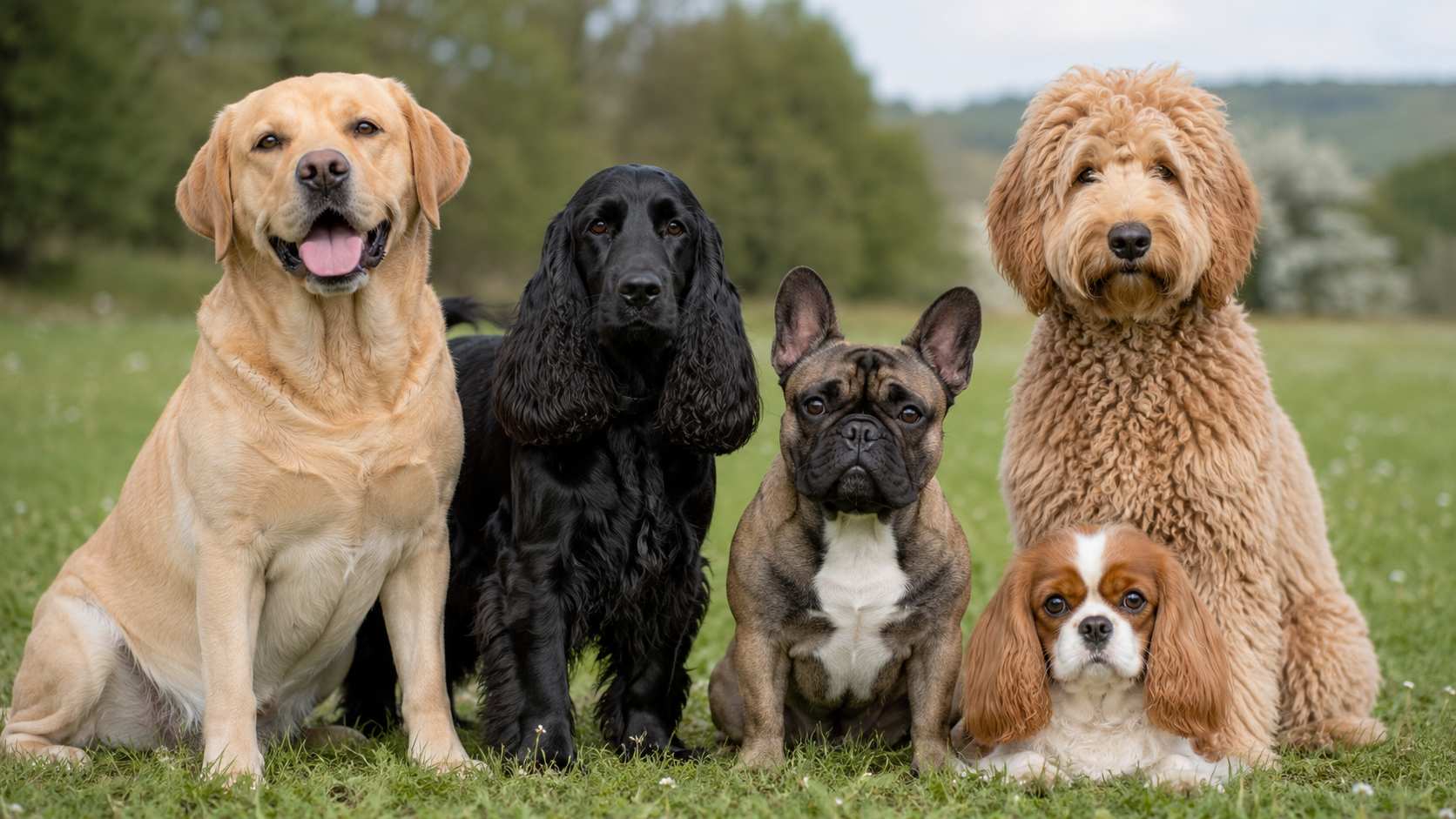
Adverts offering rare, exotic or exclusive colours at a premium have become common, particularly for popular breeds. The marketing is effective and the underlying reality is frequently poor.
What does rare usually mean?
In most cases it means the colour falls outside the recognised breed standard. That is not automatically a welfare problem, but it does mean the dog was bred for appearance rather than to a standard.
Sometimes it means the colour was introduced by crossing with another breed several generations back, so the dog is not the pure pedigree it is presented as.
Occasionally it means nothing at all, and a perfectly ordinary colour has simply been given an exciting name.
Which colours carry documented risks?
Merle is the most significant. Merle is a pattern producing mottled patches, and a dog inheriting the merle gene from both parents becomes a double merle, frequently with serious deafness, blindness or eye malformation.
Responsible breeders never mate two merles together. Where merle is not part of a breed's standard, its presence usually indicates crossbreeding, and the buyer may not know whether the other parent also carries it.
Colour dilution alopecia affects dogs with dilute coats, including blue and lilac. It causes hair loss and recurrent skin problems, and it is common enough in some heavily marketed lines to be a genuine concern.
Extreme white patterning is associated with deafness in several breeds, and albinism brings light sensitivity and eye problems.
Why are French Bulldogs a particular issue?
Because blue, lilac, merle and similar colours are heavily marketed in the breed and command large premiums. None is within the breed standard.
Breeders producing these colours are selecting primarily for coat rather than for health, conformation or temperament, in a breed that already has significant airway, spinal and skin problems.
The result is frequently a dog with the breed's existing difficulties plus colour-linked skin disease, sold at a substantially higher price.
Does an unusual colour always mean a problem?
No. Some colours are genuinely uncommon within a breed and perfectly healthy, and some breeds have wide standards covering many colours.
The warning sign is not the colour itself but the marketing. When a colour is the headline feature of an advert and carries a price premium, that tells you what the breeding priority was.
What should you ask?
Whether the colour is within the breed standard, and if not, how it arose. Whether either parent carries the merle gene, and whether DNA colour testing has been done.
Ask the same health testing questions you would ask about any puppy, since colour-focused breeders frequently skip them. Hip scores, eye certificates and breed-relevant DNA tests still apply.
Ask to see both parents, and look at their skin and coat condition as well as their temperament.
What about crossbreeds marketed on colour?
Popular crosses are frequently advertised with colour premiums, and since there is no breed standard the term rare has no reference point at all.
Both parents still need health testing against the conditions relevant to their own breeds, and colour genetics still apply. A merle in a cross carries exactly the same risk.
What is the practical advice?
Choose the dog rather than the colour. A moderately built, health-tested puppy from parents you have met is a better prospect than an unusual coat at a premium.
Paying more for colour funds breeding decisions made for the wrong reasons, and the dog usually pays for it later.
What about size marketed as rare?
The same logic applies. Teacup, micro and miniature versions of established breeds are frequently produced by breeding from undersized dogs, which concentrates health problems.
Very small dogs of this type are prone to fragile bones, dental crowding, low blood sugar, heart defects and difficulty giving birth. The word teacup has no recognised meaning and no breed standard behind it.
Oversized versions marketed as king or giant carry the opposite problems, particularly joint disease. In both directions, deliberately breeding away from the standard size is a warning rather than a selling point.