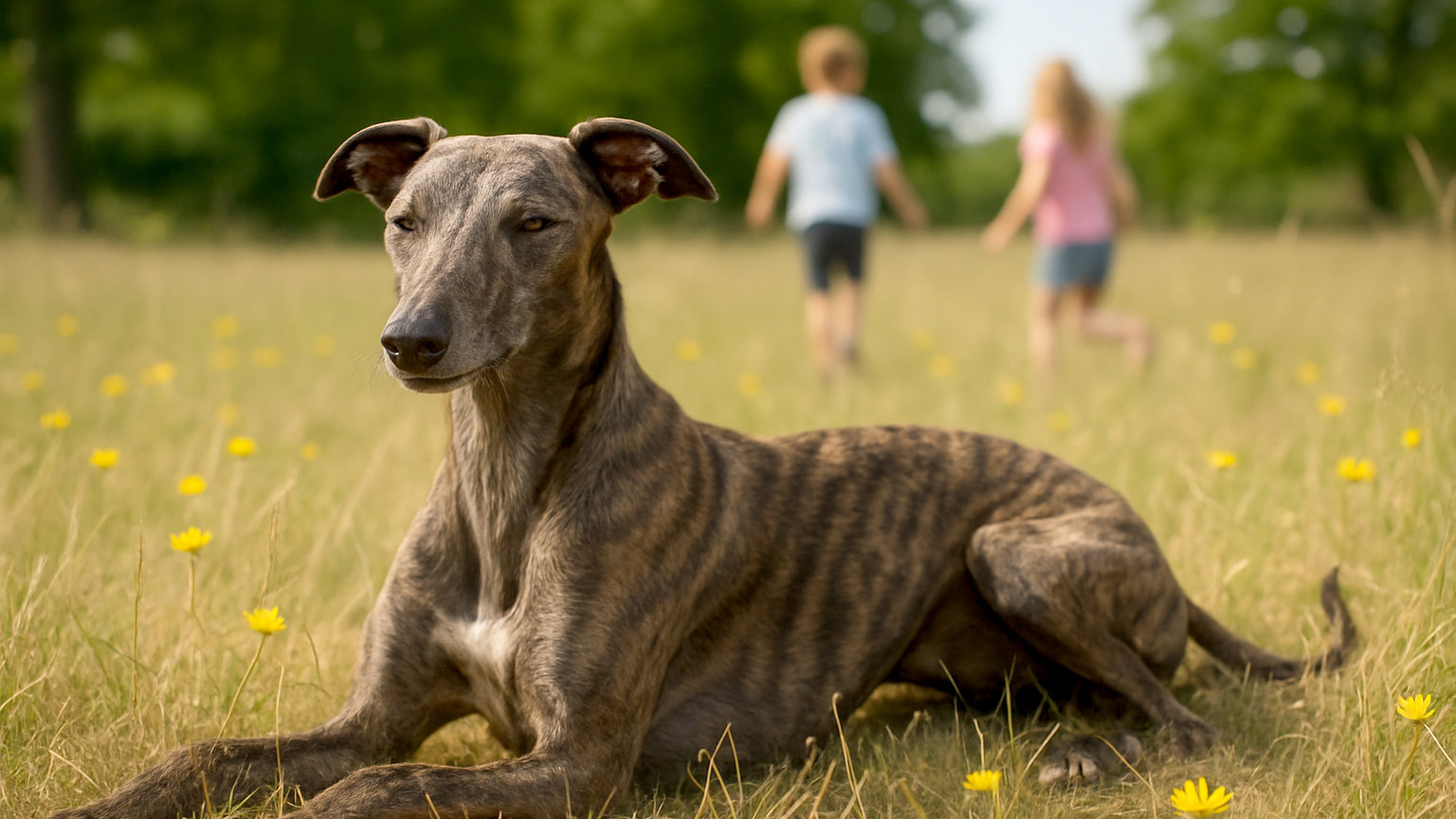
Most families considering a dog are already stretched. School runs, work, activities and the general chaos of a household with children leave limited spare capacity, and choosing a dog that fits that reality matters more than choosing a popular breed.
What does busy actually mean for a dog?
Two different things, and they have different implications. Busy meaning noisy and unpredictable at home is a temperament question. Busy meaning nobody is in for eight hours is a welfare question.
The first can be managed by choosing a resilient breed. The second cannot be solved by breed choice at all, because no dog should routinely be alone for a full working day.
Separating these before you start looking saves a great deal of wasted research.
Which breeds cope with noise and disruption?
Resilient, sociable breeds with a high startle threshold. Labradors, Golden Retrievers and Staffordshire Bull Terriers are all robust and slow to take offence.
Cavalier King Charles Spaniels, Bichon Frise and Havanese are adaptable and people-focused. Greyhounds and Whippets are quiet and unbothered by household noise, though they need somewhere undisturbed to sleep.
Breeds that struggle include noise-sensitive working dogs such as Border Collies and Shetland Sheepdogs, which frequently find chaotic households genuinely stressful.
How much time does a dog actually need?
Less than people fear on walking and more than they expect on everything else. Most family-suitable breeds need around an hour of exercise daily, which is achievable.
What accumulates is the rest: feeding, grooming, training, cleaning up, vet trips, and simply being present. A realistic estimate is two hours a day of dog-related time across the household.
The first year is considerably more demanding than the years that follow, which is why adopting an adult suits busy families well.
What about full-time work?
Most guidance suggests four hours as a sensible maximum for an adult dog to be left alone regularly. A full working day exceeds that whatever the breed.
The workable solutions are a midday dog walker, day care a few days a week, staggered working patterns within the household, or someone working from home. All cost money or flexibility, and both should be arranged before the dog arrives.
A puppy cannot be left for extended periods at all during the first months, which is why so many are acquired during school holidays and struggle when term restarts.
Which breeds should busy families avoid?
Working-line gundogs and herding breeds, which need substantial daily mental work rather than just walks. Breeds with heavy grooming requirements, since a Poodle cross needs brushing several times a week regardless of how the week is going.
Breeds prone to separation problems, including most spaniels, are difficult in households where the dog is alone regularly.
Very high-maintenance health profiles are also worth avoiding, since frequent vet appointments are hard to fit around a full diary.
Does routine help?
Enormously. Dogs settle far better when the day has a predictable shape, because they are not constantly anticipating what happens next.
Walks, meals and quiet periods at roughly consistent times lower background arousal noticeably, even in a household that feels chaotic. Consistency of pattern matters more than calm.
Building in a genuine rest period after each walk teaches the dog that activity is followed by downtime, which is a skill many dogs are never taught.
What is the honest question to answer?
Not whether you want a dog, but what happens on your worst week rather than your best. If the routine collapses when one person is away or a child is ill, plan for that before committing.
Families who do best are usually the ones who chose a moderate, resilient breed and arranged cover in advance rather than hoping it would work out.
What should you set up before the dog arrives?
Register with a vet, start insurance from day one, and book a reward-based class before you need it. These are easy to postpone and awkward to arrange in a difficult week.
Agree the household rules in advance: furniture, rooms, sleeping arrangements and who does what. Inconsistency between family members is the most common reason training stalls in a busy home.
Arrange backup cover for walks before you need it, because at some point somebody will be ill or away and the dog will still need going out.