Kitting out a large dog costs more than most people expect, and a few items that are optional for a terrier become genuinely important once the dog weighs as much as a person.
What should you use for walking?
A well-fitted harness rather than a collar. A collar on a strong dog concentrates force on the neck, risking damage to the trachea and thyroid, and gives you very little control.
Look for a harness with a front attachment point as well as a back one, which provides far better steering without causing discomfort. Fit matters: two fingers should slide under any strap, and the dog should move freely.
Use a fixed lead of one and a half to two metres. Extending leads are difficult to control with a large dog and can cause serious injury if the cord runs across a hand or leg.
A collar is still needed for the legally required identification tag, but it is not what you attach the lead to.
What kind of bed is worth buying?
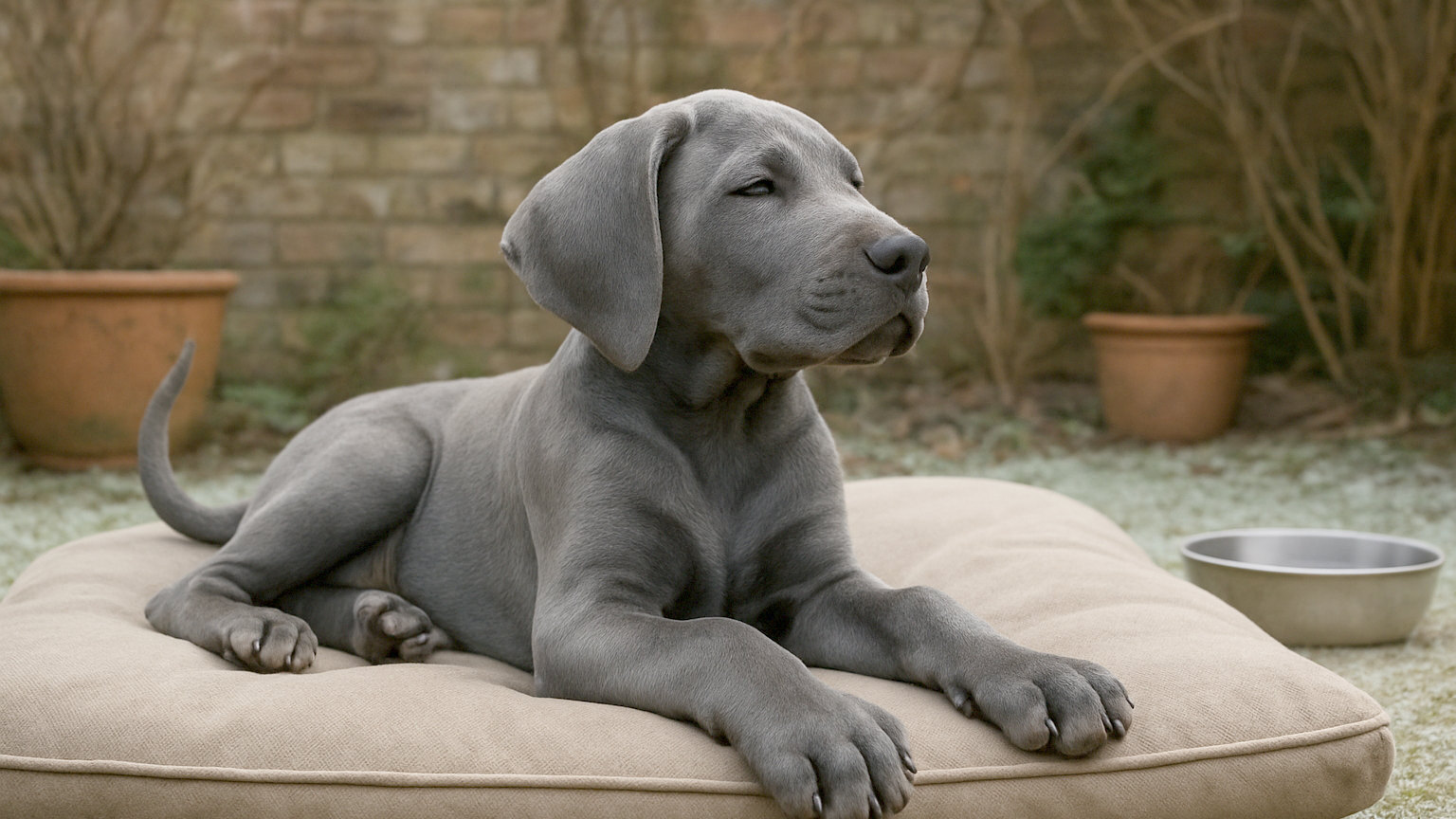
A properly supportive one, and this is not a place to economise. Large and giant breeds are prone to joint problems and to pressure sores on elbows, and a thin bed on a hard floor contributes to both.
An orthopaedic or memory foam bed with a removable washable cover is worth the cost. Measure the dog lying fully stretched out and buy accordingly, since most owners underestimate.
Expect to replace beds periodically. Many large breeds destroy the first one or two during adolescence.
Is a crate necessary?
Useful rather than essential, but genuinely valuable for a puppy. It provides a safe place for rest, assists toilet training and gives the dog somewhere it is never disturbed.
Buy for the adult size rather than the puppy, with a divider to reduce the space initially. For a giant breed this is a substantial piece of furniture and needs planning for.
A crate should always be a positive space. It is somewhere the dog chooses to go, never a punishment.
What about the car?
Restraint is expected under the Highway Code rather than optional, and an unrestrained large dog is a genuine danger in a collision to itself and everyone else in the vehicle.
Options are a crash-tested travel crate, a boot guard, or a crash-tested harness attached to a seatbelt point. For a large dog, a properly secured crate or a boot with a guard is the most practical.
A ramp is worth buying before you need it. Lifting a forty kilogram dog into a high boot is difficult when it is healthy and impossible when it is injured or elderly.
What feeding equipment helps?
Sturdy bowls that cannot be knocked over easily, ideally stainless steel for hygiene. A slow feeder is worth using for any dog that eats rapidly, particularly in deep-chested breeds where fast eating is associated with bloat risk.
Feed at floor level. Raised bowls were once widely recommended but research has suggested they may increase bloat risk in large breeds.
What grooming tools are needed?
This depends entirely on coat. Double-coated breeds need an undercoat rake and a slicker brush that reaches below the surface. Curly coats need a slicker and a metal comb, plus a budget for professional clipping.
Nail clippers or a grinder suited to thick nails are necessary, since large breed nails are considerably tougher than small breed ones.
What else is worth having?
Durable chews and puzzle feeders sized appropriately, since a giant breed will destroy toys made for smaller dogs and small parts become a choking risk.
Towels, and more of them than you expect, particularly for coated breeds. A cloth for droolers. And a stair gate for the first year while growth plates are still open.
What should you buy before the dog arrives?
Harness, lead, collar and identification tag, bowls, a crate if you are using one, a bed, car restraint, food and a few durable chews. That covers the first week.
Hold off on expensive beds and toys until you know what survives. Many owners buy a modest bed for adolescence and invest in a good orthopaedic one once the destructive phase has passed.
Legally, a dog in a public place must wear a collar with the owner's name and address on it or on a tag, and must be microchipped with up-to-date details. Both are worth sorting out immediately.