The single most useful thing a buyer can do when choosing a large breed puppy is ask what the parents have been tested for, and then ask to see the certificates. A breeder who cannot produce them has already answered the more important question.
What are hip scores?
A measure of how well the hip joints have formed, assessed from X-rays taken under a formal scheme. Each hip is scored across several features, giving a figure per hip and a total.
Lower is better. Zero is perfect and the maximum is one hundred and six. What matters is how the parents compare with the breed median, which is published for each breed, and both parents should ideally be well below it.
Hip dysplasia is partly inherited and partly influenced by growth rate, weight and exercise, so testing improves the odds rather than guaranteeing an outcome.
What about elbow scores?
Elbows are scored from zero to three, and zero is what you want in both parents. Elbow dysplasia causes lameness and arthritis, and it is common in several large breeds.
Unlike hips, where a moderate score can be acceptable if below the breed average, elbow scores above zero in either parent are worth questioning carefully.
Which breeds need heart testing?
Several large breeds carry significant inherited heart conditions. Newfoundlands and Boxers are screened for subvalvular aortic stenosis, and Rottweilers for the same condition.
Dobermanns and Great Danes are affected by dilated cardiomyopathy, and screening by a cardiologist with echocardiography is far more informative than a general listening check.
Ask specifically who performed the test and when, since heart conditions can develop after an early clear result.
What eye tests should be done?
Eye certificates issued under a formal scheme, and crucially they need to be current rather than issued once several years ago. Some conditions develop with age, so an old certificate says little.
Progressive retinal atrophy, hereditary cataract, entropion and ectropion are all relevant depending on breed. Many have DNA tests available, which are done once and remain valid.
Which DNA tests are relevant?
This varies by breed and is worth researching specifically. Degenerative myelopathy is tested in German Shepherds, Bernese Mountain Dogs and others. Cystinuria is tested in Newfoundlands.
Exercise-induced collapse and progressive retinal atrophy are tested in Labradors. Several breeds have specific tests unique to them.
A DNA test result is either clear, carrier or affected. Two carriers should not be bred together, and a good breeder will explain how they have paired the dogs.
What else should you ask about?
Longevity in the lines, particularly for giant breeds and for breeds with high cancer rates. Ask how long the grandparents lived and what they died of, and listen to how openly the question is answered.
Ask whether either parent has had a gastropexy or has bloated, since a family history increases risk. Ask about temperament in the lines and meet the mother with the puppies.
What should make you walk away?
An unwillingness to show certificates, assurances that the dogs are healthy without documentation, or claims that testing is unnecessary because the line has never had problems.
Also be cautious of anyone breeding for exaggerated size, unusual colours or extreme features, all of which correlate with health problems and inflated prices. A good breeder volunteers this information before you ask and is pleased that you did.
Do these tests apply to crossbreeds?
Yes, and this is frequently overlooked. A crossbreed inherits from both sides, so both parents need testing against the conditions relevant to their own breeds.
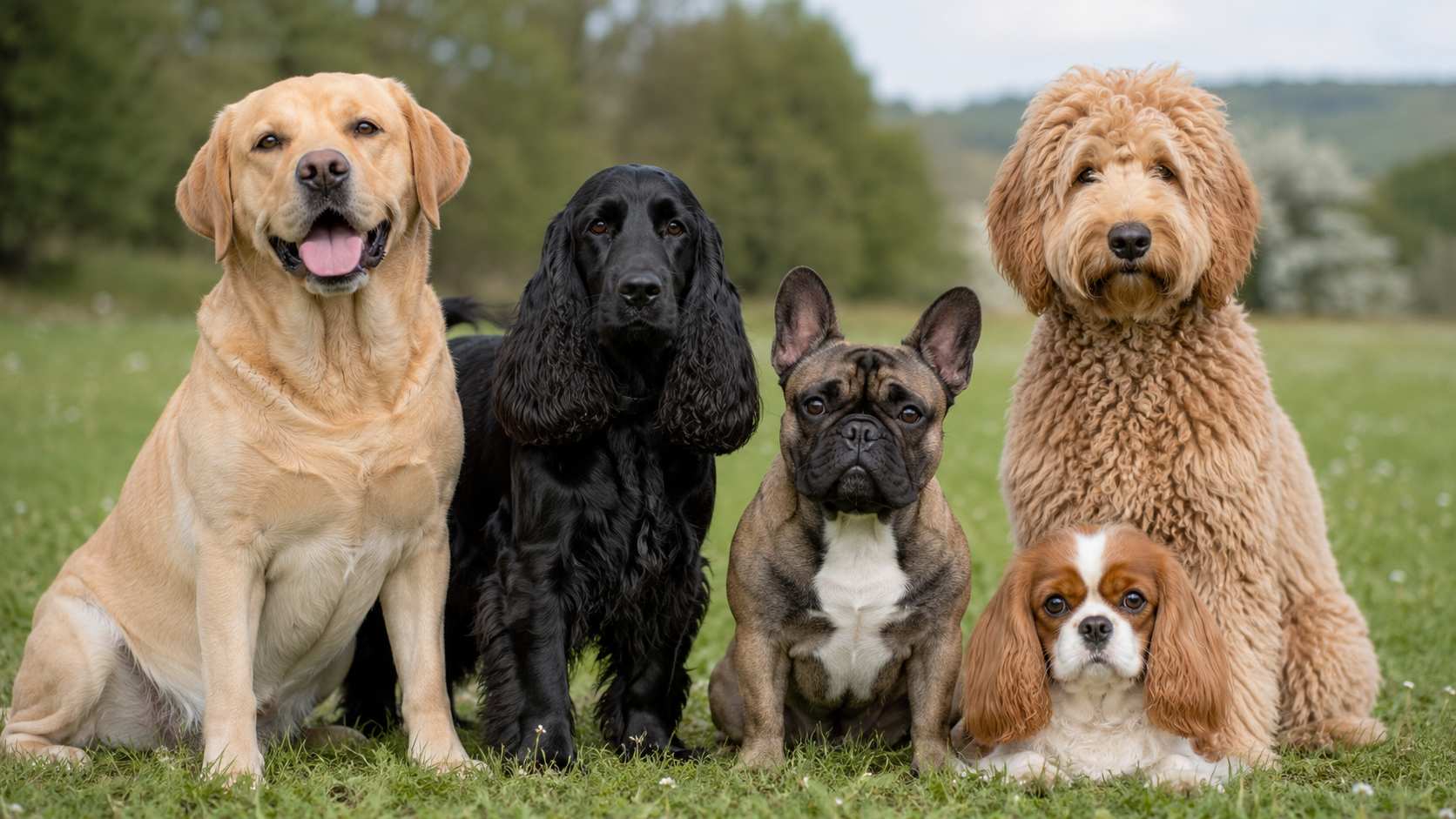
A Labradoodle can still develop hip dysplasia, because both Labradors and Poodles are affected by it. Crossing reduces the chance of recessive conditions appearing but does nothing about problems shared by both parent breeds.
Because popular crosses sit outside pedigree registration systems, there is no registry requiring testing. The responsibility for asking falls entirely on the buyer, which makes it more important rather than less.