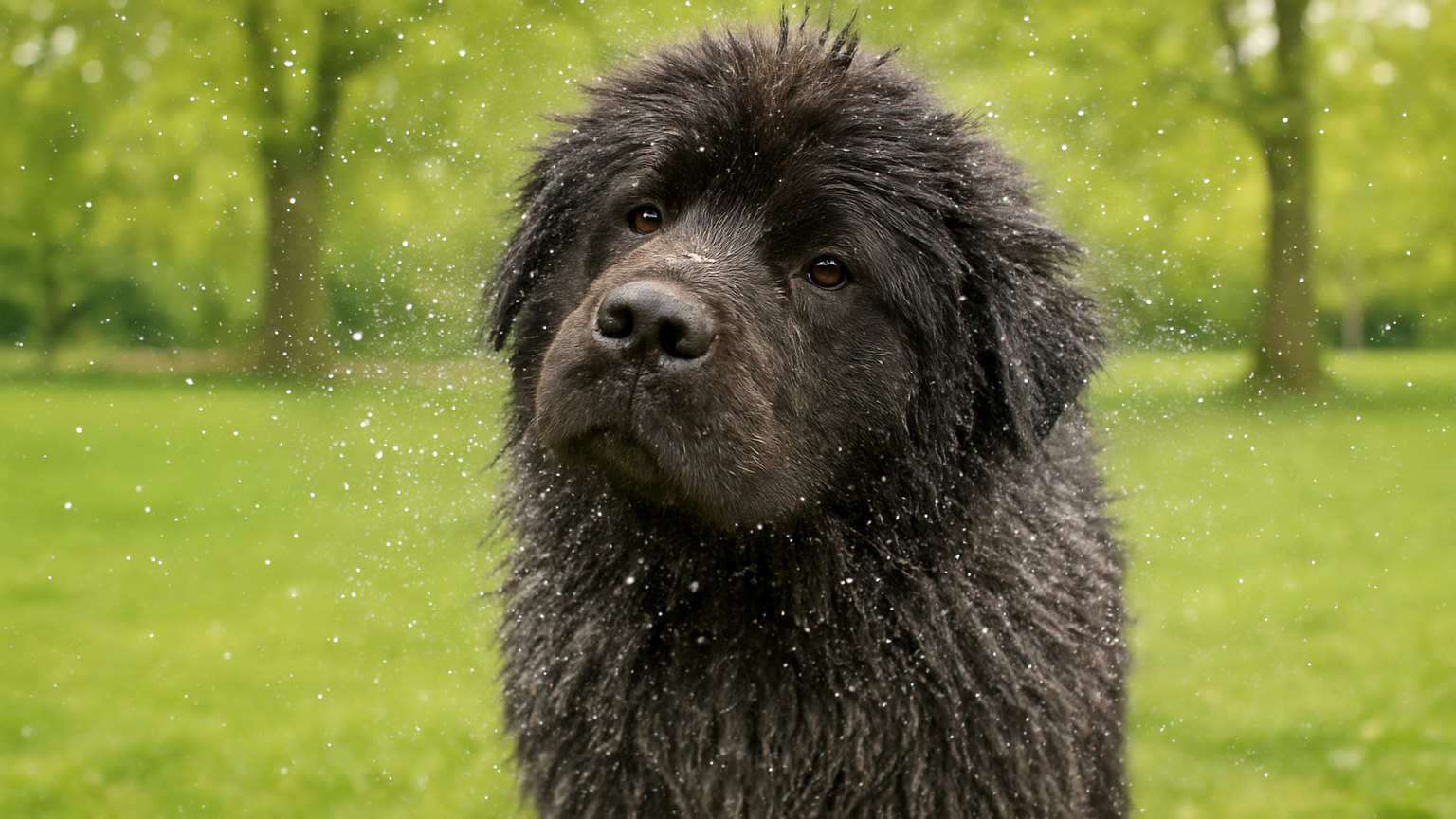
The Newfoundland is a working water dog bred to haul nets and assist in sea rescue, and almost everything about the breed follows from that. It is also one of the most consistently good-natured dogs in existence.
What is the temperament like?
Exceptionally gentle. Newfoundlands are known for a calm, patient, sweet-natured disposition, and the breed standard itself emphasises temperament above nearly everything else.
They are typically excellent with children, tolerant of noise and disruption, and generally sociable with other dogs. They are watchful rather than guarding, and rarely aggressive.
They are also sensitive and dislike harsh handling or conflict in the household. Reward-based training works well, and they are more biddable than many giant breeds.
How much exercise do they need?
Moderate. An adult generally does well on around an hour a day at a steady pace. They are not fast dogs and they are not built for distance running.
Swimming is the ideal exercise and they are extraordinary at it, with webbed feet and a water-resistant coat. Access to safe water is a genuine bonus for the breed.
Puppies need carefully restricted exercise while growth plates close at around eighteen months, since the adult weight puts real demands on developing joints.
What does the coat involve?
A great deal of work. The heavy double coat is water-resistant and dense, and it sheds continuously with two substantial moults a year.
Brush at least two or three times a week, working through to the skin, and daily during a moult. Expect matting behind the ears, on the legs and around the tail if neglected.
They also bring water and mud home in enormous quantities. A wet Newfoundland takes a long time to dry, and the drying process happens on your floors.
Never shave the coat. It insulates against heat as well as cold, and clipping can permanently damage regrowth.
How badly do they drool?
Considerably. Loose flews mean saliva collects and drips, and a head shake distributes it across walls, furniture and anyone standing nearby.
Owners keep cloths in most rooms as a matter of routine. It is a genuine lifestyle consideration rather than a minor quirk, and worth seeing in person before committing.
How do they cope with heat?
Poorly, and this is a serious practical issue in British summers. A thick double coat and a heavy build make heat regulation difficult, and Newfoundlands overheat quickly.
Walk early morning or late evening in warm weather, provide shade and water, and never exercise in the heat of the day. Access to water for swimming is genuinely useful for cooling.
Signs of overheating include heavy panting, bright red gums, drooling more than usual, wobbliness or collapse, and all require immediate cooling and veterinary attention.
What health problems affect them?
Hip and elbow dysplasia are common and both parents should be scored. Subvalvular aortic stenosis is a significant heart condition in the breed and cardiac testing of breeding stock matters.
Cystinuria, which causes bladder stones, has a DNA test available. Bloat is a risk as with other deep-chested giants, and owners should learn the signs.
Lifespan is typically eight to ten years.
Who suits the breed?
Households with space, time for grooming, tolerance for mess and a genuine willingness to manage a dog that may weigh as much as an adult. For families wanting a gentle, steady giant, few breeds do it better.
What about training and time alone?
Newfoundlands are biddable and learn readily, but their size makes early training essential rather than optional. Loose lead walking, not jumping up and a reliable settle should be established long before the dog reaches full weight.
They are strongly attached to their families and generally cope poorly with long periods alone. Build independence gradually from the first week rather than waiting for a problem to appear.
Many enjoy having a job. Carting, water work and obedience all suit the breed and provide the structure it responds well to.