The Rottweiler has one of the widest gaps between reputation and reality of any breed, and the truth sits somewhere in between. They can be outstanding family dogs, and they are not a breed to take on casually.
What is the temperament like?
Rottweilers were developed to drive cattle and later to guard and pull carts. Selection favoured a dog that was confident, calm, physically powerful and strongly bonded to its handler.
A well-bred, well-raised Rottweiler is typically self-assured rather than nervous, affectionate with its own family, and naturally watchful of strangers without being frantic about it. They are often described as leaning dogs, inclined to press against their people.
They are not usually excitable. Many are notably steady and slow to react, which is precisely what makes a good guardian.
How important is socialisation?
Critical, and more so than for most breeds. The natural watchfulness needs shaping into discernment: alert to something genuinely unusual, relaxed about visitors and passers-by.
The window closes around sixteen weeks, and what happens within it matters enormously. A Rottweiler puppy needs calm, positive exposure to visitors, traffic, handling, other dogs and household noise.
Socialisation must continue through adolescence, since many become more reserved between eight and eighteen months. Owners who stop after puppy classes frequently find the two-year-old is not the dog they had at six months.
Are they good with children?
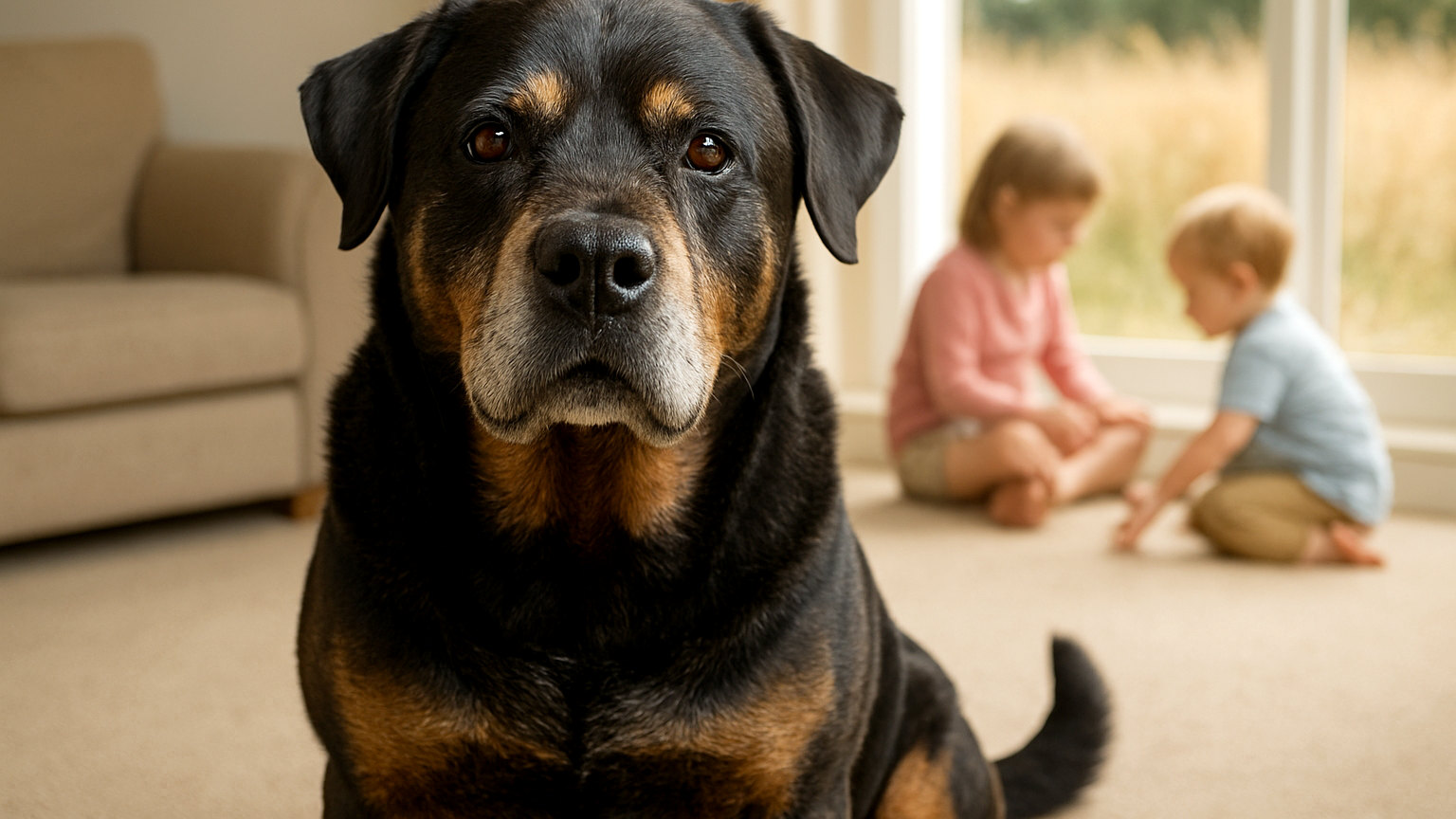
Frequently very good with children in their own family, being tolerant and steady. The issues are physical rather than temperamental: a Rottweiler is heavy and solid, and a happy adolescent can knock over a child without any bad intent.
Teach a calm greeting and a reliable settle early. Give the dog a bed children never approach, and supervise properly rather than relying on tolerance.
Visiting children need thinking about separately, since a guardian breed may view them differently from the family it lives with.
What training do they need?
Consistent, reward-based training from the first week, and a genuine commitment to classes. This is a dog that will weigh fifty kilograms and must be reliably controllable on a lead by an adult.
Harsh handling is counterproductive and risky with a confident, powerful breed. Reward-based methods produce a dog that cooperates rather than one that complies under pressure.
They are intelligent and enjoy having a job. Obedience, tracking and scent work all suit them.
What are the legal responsibilities?
Rottweilers are not restricted under UK legislation, but owners of any dog are legally responsible for keeping it under control everywhere, including on private property.
In practical terms, third-party liability cover matters. Some insurers and many landlords treat the breed differently, and some boarding kennels decline it, so check before committing.
What health problems affect them?
Hip and elbow dysplasia are the significant inherited concerns and both parents should be scored. Heart conditions including aortic stenosis are seen, and cardiac testing is worth asking about.
The breed has higher rates of osteosarcoma, a bone cancer, than most. Cruciate ligament rupture is also common, and keeping the dog lean reduces the risk considerably.
Who suits the breed?
Experienced, committed owners who will train and socialise consistently for the first two years and who can physically manage a powerful dog. For that household they are steady, loyal and genuinely rewarding.
How much exercise and grooming do they need?
Around an hour to ninety minutes a day for an adult, plus mental work. They are strong and capable but not endurance athletes, and they overheat more readily than their appearance suggests.
Puppies need exercise restricted while growth plates close at around fifteen to eighteen months, which matters a great deal in a breed carrying this much weight.
The short double coat is easy to maintain but sheds more than people expect. A weekly brush handles it outside of moults, when it becomes a daily job.
Rottweilers are frequently misjudged in both directions, dismissed as dangerous by people who have never met one and taken on casually by people drawn to the image. Neither view serves the dog, which is at its best when treated as a serious commitment rather than a statement.