Bloat is the condition large breed owners most need to be able to recognise. It progresses over hours rather than days, it is fatal without surgery, and survival depends almost entirely on how quickly the dog reaches a vet.
What actually happens?
The stomach fills with gas and distends. In many cases it then rotates on its axis, which seals both the entrance and the exit so the gas cannot escape. This is gastric dilatation-volvulus.
The distended stomach presses on major blood vessels, reducing blood return to the heart, and the blood supply to the stomach wall is cut off. The dog goes into shock and tissue begins to die.
Once the stomach has twisted, nothing resolves it except surgery. This is why waiting to see whether it settles is so dangerous.
Which breeds are most at risk?
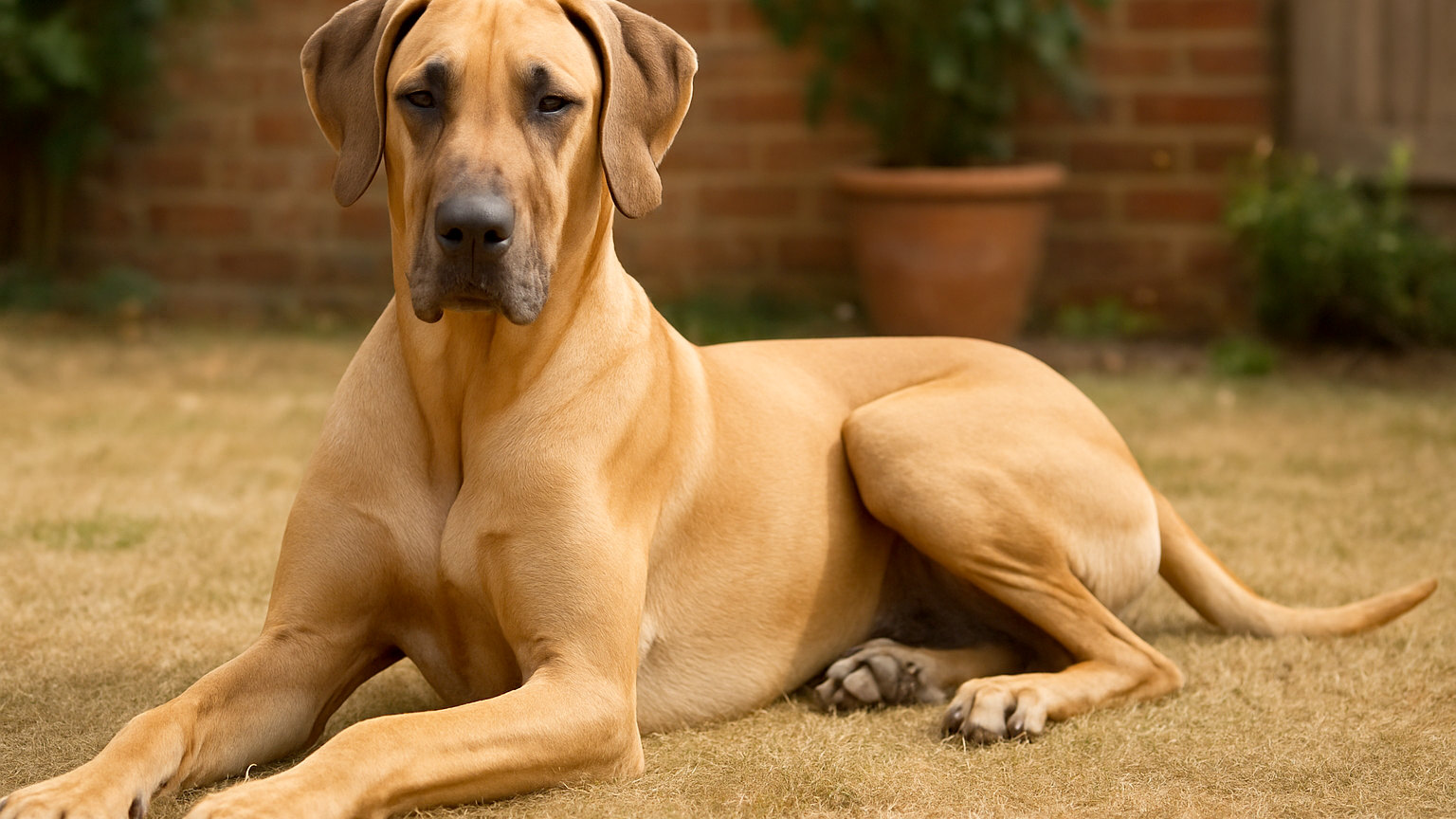
Deep-chested breeds, where the chest is tall and narrow rather than broad. Great Danes carry the highest risk of any breed by a considerable margin.
Also strongly affected are Irish Wolfhounds, Saint Bernards, Weimaraners, German Shepherds, Standard Poodles, Setters, Boxers, Dobermanns, Bernese Mountain Dogs and Newfoundlands.
Risk increases with age, and dogs with a close relative that has bloated are more likely to be affected. It can occur in any breed, including smaller ones, but it is far less common.
What are the warning signs?
Repeated unproductive retching is the most characteristic sign: the dog tries to vomit and brings up nothing, or only froth. This is the one that should prompt immediate action.
Others include a swollen, hard or distended abdomen, restlessness and inability to settle, pacing, excessive drooling, a hunched posture, looking round at the flank, rapid shallow breathing, pale gums and collapse.
Restlessness often comes first, before any visible swelling. An owner describing a dog that simply could not settle in the evening is a common opening to these cases.
What should you do?
Ring your vet immediately, at any hour, and say you suspect bloat so they can prepare. Out of hours, ring your practice anyway and the message will direct you to the emergency service.
Go straight there. Do not wait to see if it improves, do not give anything by mouth, and do not attempt any home remedy. Time is the variable that determines survival.
Can it be prevented?
The risk can be reduced but not eliminated. Feed two or three smaller meals rather than one large one, and use a slow feeder for dogs that eat rapidly, since fast eating is associated with higher risk.
Avoid vigorous exercise for an hour either side of meals. Avoid large volumes of water in one go immediately after eating.
Raised bowls were once widely recommended, but research has suggested they may increase risk in large breeds rather than reduce it. Feed at floor level unless your vet has advised otherwise for a specific reason.
What is a gastropexy?
A surgical procedure that tacks the stomach to the abdominal wall so it cannot rotate. It does not prevent the stomach filling with gas, but it prevents the twisting that makes the condition fatal.
It is frequently performed preventively in the highest-risk breeds, often at the same time as neutering to avoid a second anaesthetic. For a Great Dane in particular it is worth a direct conversation with your vet.
Dogs that have bloated once and survived usually have a gastropexy performed during the emergency surgery, since recurrence is otherwise likely.
What happens at the vet?
The dog is stabilised first, since it is usually in shock. Intravenous fluids and pain relief come before anything else, and the vet will typically take an X-ray to confirm whether the stomach has twisted.
Pressure is released from the stomach, either with a tube passed down the throat or with a needle through the abdominal wall. If the stomach has rotated, surgery follows to untwist it and assess whether the tissue is still viable.
A gastropexy is usually performed during the same operation to prevent recurrence. Recovery involves several days of hospitalisation, and the cost is substantial, which is a strong argument for insurance in at-risk breeds.