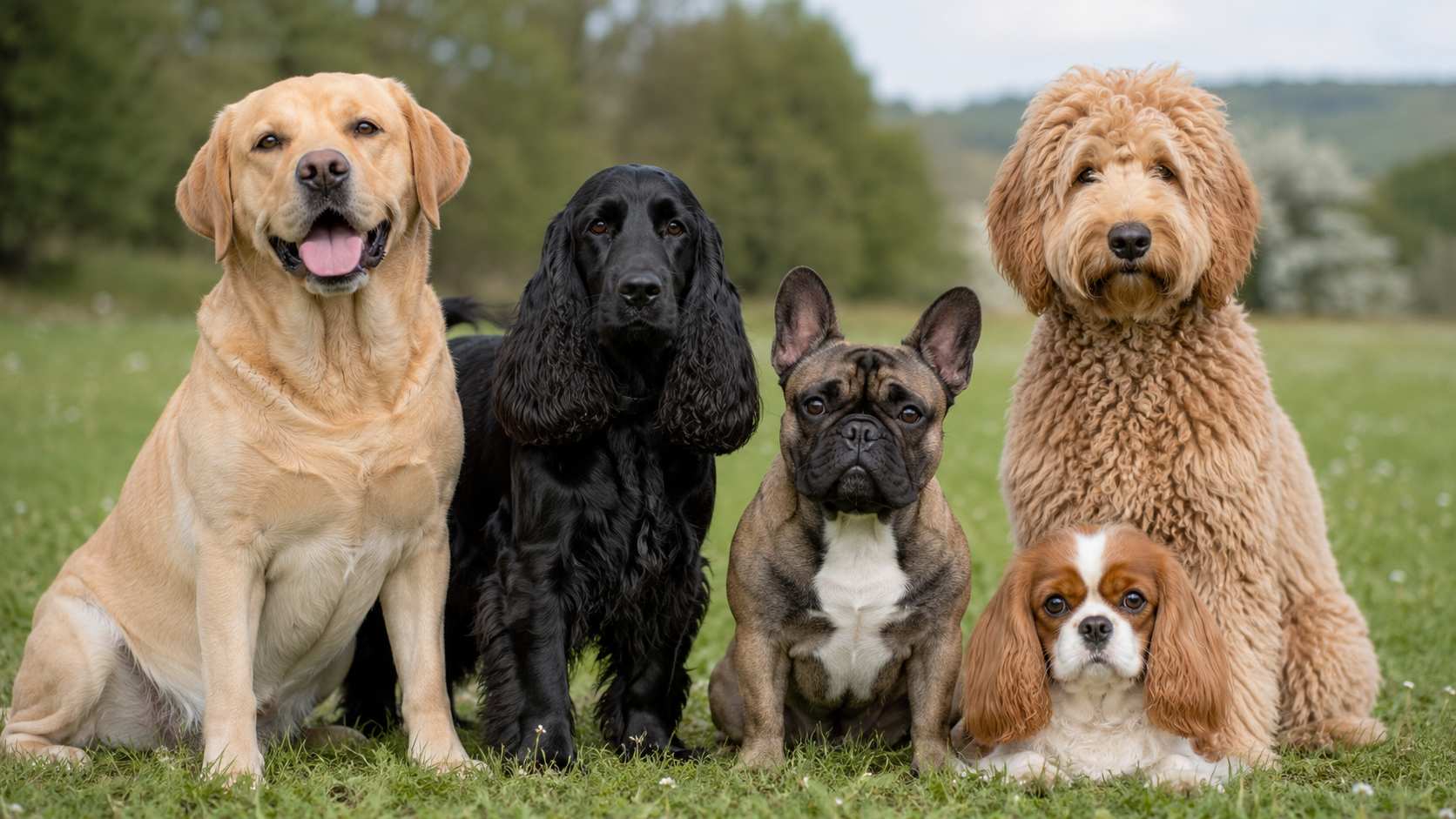
Small dogs finish growing at around ten months. Giant breeds are still developing at eighteen months or beyond, and that extended window is the most consequential period in a large dog's life.
When do large breeds finish growing?
Height is usually reached first. Large breeds typically stop growing upwards at around twelve to fifteen months, while giant breeds continue to eighteen months and occasionally longer.
Filling out continues well beyond that. Many large breeds do not reach their adult chest and muscle development until two years, and some giant breeds take closer to three.
This is why a fourteen-month-old Great Dane can look tall and gangly rather than substantial. The frame arrives before the body does.
What are growth plates?
Areas of soft cartilage near the ends of long bones where new bone is produced. While they remain open the bone is still lengthening, and the area is considerably more vulnerable to injury than mature bone.
Once growth is complete the plates close and harden. Damage before closure can cause a bone to grow unevenly or stop growing, producing permanent deformity or lameness.
The closure timing is why exercise guidance for large breed puppies is so specific.
How should you exercise a growing large breed?
Restrict formal exercise. A widely used guide is five minutes per month of age, twice daily, so a six-month-old gets around thirty minutes twice a day of structured lead walking.
Free play in a garden at the puppy's own pace is different and generally fine, because the puppy stops when it is tired. What matters is avoiding forced repetitive activity.
Specifically avoid running alongside a bicycle, long structured hikes, repeated ball throwing with hard braking, jumping down from height and repeated stairs. Use a stair gate during the first year.
Does feeding affect growth?
Considerably, and this is where many owners unintentionally cause harm. Overfeeding a large breed puppy makes it grow faster, and faster growth is associated with higher rates of developmental joint disease.
The aim is steady growth rather than maximum growth. A large breed puppy should look lean, with ribs easily felt under a thin covering.
Use a food formulated for large breed puppies, which has controlled calcium and energy levels. Do not add calcium supplements, which can actively cause skeletal problems. Free feeding is a poor idea; measure meals instead.
Why does neutering timing come into it?
Because sex hormones play a part in signalling growth plates to close. Neutering before that happens can delay closure, producing a slightly taller dog with altered joint angles.
Research has linked early neutering in some large breeds with higher rates of cruciate disease and hip dysplasia. Many vets now recommend waiting until a large or giant breed is closer to maturity.
This is a decision worth discussing with your own vet, since it depends on breed, sex and individual circumstances.
What should you watch for?
Limping, stiffness after rest, reluctance to exercise, a change in gait, or sitting oddly all warrant a veterinary appointment rather than being dismissed as growing pains.
Panosteitis, a painful inflammation of the long bones, causes shifting lameness in growing large breeds and usually resolves with time and pain relief. Other causes are more serious, and distinguishing them needs examination rather than guesswork.
How big will the adult dog be?
Breeders can give a reasonable estimate from the parents, and that is the best guide available. Puppies from larger parents tend to be larger, though there is variation within any litter.
Rough rules such as doubling the weight at a given age are unreliable in large breeds because growth is not linear. A giant breed puts on weight rapidly between four and eight months, then slows considerably.
If adult size genuinely matters for your home, car or ability to handle the dog, meet both parents and be guided by them rather than by an average figure for the breed.
The overarching principle is patience. A large breed that grows steadily, stays lean and is not pushed physically during its first eighteen months has the best possible start, and the benefit shows up years later in joints that still work.