People choosing a dog for a small house or a terrace often start with size, assuming a medium dog is the largest that will reasonably fit. Space is real but it is seldom what actually determines whether the arrangement works.
Why does temperament matter more than size?
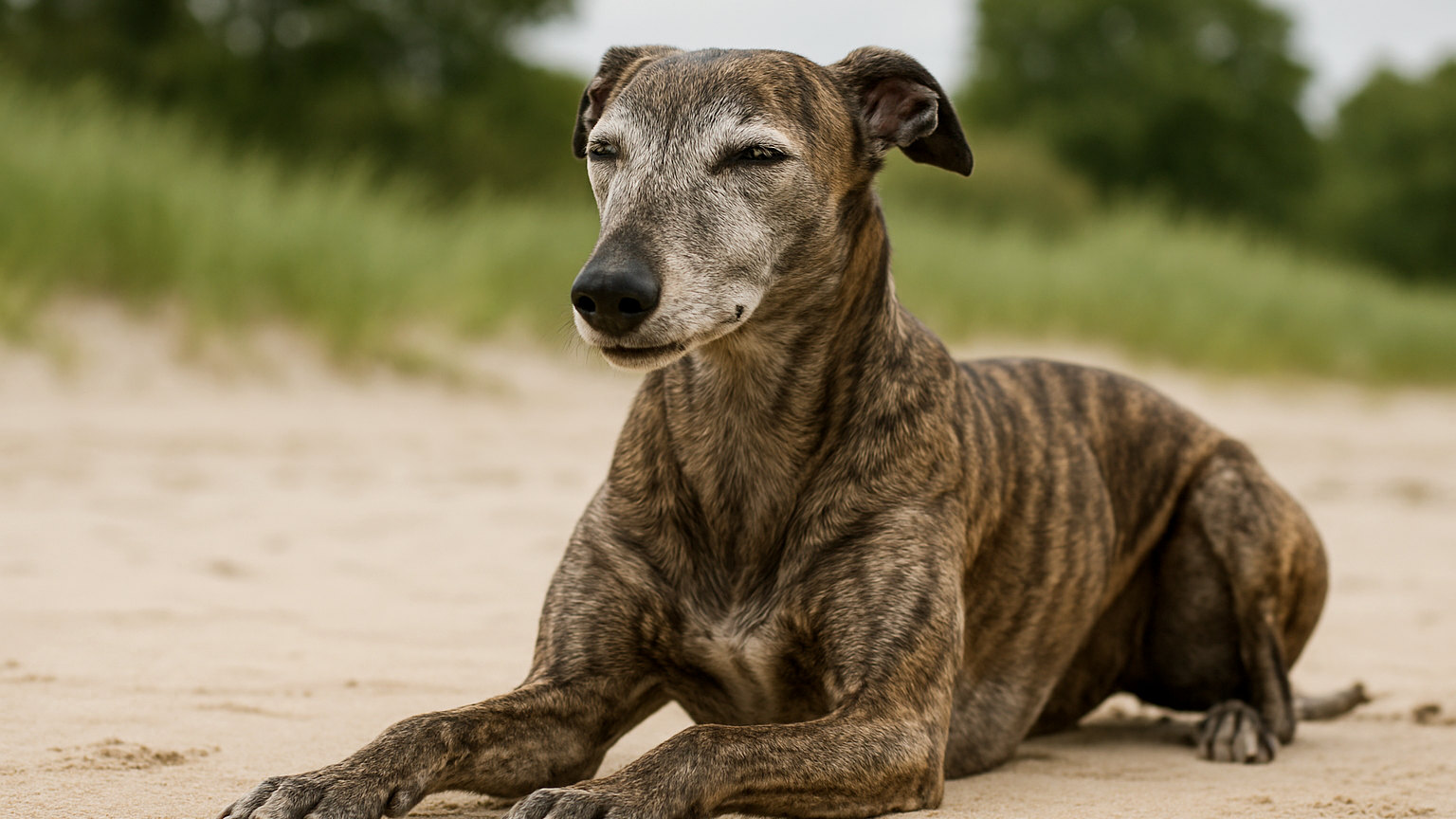
Because a dog that settles takes up very little room. A Whippet or Greyhound stretched out asleep for eighteen hours a day occupies less practical space than a Jack Russell patrolling between windows.
The dogs that struggle in small homes are the ones that cannot switch off. A Border Collie in a two-bedroom terrace is not short of floor area, it is short of a job, and the symptoms look like the house being too small.
Judge candidates by how readily they settle rather than by what they weigh.
How much does noise matter?
In a terrace or a flat, more than anything else. Barking is the most common reason tenants are asked to rehome a dog and the most common source of complaints between neighbours.
Sighthounds are among the quietest dogs of any size. Whippets and Greyhounds bark very little. Beagles, Shetland Sheepdogs and most terriers are vocal by default, and Beagles in particular have a bay that carries a long way.
Whichever you choose, manage barking from the first week rather than after complaints begin. Reduce what the dog can see from the front window, teach a settle away from the door, and reward quiet deliberately.
Does a garden change things?
It helps with toilet training and with letting a dog out quickly, but it is not a substitute for walks. A garden is not exercise, and dogs left to entertain themselves in one frequently develop barking and digging habits.
Without a garden, plan for more deliberate trips outside, particularly with a puppy, including through the night. Every toilet break becomes a journey, which is manageable but relentless in the early months.
Check fencing height and the base of the fence if you do have one. Several medium breeds dig and several can clear a low fence easily.
What about stairs and doorways?
Stairs matter most for long-backed breeds and for growing puppies, since repeated use loads the spine and joints. A stair gate during the first year is sensible for any medium breed.
Think about the practical route too. Carrying a twenty kilogram dog up two flights when it is ill or elderly is a genuine consideration, and it will happen at some point.
How do you make a small home work?
Give the dog a defined place of its own, ideally away from the front door and the busiest route through the house. A crate or bed in a quiet corner provides somewhere to retreat to, which matters more when space is shared.
Build enrichment into the day, since a dog in a small house has less to look at. Scent games, chews, puzzle feeders and short training sessions fill the gap that a larger house with a garden would fill passively.
What should you check before committing?
Read your tenancy agreement or lease first. Many leasehold properties prohibit pets or require written consent, and some freeholders exclude specific breeds regardless of size.
Then be honest about the walking you will actually do in February rather than in June, since a medium breed in a small home depends entirely on getting out.
Which medium breeds suit a small home best?
Sighthounds first: Whippets and retired Greyhounds are quiet, clean, low-energy indoors and among the most common recommendations for terraced houses and flats.
Basset Hounds and Bulldogs are calm indoors, though both are heavy to carry and Bulldogs need care in warm weather. Staffordshire Bull Terriers often settle well and are readily available as adults from rescue.
What these have in common is not size but the ability to switch off, which is the quality that actually determines whether a dog and a small house get along.