Lists of the most intelligent dog breeds are widely shared and frequently misapplied. Intelligence and trainability are different things, and several of the smartest breeds are among the most difficult for an ordinary owner to teach.
What actually makes a breed easy to train?
Biddability: the inclination to look to a person for direction and to find working with them rewarding. A biddable dog checks in, watches for cues and treats cooperation as its default.
Breeds developed to work in partnership with a handler score highly. Breeds developed to work independently at a distance do not, however clever they are.
Motivation matters too. A dog that will work for food or a toy gives you something to pay with, and a dog motivated by nothing you control is difficult regardless of intelligence.
Which medium breeds are easiest?
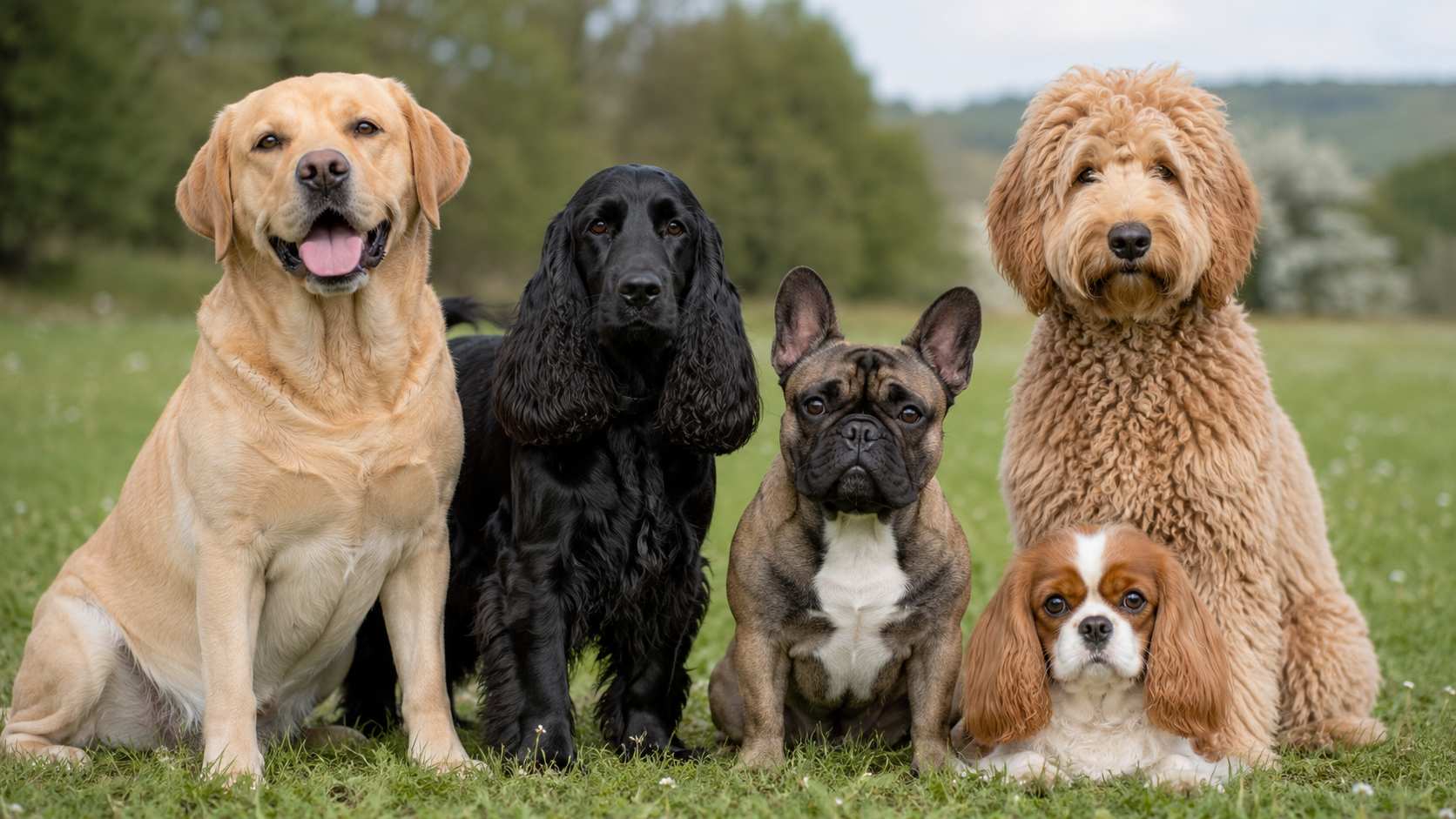
Standard and miniature Poodles are outstanding: highly intelligent, strongly biddable and genuinely enthusiastic about learning. The haircut has done their reputation no favours.
Border Collies and Shetland Sheepdogs learn faster than almost anything else, provided you can meet their need for work. Cocker Spaniels from show lines are eager and food motivated.
Portuguese Water Dogs, Bearded Collies and many Poodle crosses are similarly willing. Staffordshire Bull Terriers are frequently underestimated: food motivated, people-focused and keen to please.
Which are hardest despite being clever?
Scent hounds, without much competition. Beagles and Basset Hounds are intelligent but were bred to follow a trail independently and to ignore a handler calling. Recall in particular is a long project and never absolute.
Sighthounds including Whippets are gentle and quick to learn household manners, but a Whippet in pursuit is beyond the reach of any cue.
Bulldogs are stubborn rather than unintelligent and respond poorly to repetition. Working-line gundogs are highly trainable but demand a level of consistency beginners often cannot sustain.
Does being easy to train mean easy to own?
Not at all, and this is the trap. Border Collies are among the most trainable dogs in existence and among the most frequently rehomed, because trainability comes packaged with a need to work.
A dog that learns quickly also learns unhelpful things quickly. Collies pick up habits from a single repetition, including the ones you did not intend to teach.
Easy to own usually means moderate energy and a forgiving temperament, which is a different list entirely.
What training approach works across the board?
Reward-based methods, short frequent sessions and consistency from everyone in the household. Five minutes several times a day beats a single long session, particularly with young dogs.
Use rewards the dog actually values, which varies: chicken for a spaniel, a tug toy for a terrier, the chance to sniff for a hound. Train in gradually more distracting environments rather than assuming a behaviour learned in the kitchen will hold in a park.
What should you expect realistically?
Most behaviours take weeks of short daily practice rather than one breakthrough session, and adolescence between eight and eighteen months typically brings apparent regression in every breed.
That phase is normal and passes with consistency rather than escalation. Booking a reward-based class before problems appear is the single most useful thing a new owner can do.
How do you choose a training class?
Look for reward-based methods and ask directly what happens when a dog gets something wrong. The answer should involve resetting and trying again rather than any form of correction.
Avoid anyone using or selling shock collars, prong collars or choke chains, and be cautious of trainers talking about dominance or being the pack leader, which reflects a model the behavioural evidence stopped supporting decades ago.
The terms trainer and behaviourist are not protected, so anyone may use them. Check for membership of the Animal Behaviour and Training Council, and ask to observe a class before enrolling.
The most trainable breed in the world will still ignore you if the reward is not worth having and the environment is too distracting. Training is a set of skills for the handler at least as much as for the dog.