A first dog does not need to be easy so much as forgiving. Every new owner is inconsistent, misreads situations and misses training opportunities, and some breeds absorb that while others magnify it.
What makes a breed forgiving?
Three things above all. A moderate energy level, so that an imperfect day does not produce a destructive evening. A sociable, resilient temperament that recovers quickly from noise and disruption. And a genuine willingness to work with people, which makes training feel like cooperation rather than negotiation.
Low reactivity matters too. A dog that startles easily or fixates on movement demands a level of management most first-time owners have not yet learned.
Which medium breeds tend to suit beginners?
Whippets are consistently underrated here. They are gentle, quiet, affectionate and famously lazy indoors, needing a couple of good runs rather than hours of work. Their prey drive means recall needs care, but in the house they are undemanding.
Staffordshire Bull Terriers are people-focused, robust and tolerant, and they fill British rescue centres so adults with known temperaments are easy to find. The caveat is that some are less tolerant of other dogs.
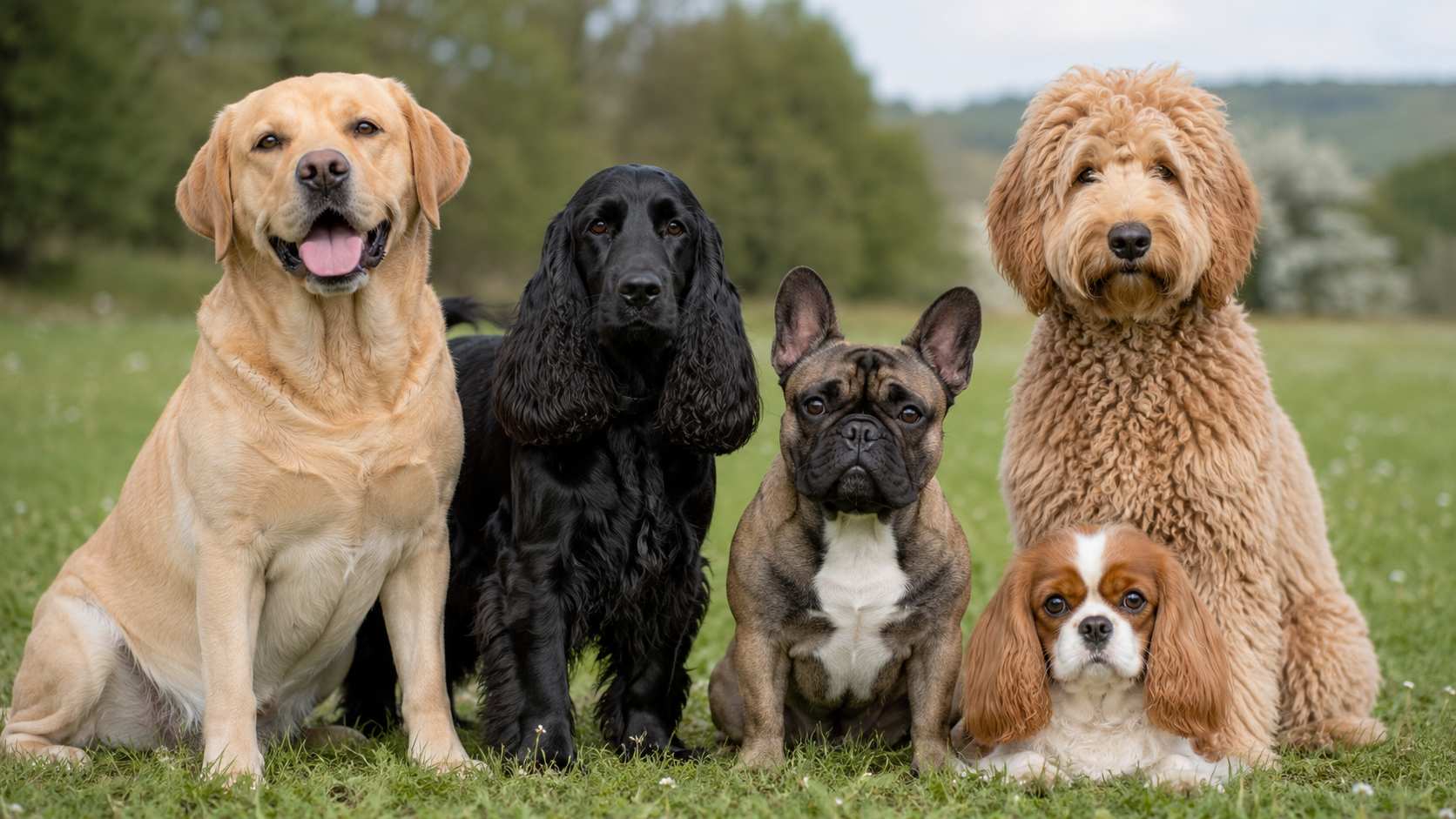
Cavapoos and smaller Cockapoos from show-line parents are usually sociable and biddable, provided the coat commitment is understood. Standard Poodles at the top of the range are exceptionally trainable and often overlooked because of the haircut.
Bearded Collies and Shetland Sheepdogs suit people who want to train, though both are vocal.
Which are harder than they look?
Border Collies and English Springer Spaniels are the two that catch beginners out most often. Both are outstanding dogs and both were bred to work all day under direction. Placed in a household offering a walk and a quiet evening, they redirect that drive into the house, and the problem surfaces at eight to eighteen months.
Beagles are friendly and robust but follow their nose absolutely, which makes recall a long project. Basset Hounds are calm but stubborn, and heavier than they look to lift.
Working-line Cockers deserve the same caution as Springers. Ask which lines the parents came from, because the difference is substantial.
Does an adult dog make more sense?
Frequently, yes, and it is worth taking seriously rather than treating as second best. Almost everything difficult about dog ownership is concentrated in the first year: night waking, toilet training, biting, chewing and enormous energy swings.
An adult from rescue is usually toilet trained, past the destructive stage and settled in temperament. Its size, coat and energy are visible rather than predicted, and staff will tell you honestly which dogs suit a household with no previous experience.
What should a first-time owner arrange early?
Book training classes before the dog arrives rather than after a problem appears. A good class teaches the handler more than the dog, and reward-based group work builds skills that transfer.
Establish the routine in the first fortnight: where the dog sleeps, who feeds it, what furniture is allowed and how time alone is built up. Changing rules later is considerably harder than setting them at the start.
Insure early, before anything has appeared, since conditions that develop later are excluded once known.
What mistakes do first-time owners make most?
Choosing on appearance is the most common, followed by choosing on a friend's recommendation without checking whether the two households resemble each other.
Underestimating adolescence comes next. Most new owners expect the difficult phase to be puppyhood, and are unprepared when a settled six-month-old becomes a boisterous, selectively deaf twelve-month-old. This is normal and passes with consistency.
The third is delaying training until something goes wrong. Habits are far easier to build than to undo, and a fortnight of short daily sessions early saves months of remedial work later.
Above all, choose for the household you actually have rather than the one you intend to become. Plenty of people buy a working breed expecting it to make them more active, and the dog arrives long before the new routine does.