Medium is the least precise of the dog size categories, and the boundaries shift depending on whether you are reading a breed guide, an insurance quote or a bag of dog food. Understanding the ranges helps, but the label matters less than what sits behind it.
What weight range is usually meant?
Most guides put medium dogs somewhere between ten and twenty-five kilograms, standing roughly forty to sixty centimetres at the shoulder. Below that is small, above it is large.
Manufacturers and insurers frequently use their own bands. A dog food company might call anything from ten to twenty-five kilograms medium, while an insurer draws the line at twenty. This is why the same dog can be quoted differently by two providers, and it is worth checking rather than assuming.
Which breeds fall into the band?
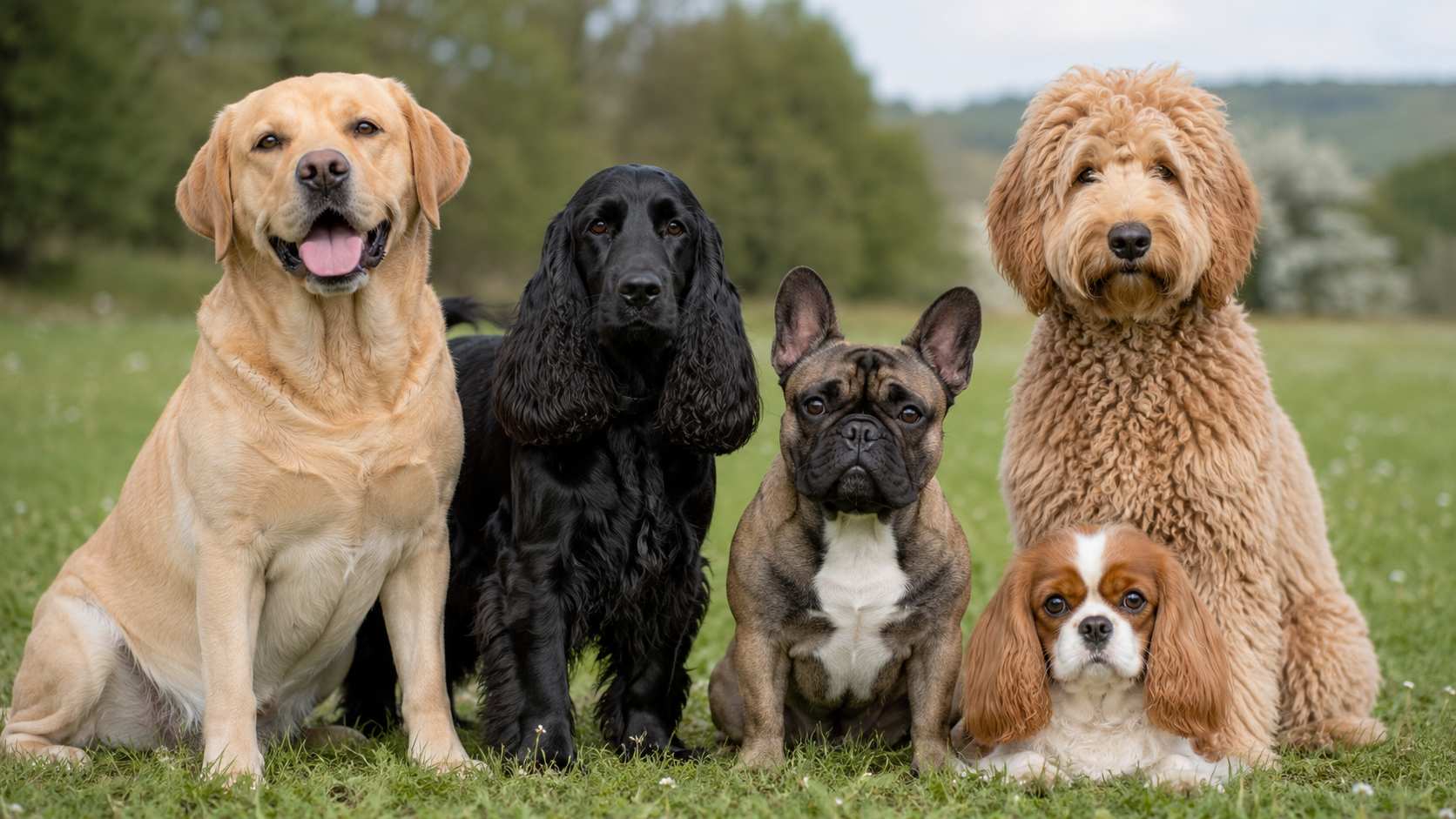
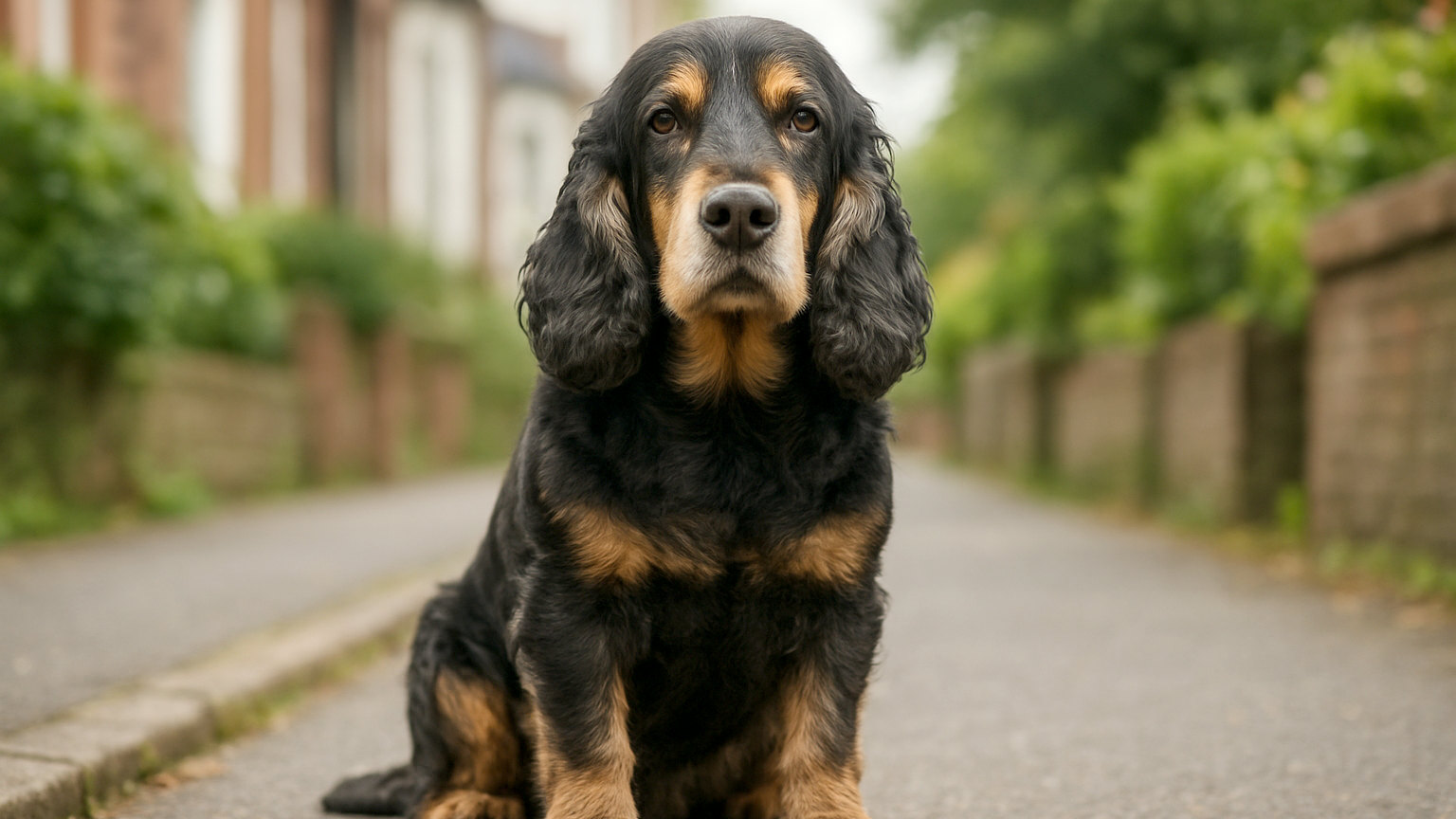
The classic medium breeds include Border Collies, English Springer Spaniels, Cocker Spaniels, Beagles, Whippets, Staffordshire Bull Terriers, Bulldogs, Miniature Schnauzers at the upper end, Shetland Sheepdogs, Basset Hounds and Standard Poodles at the lower end of large.
Several popular crossbreeds sit here too. Most Cockapoos bred from a miniature Poodle land in the medium band, as do many Labradoodles bred from smaller lines.
Border Collies and Springers illustrate the problem with the category neatly: both are medium by weight and both need as much work as many large breeds.
Why is the label misleading?
Because size tells you almost nothing about what a dog needs. A twenty kilogram Basset Hound and a twenty kilogram Border Collie occupy the same size bracket and require entirely different lives.
Breeding purpose is the useful variable. A dog bred to work sheep for hours needs mental and physical work regardless of what it weighs, while a dog bred as a companion generally does not.
Judging a dog by weight alone is one of the more common ways people end up mismatched, particularly with medium breeds where the range of temperaments is at its widest.
Where does size genuinely matter?
Several places, and they are practical rather than behavioural. Food costs scale with weight, and so does the price of medication, which is dosed by body mass. Insurance premiums are usually banded by size.
Physical management matters too. A twenty-five kilogram dog that pulls is difficult to hold, and lifting one into a car or onto a vet table is a two-person job for many owners.
Space is less of an issue than people assume. A calm medium dog takes up less room in practice than a busy small one, because it spends more of the day asleep.
Do medium breeds have particular advantages?
They are frequently described as the sensible compromise, and there is something to that. They are sturdy enough to cope with children without being fragile, small enough to lift in an emergency, and generally longer lived than large breeds.
Running costs sit between the extremes, and most cars, crates and boarding kennels accommodate them without difficulty. Many can walk considerable distances while still settling well indoors.
How should you use the category?
As a rough filter and nothing more. Use it to narrow a list if space, cost or physical handling genuinely constrain you, then throw the label away and research individual breeds properly.
The questions that actually determine suitability are how many hours the dog will be alone, how much exercise and mental work it needs, what its coat requires and what it is likely to cost across a decade. None of those is answered by a weight bracket.
Within any medium breed there is variation too, particularly between working and show lines, and that difference is frequently larger than the difference between two breeds of the same size.
Does the category affect insurance and food?
Both, and it is worth checking rather than assuming. Insurers band premiums by size, and a dog sitting near a boundary may be quoted as medium by one provider and large by another, with a meaningful difference in price.
Food is sold in size-specific formulations with different kibble sizes and nutrient densities. These bands rarely align between manufacturers either.
Get a quote for your specific breed and weight rather than relying on the label, particularly if the dog is near twenty-five kilograms where the categories diverge most.