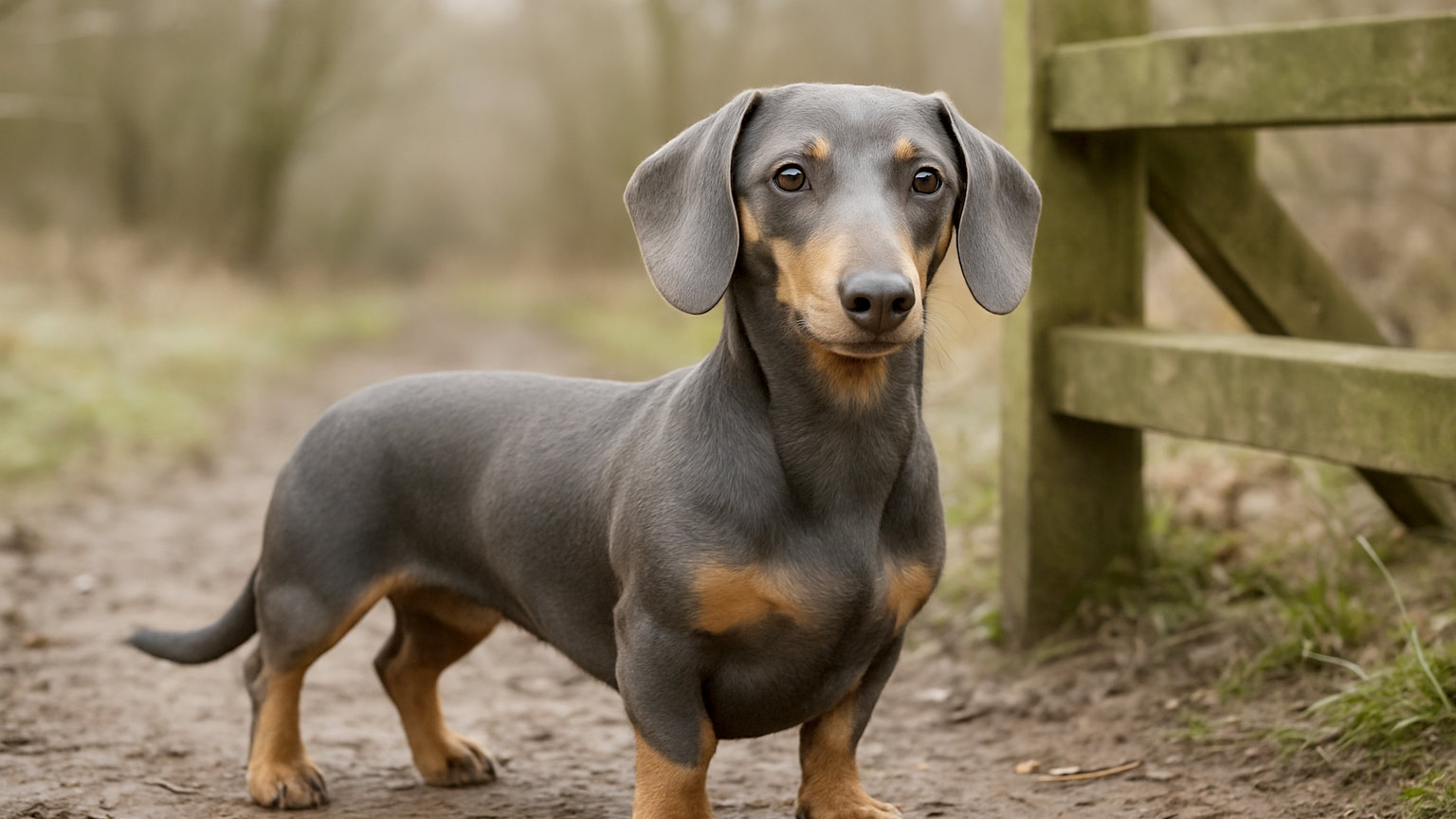
Dachshunds have climbed steadily in British registrations, helped considerably by how well they photograph. They are characterful, funny and genuinely rewarding dogs, but there are two things worth understanding properly before committing.
What is the temperament actually like?
Dachshunds were bred to go underground after badgers, which required a dog that was bold, persistent and willing to make decisions alone at a distance from its handler. Those traits survive intact.
In practice that means a small dog with a large opinion. They are affectionate and loyal with their own people, often devoted to one person in particular, and frequently wary of strangers. They bark readily, dig enthusiastically, and follow their nose with total commitment.
They are also more independent than most companion breeds, which affects training. A Dachshund will consider your request and decide. This is not stupidity, and harsh correction makes it worse rather than better.
Why does the back matter so much?
This is the dominant health issue in the breed. The long spine and short legs come from a form of dwarfism, and the same genetics affect the spinal discs, which degenerate early. Intervertebral disc disease affects a substantial proportion of Dachshunds, and roughly a quarter will show signs during their lifetime.
IVDD can range from pain and reluctance to move through to sudden hind limb paralysis. It frequently comes on quickly, sometimes over hours, and it is an emergency. Any Dachshund that suddenly cannot use its back legs, cries when picked up, or has a hunched posture needs a vet immediately, because early surgery greatly improves the outcome.
How do you protect the spine?
Several things genuinely help. Keep the dog lean, since excess weight loads the spine directly and is the biggest modifiable risk factor. Use ramps or steps for sofas and beds, and discourage jumping down from height.
Support the body properly when lifting, with one hand under the chest and one under the hindquarters, so the spine stays level rather than dangling. Use a harness rather than a collar to avoid neck strain. Limit stairs where you can, particularly going down.
Screening exists: some breeders X-ray for calcified discs, which correlates with IVDD risk. Ask whether the parents were screened.
Are they good with children?
They can be, with supervision. They are small enough to be injured by rough handling, and their back makes that risk more serious than in other small dogs. Some are impatient with young children. Teach children to sit on the floor rather than pick the dog up.
What about exercise and training?
Around forty-five minutes to an hour a day for a standard, less for a miniature, split into shorter walks. Avoid repeated jumping and hard twisting. Scent games suit them exceptionally well and are gentle on the back.
Toilet training frequently takes longer than average, and many dislike rain. Barking usually needs active management from the start rather than after it has become established.
Who suits a Dachshund?
Someone who finds independence entertaining rather than frustrating, who will keep the dog slim, and who can afford treatment or insurance for a breed with a well-documented and expensive spinal risk.
Which size and coat should you choose?
Dachshunds come as standard and miniature, and in smooth, long-haired and wire-haired coats. Smooth coats need very little grooming, long coats need brushing several times a week to prevent matting behind the ears and legs, and wire coats need hand stripping or clipping a few times a year.
Miniatures suit smaller homes but are more fragile and more easily injured by children or a fall from a sofa. Standards are sturdier and better suited to households with older children. Coat type has no bearing on back risk, which affects all varieties.
Whichever variety you choose, the priorities stay the same: keep the dog lean, support the back properly when lifting, discourage jumping down from furniture, and act immediately if the dog becomes reluctant to move. Those four habits do more for a Dachshund than anything else within an owner's control.