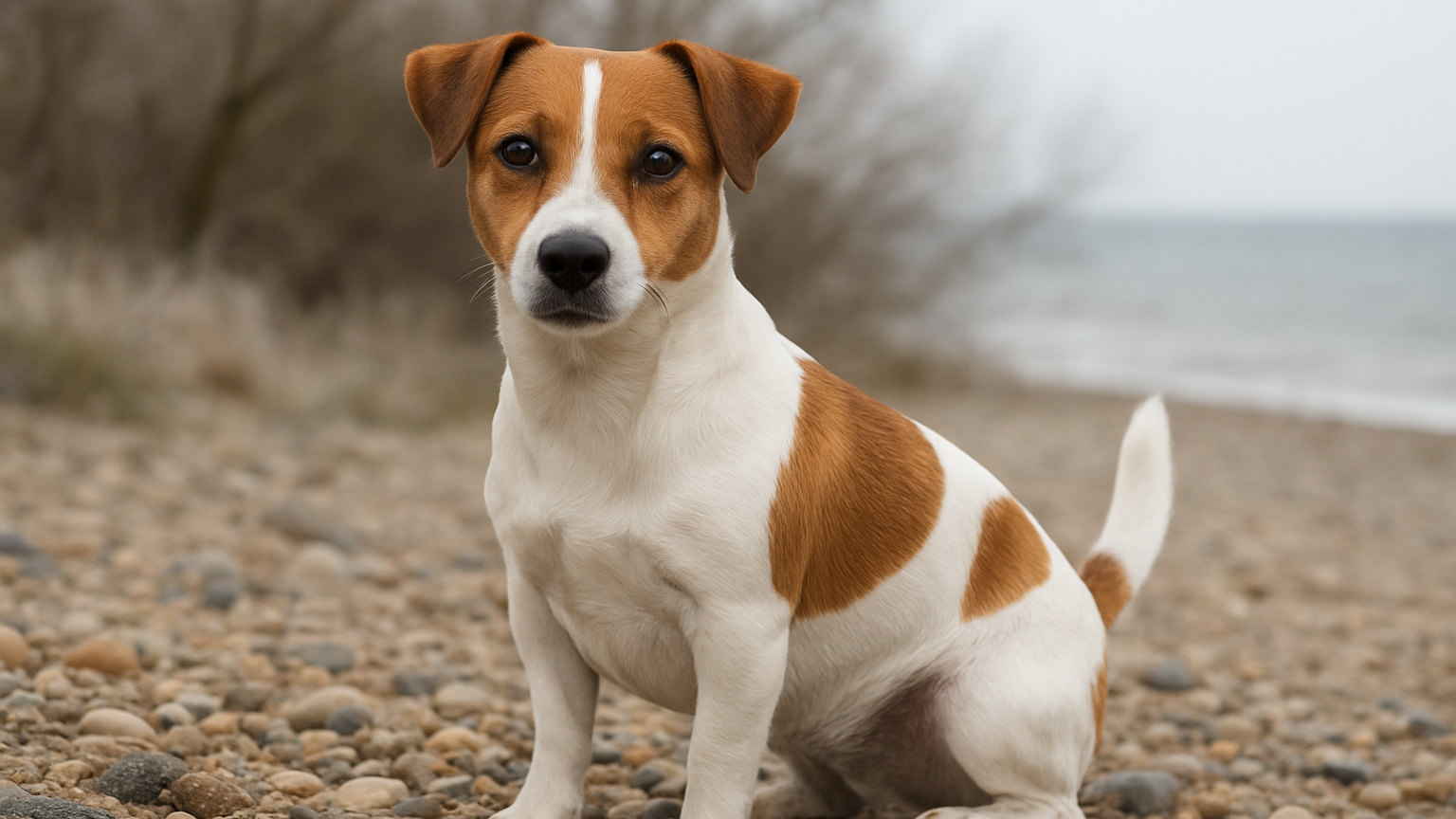
Jack Russells remain one of Britain's most common dogs, and they are frequently chosen on size alone. That is the root of most problems, because almost nothing about a Jack Russell's requirements follows from being small.
What is the temperament like?
The breed was developed to bolt foxes from underground, which required a dog that was fearless, tenacious, quick and prepared to work independently. Unlike many old working breeds, the Jack Russell has never been softened much by generations of purely companion breeding.
What you get is a bold, alert, extremely energetic dog with strong opinions and no apparent awareness of its size. They are affectionate and funny with their families and often intensely loyal. They also bark, dig, chase and challenge things considerably larger than themselves.
How much exercise do they need?
Far more than their size suggests. An adult needs at least an hour a day, and many are happier with more, plus regular mental work. A Jack Russell walked round the block twice will be bored, and a bored terrier is destructive and vocal.
They excel at anything involving speed, problem solving or scent. Agility, flyball, scent work and earthdog-style games suit them, and puzzle feeders and hidden food are useful daily.
How strong is the prey drive?
Strong, and it is the single biggest practical consideration. Jack Russells will chase squirrels, cats, rabbits and small pets, and once in pursuit many become effectively deaf to recall.
This has consequences. Recall training needs to start early and be maintained with high-value rewards, off-lead freedom needs to be earned in safe places, and households with rabbits, guinea pigs or hamsters should think carefully. Cats can work if the dog is raised with them, but it is not guaranteed.
They also dig, and a garden fence needs checking at the base rather than just the top.
Are they good with children?
It depends on the individual and the children. They are robust and playful, which suits older children who understand boundaries. They are also less tolerant of rough handling than some breeds and may snap if repeatedly pestered.
They are small enough to be injured by a falling toddler, which produces defensive behaviour. Supervision and a safe retreat are essential.
How do you handle the barking?
Proactively. Alert barking is deeply embedded in the breed, and the aim is management rather than elimination. Reduce visual triggers at windows, teach a settle on a bed, reward quiet, and give the dog enough activity that it is not barking out of boredom. Waiting until barking is established makes it much harder to change.
How long do they live?
Unusually long, frequently thirteen to sixteen years and sometimes beyond. This is a genuine advantage of the breed, but it means the commitment is longer than for most dogs and should be planned as such.
They are generally healthy, with primary lens luxation, patellar luxation and deafness among the conditions worth asking about. DNA testing is available for lens luxation.
Who suits the breed?
Active people who enjoy training and find terrier character entertaining. Anyone wanting a quiet, low-energy lap dog has chosen wrongly, and the mismatch is why so many end up in rescue.
Which type and size should you expect?
Coats come in smooth, rough and broken, and the difference is mostly grooming: smooth coats need a weekly brush, rough and broken coats benefit from hand stripping a few times a year.
There is also a distinction between the Jack Russell and the taller, squarer Parson Russell Terrier, which is a separate recognised breed. Many dogs sold as Jack Russells are unregistered and vary considerably in height and build, so judge the parents in front of you rather than the label.
Whatever the type, the temperament is the constant. A Jack Russell is a working terrier in a small package, and the households that do well with them are the ones that treat the dog as exactly that rather than as a lap dog which happens to bark.