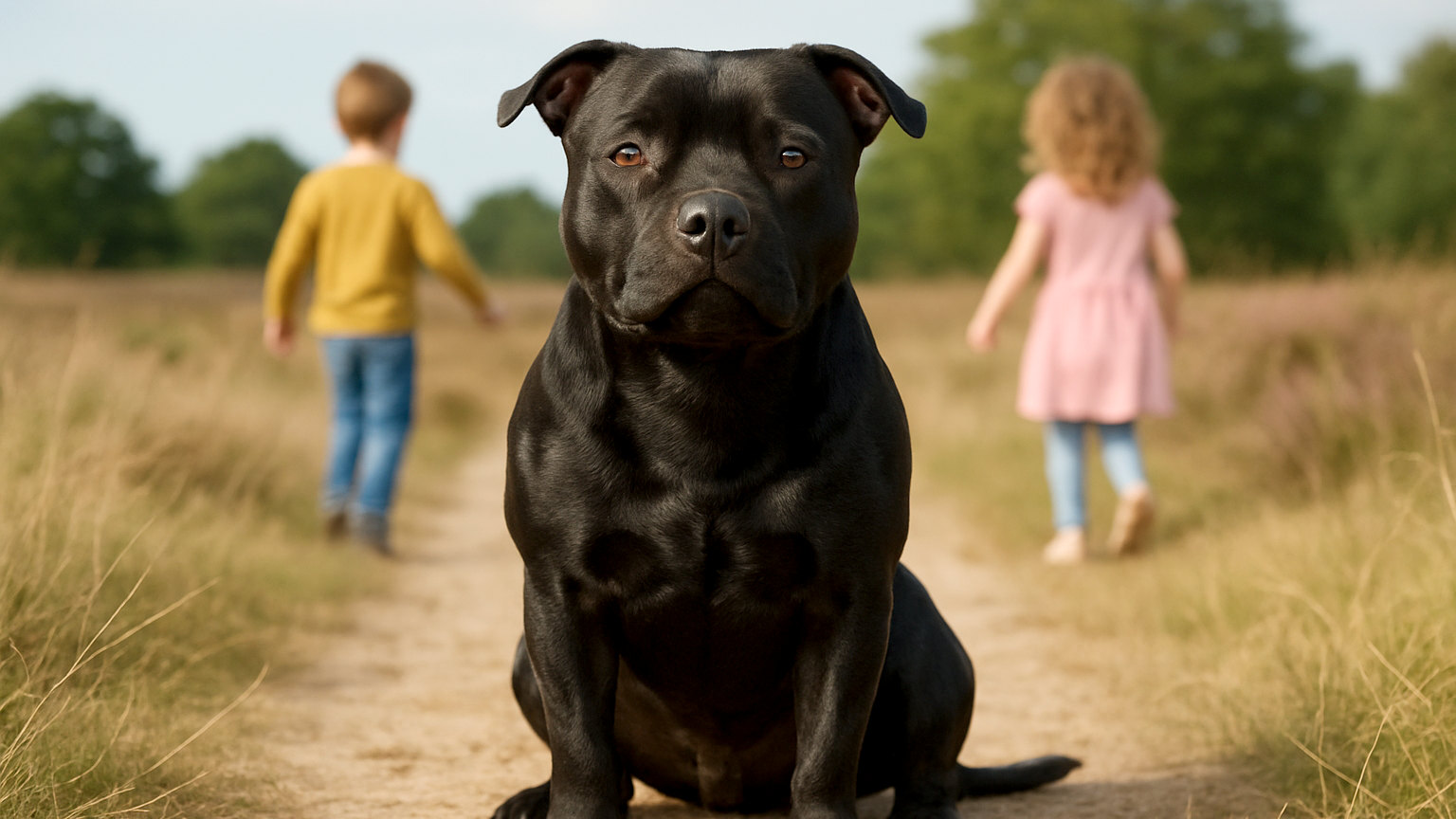
Few breeds carry a gap this wide between public reputation and the experience of people who live with them. Staffordshire Bull Terriers remain among Britain's most common dogs and among the most frequently misunderstood.
Where does the reputation come from?
The breed descends from dogs used in nineteenth-century blood sports, which is where the association with fighting originates. That history shaped the breed in one specific way that still matters: dogs were selected to tolerate handling in high-arousal situations, because handlers needed to separate them safely.
Selection therefore ran strongly against human-directed aggression. This is why the breed developed its old nickname as a nanny dog, a phrase now discouraged because it implies dogs can be left unsupervised with children, which is never true of any breed.
Media coverage and confusion with other bull breeds, including the banned Pit Bull Terrier type, have done the rest.
What are they like with children?
Generally excellent. Staffies are typically people-focused, affectionate, tolerant of handling and physically robust enough to cope with clumsy contact without becoming defensive. They are enthusiastic and often extremely licky.
The main practical issues are strength and exuberance rather than temperament. A Staffie is muscular and solid, and a delighted adult dog can easily knock over a small child. Teaching a calm greeting and a settle on cue matters a great deal.
Standard supervision rules apply as they do for every breed: give the dog somewhere to retreat to, leave it alone when it is eating or asleep, and teach children to read when the dog wants space.
What about other dogs?
This is the honest caveat, and it is where the breed's history does show. Some Staffies are less tolerant of other dogs, particularly of the same sex, and may not defuse a confrontation the way many breeds do.
Early and continued socialisation makes a substantial difference, as does avoiding chaotic off-lead free-for-alls where a scuffle can escalate. Many Staffies are perfectly sociable with other dogs. Some are best as an only dog, and that is worth planning for rather than discovering.
How much exercise do they need?
Around an hour a day, plus mental work. They are strong and athletic but not endurance dogs, and they overheat more readily than they look as though they should because of their broad, relatively short muzzle. Take care in hot weather.
They are enthusiastic chewers, so durable toys and chews are a practical necessity rather than a luxury.
What health issues affect them?
Two inherited conditions have DNA tests and both parents should be clear or tested appropriately: L-2-hydroxyglutaric aciduria and hereditary cataract. Hip dysplasia and skin allergies are also seen, and the breed is prone to skin problems and mast cell tumours.
Should you consider one?
If you want an affectionate, robust, people-loving family dog and can manage the possibility of dog-directed reactivity, they are among the best value choices available. Staffies fill British rescue centres, so adopting an adult with a known temperament is realistic and sensible.
Are Staffies banned or restricted in the UK?
No. Staffordshire Bull Terriers are a fully recognised breed and are not restricted under the Dangerous Dogs Act. The confusion arises because the Act bans the Pit Bull Terrier type, which is judged on physical characteristics rather than pedigree, and Staffies are sometimes mistaken for it.
What does affect owners is housing and insurance. Some landlords and letting agents refuse bull breeds, and some insurers charge more or decline cover. Check before committing if you rent.
Owners are legally responsible for keeping any dog under control in all places, including at home, so the general law applies as it does to every breed.
If you are considering the breed, visit a rescue and meet several. Staffies are among the most common dogs in British rescue centres, so adopting an adult means temperament, dog tolerance and energy level are already known rather than hoped for. Staff will tell you honestly which of their dogs suit a household with children.