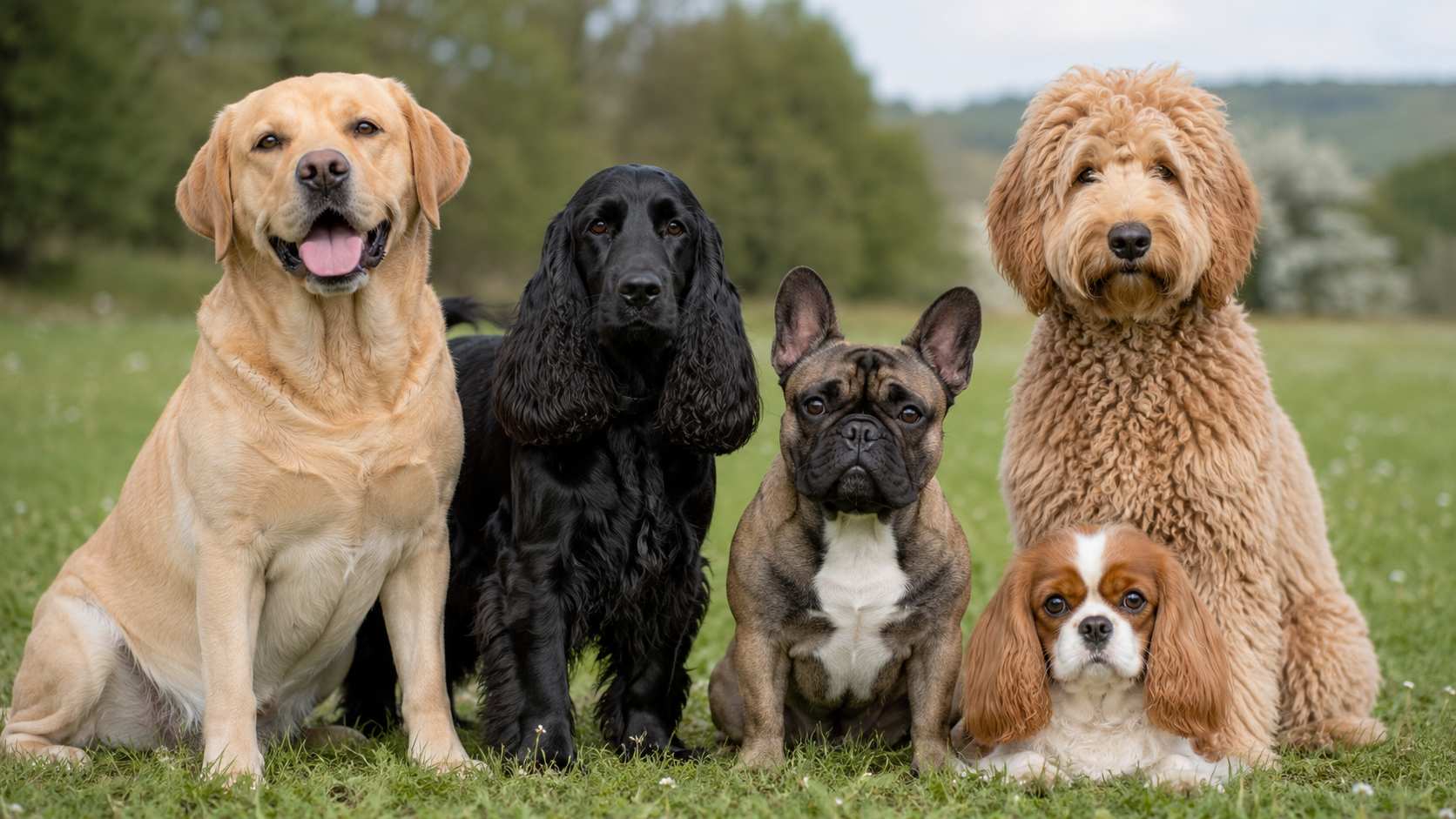
Rescue centres see the same conversations repeatedly, and the dogs involved are usually normal examples of their breed doing exactly what that breed does. The problem is almost never the dog. It is the gap between what someone expected and what they chose.
Which mismatches cause the most problems?
The first is energy. Working breeds such as Border Collies, working Cockers, Springers and Malinois are bred to work for hours under direction. Placed in a household offering an hour's walk and a quiet evening, they redirect that drive into the house. This accounts for a substantial share of adolescent rehoming.
The second is time alone. Many popular breeds, including Labradors, Goldens, Cockers and most companion breeds, were selected to work closely with people and cope poorly with long isolation. A full-time office job with a dog alone from eight until six is a poor fit for most of the top ten.
The third is grooming. Low-shedding coats such as those on Cockapoos, Poodles and Bichons require frequent brushing and regular professional grooming. People choosing them to avoid hair are often unprepared for the cost and time.
What about size and strength?
A dog you cannot physically manage during adolescence is a real problem. German Shepherds, Labradors, Goldens and larger crossbreeds all go through a phase between eight and eighteen months where they are big, strong and not yet sensible.
If a member of the household is elderly, unsteady or physically limited, an adolescent large breed can be genuinely unsafe. Training loose lead walking early helps enormously, but so does choosing realistically at the start.
Does the household make a difference?
Considerably. Households with young children benefit from tolerant, predictable, robust breeds. Sensitive breeds that startle easily, or terriers with lower tolerance for pestering, are harder work in a busy home.
Existing pets matter too. Breeds with high prey drive, including most terriers and many sighthounds, need careful thought where there are cats or small animals. Some bull breeds are less tolerant of other dogs and may be better as an only dog.
What about cost?
Running costs vary far more than purchase price. Large breeds eat considerably more and cost more for medication, which is dosed by weight. Insurance varies dramatically, and breeds with known health problems such as French Bulldogs attract high premiums with exclusions appearing early.
Grooming for a Poodle cross can exceed six hundred pounds a year. Work out the annual figure before choosing, not after.
What questions should you answer first?
Be honest about five things: how many hours the dog will be alone on a normal working day, how far you will walk in February rather than in June, how much time you will spend on grooming each week, what you can afford annually including insurance, and how much noise, hair and mud you can genuinely tolerate.
Answer those, then find breeds that fit. Doing it in that order is the difference between a dog that works out and one that ends up in rescue at fourteen months, which is precisely when most of them arrive.
What if you have already chosen wrongly?
It is more fixable than it feels, and rehoming is not the only option. Most mismatches are about unmet need rather than temperament, and adding structured mental work often changes the picture within weeks. Scent games, training sessions, puzzle feeders and a predictable routine address a great deal of what looks like a behaviour problem.
Enforced rest matters too. Many adolescent dogs described as hyperactive are chronically overtired, and reducing stimulation improves behaviour more reliably than adding another walk.
If the gap is genuinely unbridgeable, a breed-specific rescue will usually help, and doing that early and honestly is far better for the dog than waiting until the situation has deteriorated.
The uncomfortable truth is that most of this is predictable before the dog arrives. An honest hour spent working through your actual week is worth more than months of reading breed descriptions, nearly all of which were written to make every breed sound appealing.