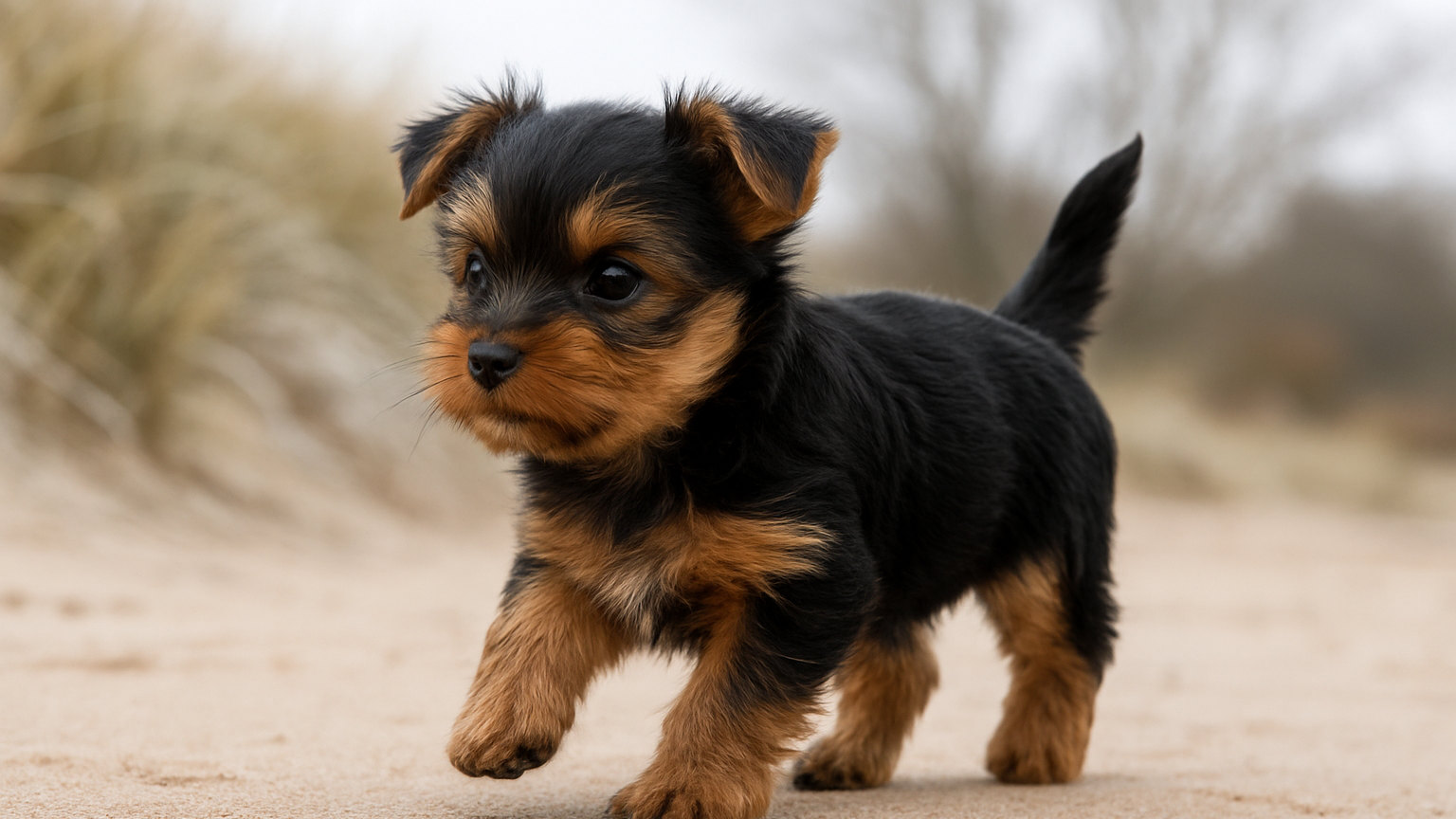
Owners of small breeds frequently report that toilet training took months rather than weeks, and the pattern is consistent enough to be real. The causes are practical, and understanding them makes the process considerably faster.
Why does it take longer?
The first reason is simple anatomy. A small puppy has a very small bladder and cannot physically hold on as long as a larger one. A toy breed puppy may need to go out every forty-five minutes when awake, which is a demanding schedule to keep up.
The second is that accidents from a small dog are easy to miss. A puddle from a Chihuahua can dry unnoticed, so the dog keeps returning to a spot that still smells of urine while the owner believes the area is clean.
The third is weather. Small dogs get cold and wet quickly, and a puppy that dislikes standing in the rain will often wait until it is back indoors. Owners who bring the dog straight back in after a minute outside unintentionally teach it to hold on until it is warm.
Do puppy pads make it harder?
Often, yes. Pads teach a dog that toileting indoors on a soft surface is acceptable, and many owners then find the dog treats rugs and bath mats the same way. Moving from pads to outdoors is a second training process rather than a natural progression.
Pads have a place if you live several floors up or cannot get outside quickly, but if you have direct outdoor access it is usually faster to skip them entirely.
What routine actually works?
Take the puppy out on a predictable schedule rather than waiting for signals: on waking, after every meal, after play, after any excitement and every forty-five to sixty minutes in between. Overnight, a young puppy will need at least one trip out.
Go to the same spot each time, stay quiet and still, and wait. Once the puppy performs, reward immediately and warmly on the spot rather than back indoors, because the reward needs to connect to the act itself.
Give the puppy a couple of minutes afterwards rather than going straight back in, so returning indoors does not become the thing that ends the fun.
How should you handle accidents?
Say nothing and clean thoroughly. Punishment teaches a puppy to hide where it toilets rather than to wait, which produces accidents behind the sofa and a dog reluctant to perform in front of you.
Use an enzymatic cleaner rather than a general household product. Ordinary cleaners leave scent traces a dog can still detect, and anything ammonia-based smells like urine and actively encourages repeat use.
If accidents suddenly restart in a previously reliable dog, consider a urine infection or other medical cause before assuming it is behavioural. This is common enough to be worth a vet appointment.
How long should it take?
Most small breed puppies are broadly reliable by four to six months, with occasional accidents beyond that. Full reliability often comes around eight months as bladder capacity increases.
Progress is rarely linear, and a regression after a settled period usually means going back a stage for a fortnight rather than starting again. Supervision is the constant: a puppy that cannot be watched should be somewhere safe and easy to clean.
Does neutering or age affect toilet training?
Age does, considerably. Bladder control improves steadily with maturity, and a puppy struggling at twelve weeks is often reliable by six months without anything changing in your approach.
Marking is a separate behaviour from toileting. Some entire males begin urinating small amounts on vertical surfaces around adolescence, indoors as well as out, and this is territorial rather than a lapse in training. Neutering reduces it in many but not all dogs, and the longer the habit has been established the less likely it is to disappear.
Older dogs that suddenly become unreliable should always be checked by a vet, since infections, kidney disease and cognitive decline all present this way.