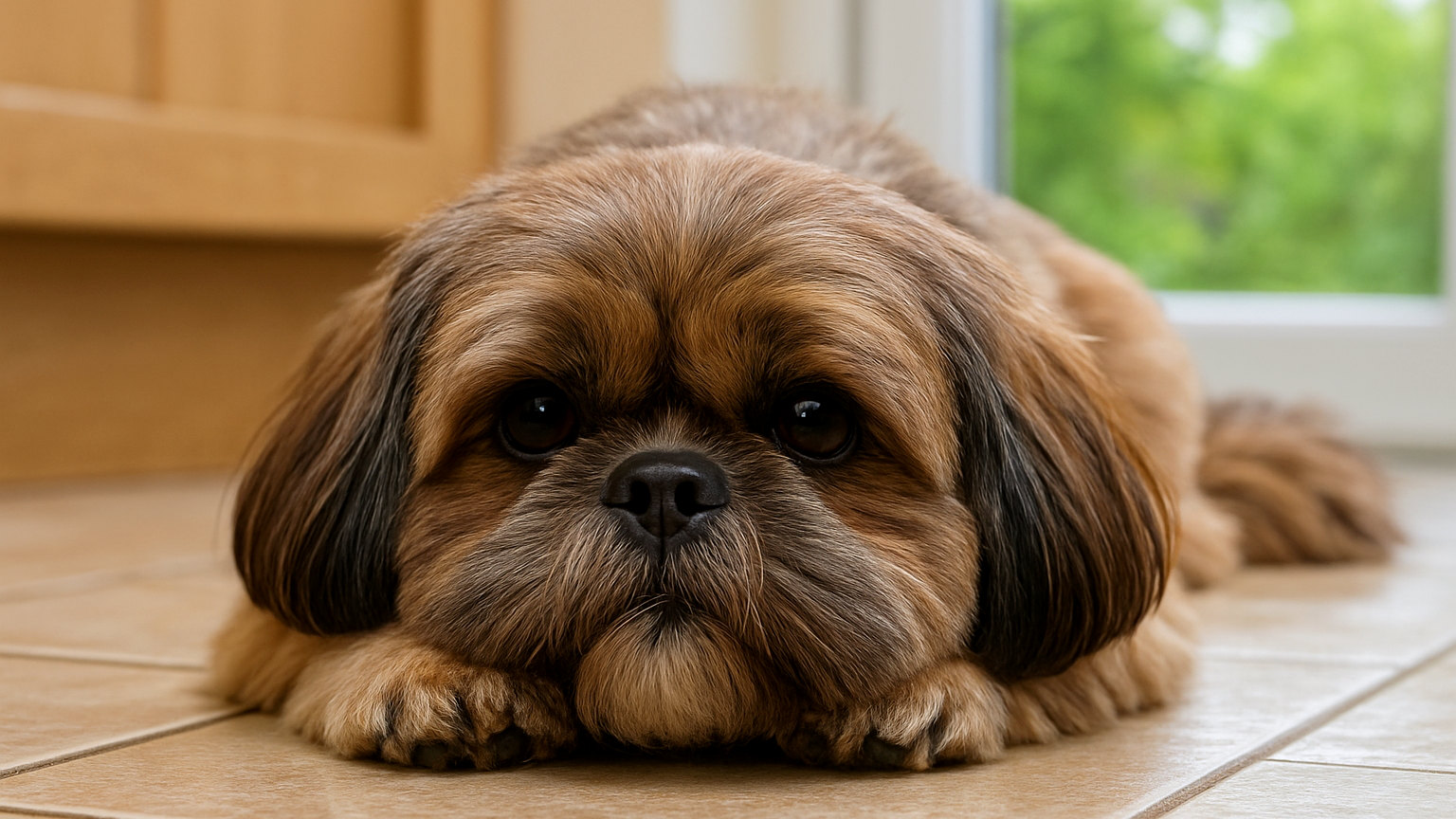
The Shih Tzu was bred for centuries as a palace companion, with no working role at all. That history shows in a dog that is generally content, sociable and undemanding in the ways that matter most to a first-time owner.
What is the temperament like?
Friendly, calm and people-oriented. Shih Tzus are typically affectionate without being clingy, sociable with strangers and other dogs, and rarely reactive or nervous.
They are less driven than terriers and less needy than some companion breeds, and they generally settle well indoors. They tend to be tolerant of children, though like any small dog they are physically vulnerable to rough handling.
They are also stubborn in a good-natured way. A Shih Tzu will often decide it would rather not, which is a training consideration rather than a temperament problem.
How much exercise do they need?
Modest. Thirty to sixty minutes a day, split into two shorter walks, suits most adults. They enjoy pottering and sniffing rather than covering distance.
This is genuinely convenient for a first-time owner, though it is not zero. A Shih Tzu that never leaves the house becomes bored and unfit, and daily walks matter for stimulation as much as fitness.
They are moderately brachycephalic, with a shortened muzzle, so warm weather needs care. Walk early or late in summer and watch for noisy breathing or reluctance to continue.
What is the grooming commitment?
This is the part most first-time owners underestimate. The coat is long, fine and grows continuously, and it mats readily behind the ears, under the legs and around the collar.
A full coat needs daily brushing. Most owners keep their Shih Tzu in a shorter puppy clip, which reduces brushing to a few times a week but requires professional grooming every six to eight weeks.
The face needs daily attention. Hair grows into the eyes and needs tying up or trimming, and the folds around the muzzle collect food and moisture and need wiping. Eyes are prominent and prone to injury and ulceration, so any squinting or discharge needs a vet promptly.
Are they easy to train?
Moderately. They are not driven to work with people the way a retriever is, so training relies on making it worth their while. Short, frequent, reward-based sessions work well.
Toilet training frequently takes longer than average, which is common across small breeds and is about bladder size and weather tolerance rather than intelligence. Patience and a strict routine are what solve it.
What health issues should you check?
Eye problems are the main concern, including corneal ulcers and dry eye. Breathing can be affected by the shortened muzzle, and moderately built dogs with visible nostrils are a considerably better bet than very flat-faced ones.
Hip dysplasia, patellar luxation and dental disease are also seen. Ask about the parents and prioritise a breeder producing dogs with some muzzle length.
So are they a good first dog?
Yes, provided you go in clear-eyed about the coat and the face. Temperamentally they are among the more forgiving small breeds, and their exercise needs suit a household that is not sporty.
If daily grooming and regular professional appointments do not appeal, choose a short-coated breed instead rather than hoping it will be manageable.
What are they like with other dogs and being left?
Generally sociable with other dogs and rarely confrontational, which makes walks straightforward and suits households considering a second dog later.
Being left alone is more of a consideration. Shih Tzus were bred entirely for company and many find long isolation difficult. Build time alone gradually from the first week, starting with seconds rather than minutes, rather than waiting for a problem to appear.
If nobody is home for a full working day, this is not the right breed, and no amount of training fully compensates for a dog developed specifically to sit with people.
For the right household the Shih Tzu is among the easiest small dogs to live with. The question to answer honestly is not whether you like the temperament, which most people do, but whether you will keep up with the coat and the face.