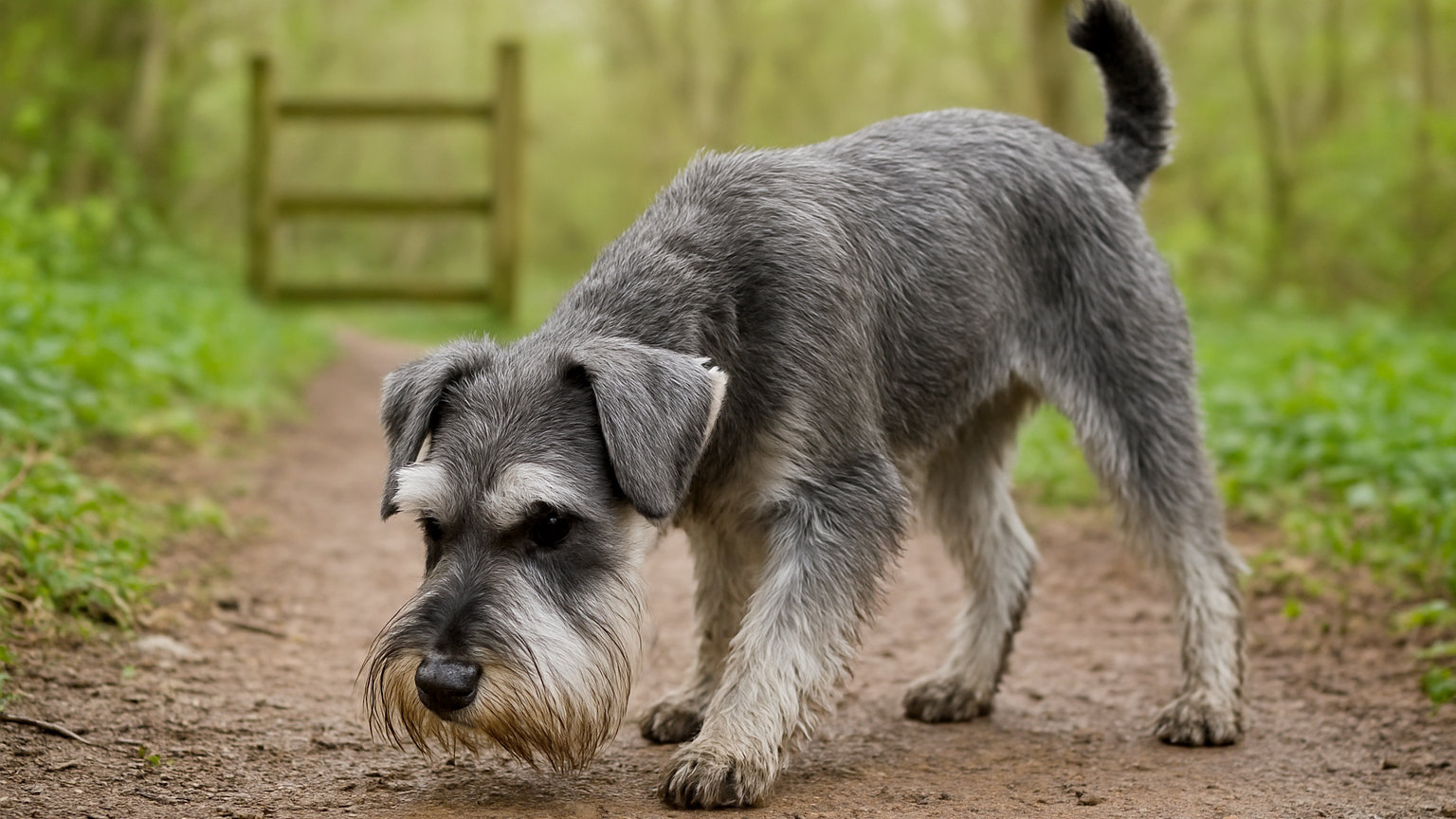
The Miniature Schnauzer sits reliably in Britain's most registered breeds, and it is one of the more genuinely versatile small dogs. It is also busier and louder than many owners expect from something that size.
What is the temperament like?
Schnauzers were bred as farm dogs to control rats and to alert to anything unusual. That produces a dog that is intelligent, confident, strongly bonded to its family and extremely attentive to what is going on.
They are typically affectionate and playful at home, good with children they have grown up with, and often more biddable than a typical terrier. They tend to be watchful of strangers initially and warm up quickly once introduced.
They are also opinionated. A Schnauzer that has decided something is worth barking about will need convincing rather than commanding.
How much do they bark?
A great deal, if allowed to. Alert barking is deeply embedded in the breed and is exactly what it was bred for, so the aim is management rather than elimination.
Reduce access to windows overlooking a street, teach a settle on a bed away from the front door, and reward quiet deliberately. Teaching a cue that means the dog has alerted and you have dealt with it works well for this breed.
Boredom barking is a separate problem and is solved with activity rather than management. A Schnauzer with nothing to do will find something to comment on.
How much exercise do they need?
Around an hour a day for an adult, plus mental work. They are athletic for their size and enjoy scent games, training, agility and anything involving problem solving.
They are quick learners and genuinely enjoy training, which makes them rewarding to work with. Short, frequent, reward-based sessions suit them far better than long repetitive ones.
What is the coat commitment?
The wiry double coat sheds very little, which is part of the appeal, but it needs regular attention. You have a choice between hand stripping and clipping.
Hand stripping removes dead hair from the root and maintains the correct wiry texture and colour. It takes longer and costs more, and needs doing a few times a year. Clipping is quicker and cheaper but softens the coat over time and often fades the colour.
Either way the beard and leg furnishings need brushing several times a week and the beard needs cleaning regularly, since it collects food and water throughout the day.
What health problems affect the breed?
Pancreatitis is a notable concern, and Schnauzers are prone to raised blood fat levels which contribute to it. A low fat diet suits many, and fatty human food should be avoided entirely.
Bladder stones are more common than in most breeds. Eye conditions including progressive retinal atrophy and hereditary cataract have DNA tests, and both parents should be tested. Myotonia congenita is also screened for.
Who suits the breed?
Active households that enjoy training and can live with a vocal dog. They are a poor fit for anyone wanting a quiet, undemanding lap dog, and their intelligence means an under-occupied Schnauzer becomes a nuisance rather than simply bored.
Are Schnauzers good with other pets?
Usually fine with dogs they are raised alongside, and often sociable on walks. Cats can work, particularly if the dog grows up with them, though the ratting heritage means some individuals will chase.
Small pets such as rabbits, guinea pigs and hamsters are a different matter. The breed was specifically developed to kill vermin, and expecting reliable restraint around a caged rodent is optimistic. Secure separation is the sensible approach rather than trusting training.
On walks, a strong recall matters. Practise it early with high-value rewards, before the adolescent phase where the nose starts to override instructions.
Overall the Miniature Schnauzer rewards involvement. Given daily training, sensible coat care and a job to think about, it is one of the most capable and characterful small dogs available in Britain.