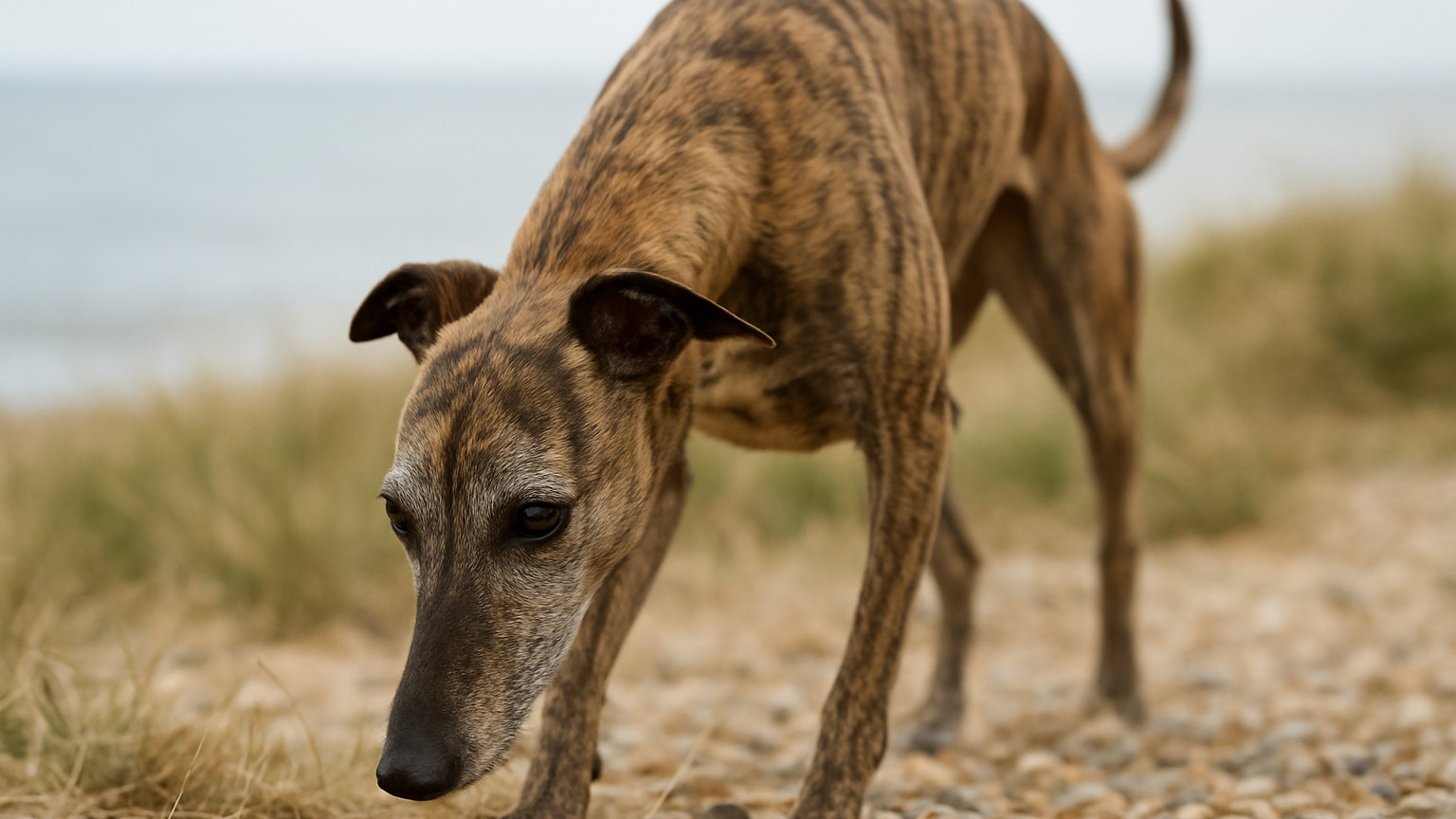
Medical alert dogs trained to detect hypoglycaemia are one of the more remarkable assistance roles, and the claims made for them online frequently outrun the evidence.
What do they actually detect?
Volatile organic compounds released in breath and through the skin as blood glucose falls.
Research has identified isoprene in breath as one compound that rises during hypoglycaemia, and dogs appear able to detect changes at concentrations far below anything a person could perceive.
The dog is not measuring blood glucose. It is responding to a scent signature that accompanies the change.
How are they trained?
Using scent samples collected by the person when their glucose is low, typically saliva or breath samples on swabs.
The dog learns to identify that specific scent and to perform a trained alert: pawing, nudging, staring, fetching a testing kit or retrieving another person.
Training is highly individual, since each person's scent signature differs, and it continues throughout the dog's working life with regular reinforcement.
How accurate are they?
Variable, and this is the part most often overstated. Studies have reported wide ranges in sensitivity, with some dogs performing very well and others considerably less so.
Accuracy depends on the individual dog, the quality and consistency of training, the handler's responsiveness and the environment.
False alerts happen, and missed events happen. A dog is a useful additional layer rather than a reliable detector.
How do they compare with continuous monitors?
Continuous glucose monitors give numerical readings, trend arrows and alarms, and are available through the NHS for many people with type 1 diabetes.
They are more accurate and more consistent than any dog, and the sensible position is that a dog complements a monitor rather than replacing it.
Some handlers report that their dog alerts before the monitor does, which is plausible given the different mechanisms, and it does not make the dog a substitute.
Dogs also offer something a device does not: they alert during sleep in a way people respond to, and they provide company and confidence.
Who qualifies in the UK?
Typically people with type 1 diabetes who have impaired awareness of hypoglycaemia, meaning they no longer reliably notice the warning signs.
Frequent severe hypoglycaemic episodes, particularly those requiring assistance from others, strengthen an application.
Organisations require evidence from a diabetes specialist team and expect existing management to be optimised first.
Waiting lists are long, and the number of dogs placed each year is small.
What does the handler have to do?
Considerable ongoing work. Collecting samples, rewarding correct alerts every time, testing whenever the dog alerts, and keeping records.
Alert behaviour degrades if it is not reinforced, so a dog whose alerts are ignored will stop alerting.
What is the honest summary?
For carefully selected people with impaired hypoglycaemia awareness, an alert dog can add genuine safety and confidence.
It should never be relied on as the only line of defence, and anyone with frequent severe hypoglycaemia should speak to their diabetes team about all available options.
What happens when the dog gets it wrong?
Test anyway. Handlers are advised to treat every alert as genuine and reward it, since ignoring alerts is what causes them to fade.
A run of false alerts is worth discussing with the training organisation rather than working around, since it usually reflects a training issue.
How long do they work?
Typically until around ten, depending on health. Retirement needs planning for, both practically and financially.
Most handlers keep the retired dog as a pet, which means running two dogs during any overlap with a successor.
Who trains them in the UK?
A small number of accredited charities, with the best known specialising in medical detection work.
Numbers placed each year are limited, and criteria are strict, so contact them early and read the eligibility guidance carefully.
What about scent detection more widely?
The same principle underpins research into dogs detecting other conditions, and some of that work is promising and still experimental.
Be cautious of anyone offering trained detection for conditions where no established programme exists.