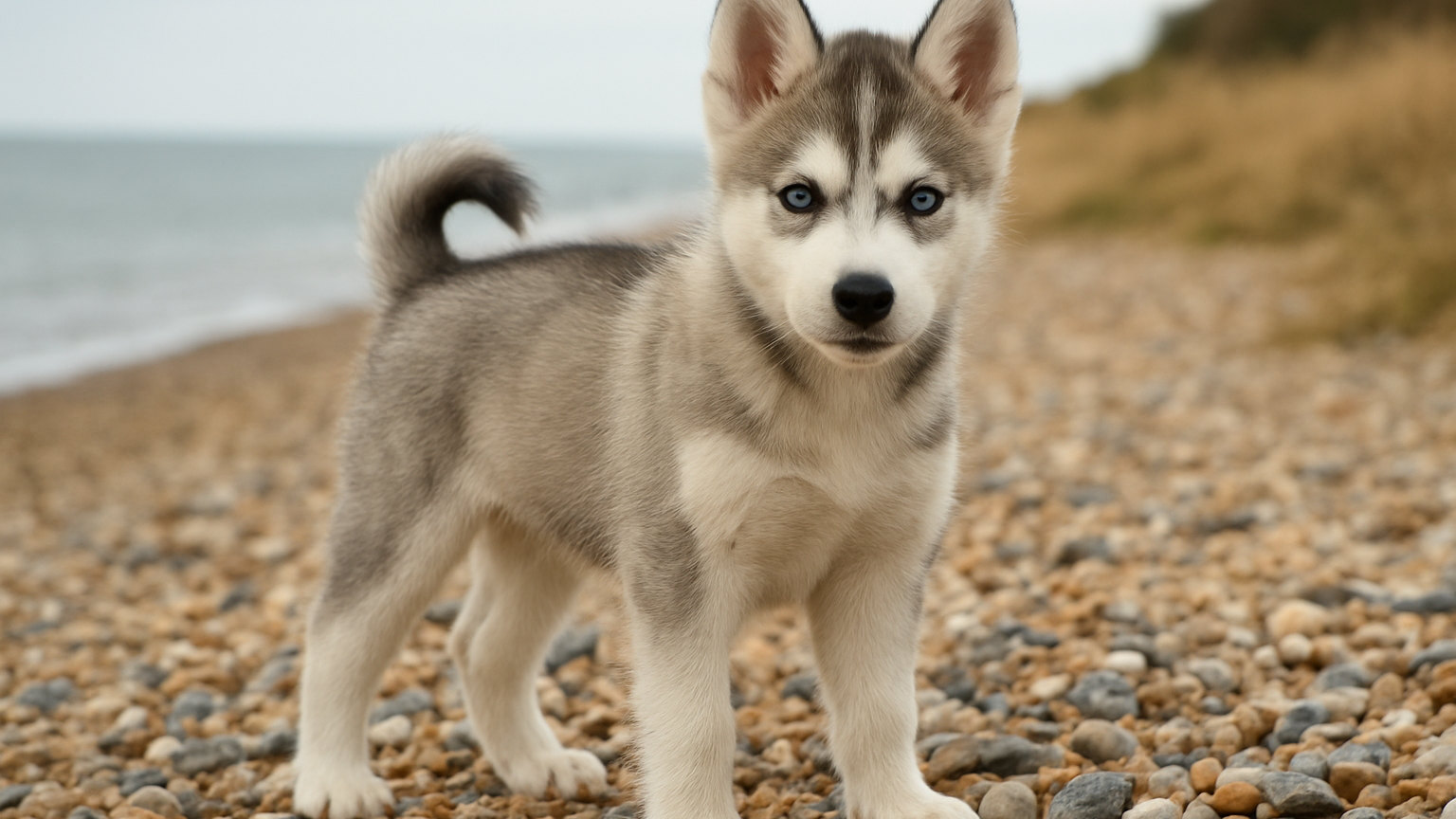
The puppy vaccination course looks straightforward and the reasoning behind it is more interesting than most owners realise, particularly the explanation for why one dose is not enough.
What is the usual schedule?
A first injection at around six to eight weeks, frequently given by the breeder before the puppy leaves.
A second at around ten to twelve weeks, at least two weeks after the first. Some protocols include a third at around sixteen weeks.
Leptospirosis requires two doses two to four weeks apart, given alongside the others. A booster follows at around twelve months old.
Why does a puppy need more than one dose?
Because of antibodies passed from the mother, mainly in the first milk. These protect the puppy in early life and also block vaccines from working.
The level of maternal antibody varies between individual puppies and fades at different rates, typically somewhere between six and sixteen weeks.
There is therefore a window where maternal protection has fallen too low to protect the puppy but is still high enough to interfere with the vaccine. Nobody can predict exactly when that window opens for a given puppy.
Giving multiple doses spaced apart maximises the chance that at least one lands after maternal antibodies have faded.
Why does the final dose age matter?
Because a small proportion of puppies retain maternal antibody until fourteen or sixteen weeks. A course finishing at ten weeks may leave those puppies unprotected.
This is why many vets now recommend a final dose at sixteen weeks or later, particularly for parvovirus and in breeds or bloodlines where higher maternal antibody levels are recognised.
Discuss it with your practice rather than assuming a two-dose course finishing early has definitely worked.
What should the breeder have done?
Given the first vaccination and provided a card showing the date, the product and the batch number, signed or stamped by the veterinary practice.
They should also have wormed the litter on a proper schedule and had the puppies microchipped, which is a legal requirement before sale.
Take all of this to your first appointment so the practice can continue the course correctly. A puppy arriving with no paperwork usually needs starting from the beginning.
Can vaccination start later?
Yes. A puppy that missed the usual window, or an older dog with no history, can start a primary course at any age, usually two doses two to four weeks apart.
Rescue dogs frequently fall into this category and it presents no particular difficulty.
What if a dose is delayed?
A short delay of a week or two is usually manageable and the course simply continues. A longer gap may mean starting again.
Ring the practice rather than guessing, since the answer depends on which vaccine and how long has passed.
Is the puppy protected straight away?
No, and this catches people out. Immunity develops over one to two weeks after the final dose, so a puppy is not protected on the day of its last injection.
Your vet will tell you the date from which the puppy can safely walk in public places. Until then, socialisation should continue by carrying the puppy rather than by putting it on the ground.
What if the puppy seems unwell on the day?
Mention it before the injection is given. Vaccination is usually postponed in a puppy with a temperature, diarrhoea or any sign of illness, since the immune response may be poorer and it complicates interpreting any reaction.
A short delay of a few days rarely matters. What does matter is not vaccinating a puppy that is already fighting something.
Equally, do not delay the appointment because the puppy has mild loose stools after a food change without asking, since the practice would rather advise than have you simply not attend.
The practical summary is to follow the schedule your practice sets, keep the card, and ask specifically when the puppy can walk on the ground rather than assuming a date.