
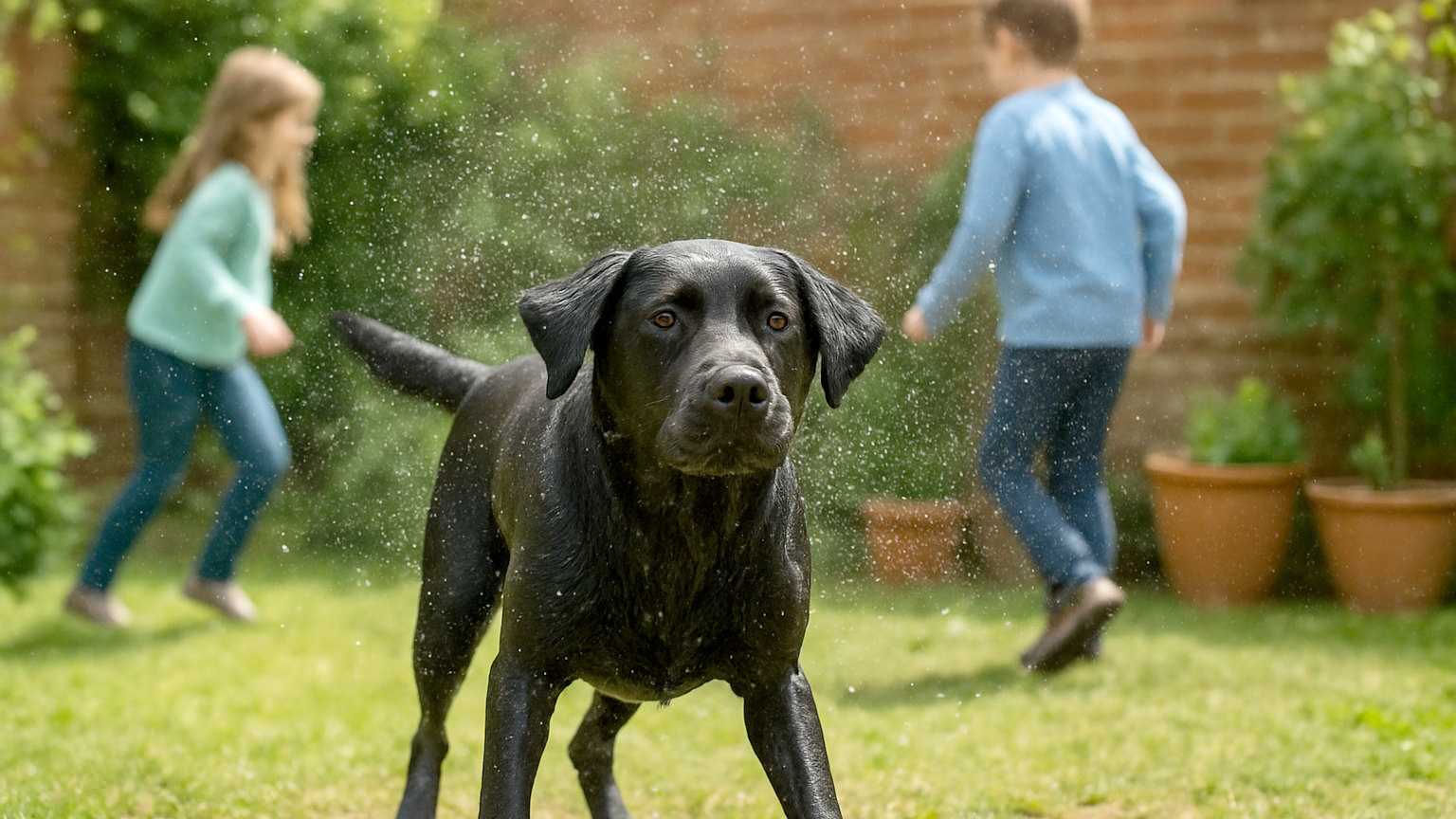
Naming feels like the fun part and has a few practical considerations that make daily life easier.
What makes a name work?
Brevity. One or two syllables carry better and can be said sharply, which matters when you need attention quickly.
Names with hard consonants and a clear ending cut through background noise well. Names that trail off are harder for a dog to pick out.
Something distinct from the words you use around the house, so the dog can identify it easily.
What should you avoid?
Names that sound like common cues. A dog called Bo will struggle when you say no. Kit sounds like sit, and Ray sounds like stay.
Names that sound like other household members or pets, which causes confusion for everyone.
Anything you would be embarrassed to shout across a busy park, which is the practical test people forget until they are doing it.
Very long names, which get shortened anyway, so choose the short version deliberately.
Should you rename a rescue dog?
You can, and dogs adapt quickly. A name is a learned cue rather than an identity, and most dogs learn a new one within days.
Renaming is worth considering where the old name has been poisoned, meaning it has come to predict something unpleasant. A dog that flinches at its name has told you it needs a new one.
It also matters where the old name sounds like a cue, or where you simply cannot get on with it.
How do you change a name?
Pair the new one with the old briefly, then drop the old. Say the new name and immediately give a treat, twenty or thirty times, before expecting any response.
Then use it in easy situations and reward every response. Within a week most dogs respond reliably.
Update the microchip record, the tag and your veterinary registration once you have settled on it.
What should the name mean to the dog?
Look at me, because something good is about to happen. That is the whole function.
Which means never using it to tell the dog off, to call it for something it dislikes, or repeatedly with no consequence. Those are the three ways a good name stops working.
Does the registered name matter?
For a Kennel Club registered dog, the registered name is frequently long and formal, including a breeder's kennel prefix. It is used on paperwork rather than day to day.
The everyday name is entirely your choice and need not resemble it.
How long should you take?
Some people decide in advance, others wait to meet the dog. Either is fine, though settling on it in the first week helps, since you will be using it constantly.
What if the household cannot agree?
Write down everyone's suggestions and try saying each one aloud in a firm voice, which eliminates several immediately.
Test the shortlist by using them for a day. The one you naturally reach for is usually the right one.
Does the name affect anything else?
Only practically. Registering with a vet, insurance, microchip records and a tag all use it, so settle on it before doing that paperwork.
Changing it later means updating all of them, which is a small nuisance rather than a real obstacle.
Should you keep a rescue dog's existing name?
Frequently the simplest option, particularly if the dog responds to it happily and it has no obvious drawbacks.
Continuity has some value during a period when everything else has changed, and a familiar sound is one less thing to learn.
Does the dog understand its name is a name?
No. To the dog it is a sound that predicts attention and usually something good, which is why what it predicts matters far more than what it is.
A well-chosen name used badly works worse than an awkward name used consistently.
What about names for a second dog?
Choose something that sounds clearly different from the first dog's name, since similar-sounding names cause confusion for both dogs and both are likely to respond.
Different vowel sounds and different lengths help considerably.


