
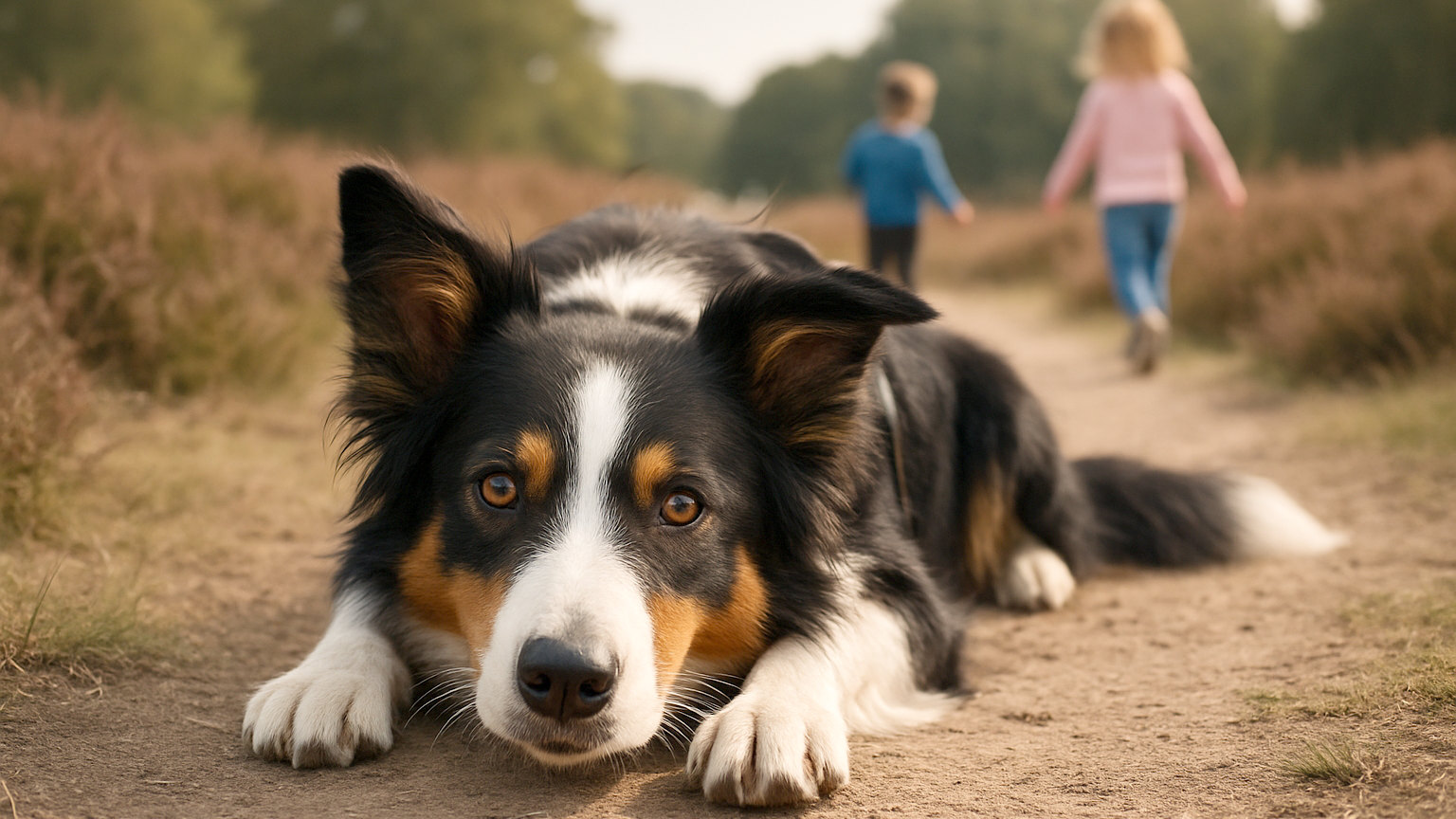
The first fortnight carries the highest risk of a dog going missing, and the reason is straightforward: the dog has no bond with you and no reason to stay.
Why is the risk so high?
Because a new dog does not know you, does not know where home is, and cannot find its way back if it panics.
Frightened dogs bolt, and a dog in flight can cover a considerable distance. Newly arrived rescue dogs, particularly those imported from abroad, are heavily represented among dogs that go missing.
Recall means nothing at this stage, however well trained the dog was elsewhere.
What equipment should you use?
A well-fitted harness rather than a collar alone. Collars slip over heads with alarming ease when a dog pulls backwards in panic.
A harness with two attachment points, or a harness and collar attached to separate leads, so there are two independent points of failure.
Check the fit properly: you should be able to fit two fingers under any strap and no more. Many escapes happen because a harness was too loose.
A collar with an identification tag showing your mobile number, which is a legal requirement in a public place and works instantly for anyone who finds the dog.
What about the microchip?
Confirm the registration has been transferred to you before the dog arrives, or immediately afterwards. A chip registered to a breeder or a rescue in another county is far less useful.
Note the number and know which database it is on, so you can report the dog as missing quickly if needed.
How do you secure the house and garden?
Walk the boundary and check at ground level as well as height. Gaps under fences, loose panels and spaces beside gates are the usual routes.
Fit a bolt to the gate and tell everyone to use it. Consider a note on the front door for deliveries.
Use a stair gate or a hallway barrier so the dog cannot reach the front door when it opens, which is where a great many escapes happen.
Brief everyone in the household, particularly children, about doors and gates.
When can the dog go off lead?
Not for weeks, and for many dogs months. Recall needs building from scratch in the new environment regardless of history.
Use a long line attached to a harness, never a collar, in open spaces, so the dog gets freedom without risk.
Secure fenced fields, which can be hired across the UK, are ideal during this period.
Are trackers worth it?
For the first months, many owners find them reassuring, particularly with a nervous or imported dog. A GPS tracker attached to the harness is a separate thing from a microchip and does show location.
What if the dog gets out?
Do not chase. Move away, crouch and encourage. Stay in the area where the dog last saw you, since many return to that point.
Report to the microchip database, the local authority dog warden, local vets and social media groups immediately rather than waiting.
What about car doors?
A frequently overlooked escape point. Attach the lead before opening the door, and teach the dog to wait rather than leaping out.
Use a boot guard or a crate so the dog cannot reach an opening door from inside the vehicle.
What should you do in the first days?
Keep the dog on a lead even in the garden if the fencing is not certain, and supervise every trip outside.
Check the boundary again after the dog has been out a few times, since dogs find gaps people miss.
What about the first few times off the property?
Double-check equipment before opening the front door every single time, and attach the lead indoors rather than on the doorstep.
Carry the dog's details on your phone, including a recent photograph and the microchip number, so you can act immediately if the worst happens.


