
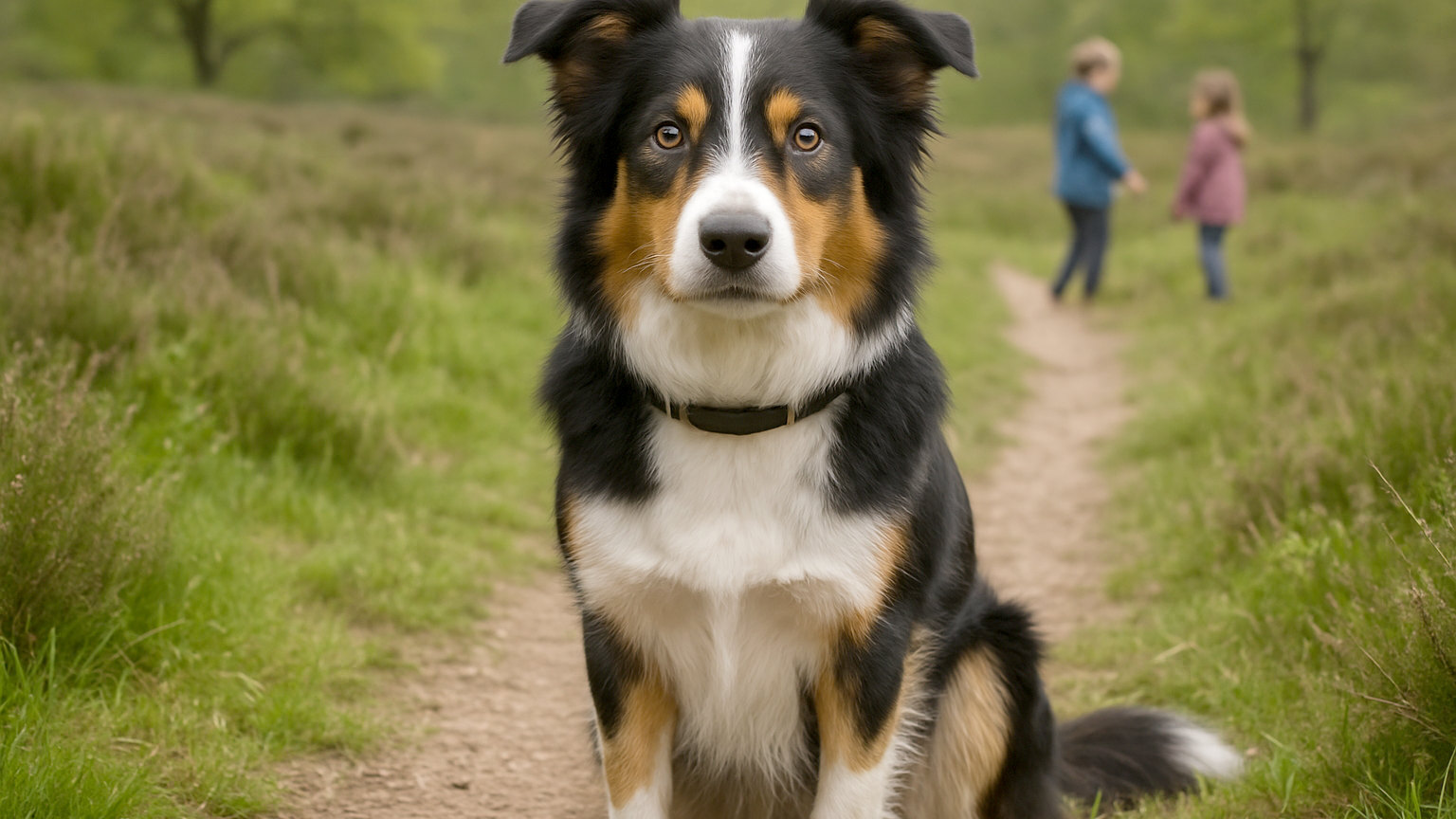
New owners are frequently keen to get out walking, and the dog usually benefits more from a quiet week at home first.
When should the first walk be?
For an adult dog, after a day or two of settling, and even then keep it very short: ten or fifteen minutes on a quiet route.
For a puppy, once your vet confirms it is protected, which is typically one to two weeks after the final vaccination.
Garden time and toilet trips start immediately in both cases.
Why start so short?
Because a new environment is mentally demanding, and mental effort tires a dog more than physical exercise does.
A long walk through a busy area on day two is overwhelming rather than settling, and frequently produces a dog that is more wired afterwards rather than calmer.
Short, quiet outings build confidence. Long, busy ones build stress.
Where should you go?
Somewhere quiet with good visibility and few other dogs. Early mornings and late evenings are considerably easier than mid-morning in a park.
Avoid narrow paths and blind corners where another dog could appear at close range, since you do not yet know how your dog reacts.
Vary the route only once the dog is confident. For a nervous dog, the same familiar route repeatedly is more reassuring.
What should the walk be for?
Sniffing rather than distance. A slow twenty minutes where the dog investigates every hedge is more valuable than a brisk mile.
Sniffing lowers arousal, provides mental stimulation and is how dogs gather information about a new area.
Do not work on lead manners yet. Let the dog explore and save training for later.
How do you build up?
Gradually over two to four weeks, adding a few minutes at a time and slowly introducing busier places.
Watch the dog rather than the clock. A dog that is panting heavily, pulling towards home, refusing treats or startling at ordinary things has had enough.
For puppies, formal exercise should stay limited while growth plates are open, commonly around five minutes per month of age twice daily.
What equipment should you use?
A well-fitted harness with two attachment points, or a harness and collar with separate leads, since newly arrived dogs slip out of equipment.
A fixed lead of one and a half to two metres for streets, and a long line attached to the harness for open spaces.
No off-lead exercise for weeks, and only once recall has been built in the new environment.
What if the dog will not walk?
Common, particularly with dogs that have never been on a lead or that find outside frightening. Do not drag the dog.
Start in the garden, then just outside the gate, then a few metres, building over days. Sit outside with the dog and let it watch before expecting movement.
What about other dogs on walks?
Keep your distance initially. You do not know how your dog reacts, and an early bad encounter can create a lasting problem.
Cross the road, step aside and let others pass rather than allowing on-lead greetings until you know the dog better.
How do you know the dog has had enough?
Pulling towards home, refusing treats it would normally take, panting heavily, startling at ordinary things, or simply stopping and refusing to move.
End the walk at that point rather than pushing on, and make the next one shorter.
What about dogs that have never walked on a lead?
Common with imported dogs and some rescue dogs. Start indoors with the harness alone, then a trailing lead, then a few steps in the garden.
Expect this to take a week or two before going out at all, and do not rush it because you feel the dog should be getting walks.
When can you relax the restrictions?
Gradually from around a month, as recall develops and you understand how the dog reacts to other dogs, traffic and people.
Off-lead freedom is earned through demonstrated recall in that environment rather than granted after a set period.


