
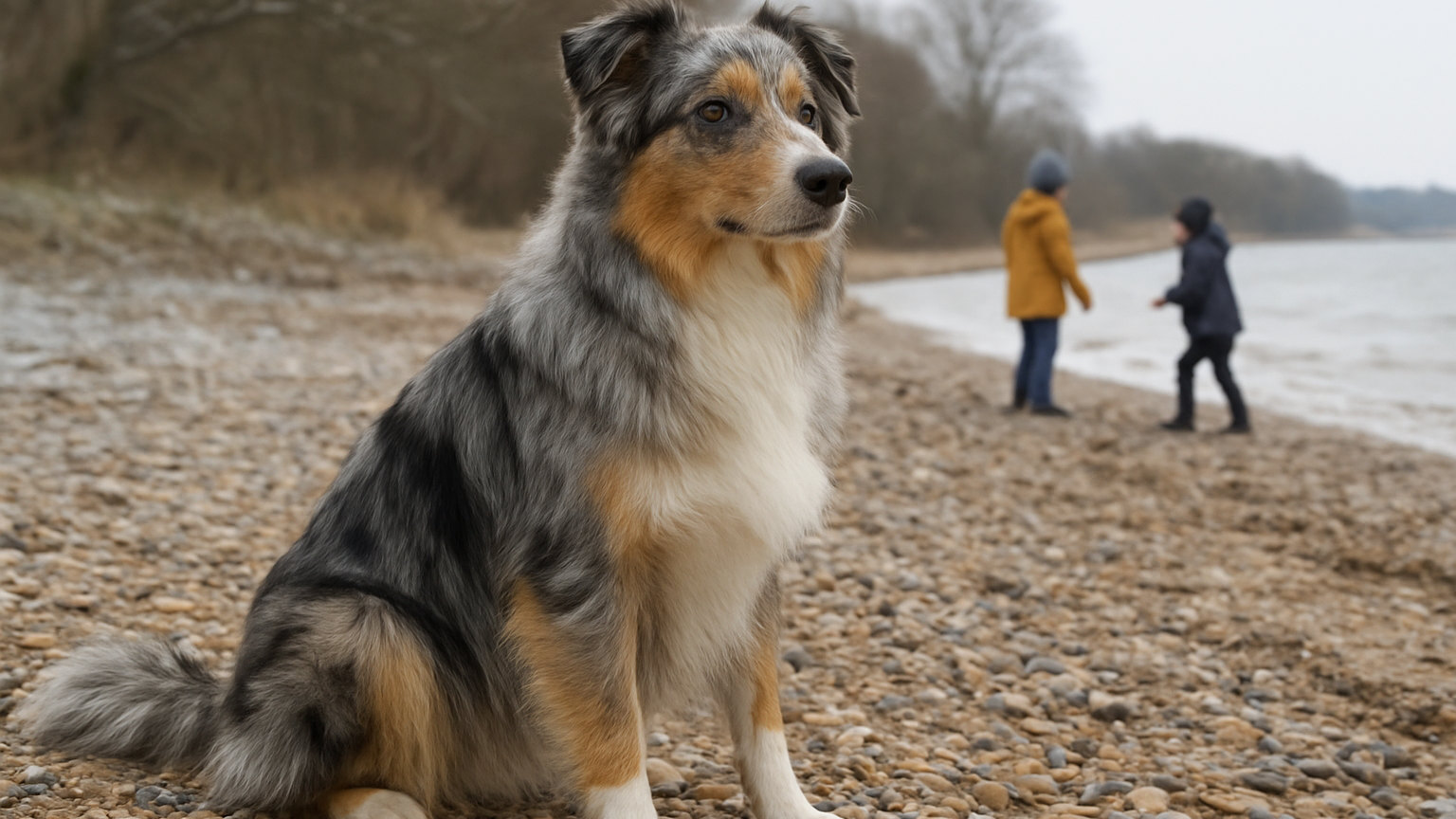
Water is excellent exercise for many dogs and carries risks that owners consistently underestimate.
Can all dogs swim?
No, which is a common misconception. Breeds with heavy bodies and short legs, including Bulldogs, French Bulldogs, Pugs and Dachshunds, swim poorly or not at all.
Flat-faced breeds have the additional problem that they must hold their heads high to breathe, which tips the body downwards.
Even strong swimmers tire, and cold water saps strength considerably faster than owners expect.
A buoyancy aid is worth using for any dog around deep or open water, and particularly for those breeds.
What is the biggest practical risk?
Getting out. Dogs enter water easily and then find steep, muddy or vertical banks impossible to climb.
Canals, reservoirs, weirs and rivers with engineered banks are the worst for this. Before letting a dog in, identify where it can get out.
This is the mechanism behind many drownings, rather than the swimming itself.
What about currents and tides?
Rivers in spate, weirs and outfalls carry dogs away quickly. Coastal rip currents do the same.
Tides cut off beaches and estuaries fast. Check tide times before coastal walks.
Cold water shock affects dogs as well as people, particularly in winter and early spring when air temperatures are misleading.
What is water intoxication?
A less known but serious condition where a dog ingests a large volume of fresh water in a short period, diluting blood sodium.
It typically affects dogs that repeatedly retrieve from water, bite at hoses or sprinklers, or swim with their mouths open.
Signs include lethargy, wobbliness, vomiting, bloating, glazed eyes, tremors and seizures. It progresses quickly and needs emergency treatment.
Prevent it by limiting continuous retrieving in water and giving frequent breaks.
What other hazards are there?
Blue-green algae in still fresh water during warm weather, which can be fatal and is covered separately.
Leptospirosis, spread through water contaminated with rat urine, which is a reason to keep vaccination current.
Fishing hooks, line and litter. Swallowing salt water at the beach. Ice in winter, which will not hold a dog.
What should you do if a dog gets into difficulty?
Do not go in after it. This advice is unambiguous, and people drown attempting rescues every year.
Ring 999 and ask for the fire service, or the coastguard at the coast. Call the dog from the bank, moving to a point where it can get out.
Most dogs get themselves out if there is somewhere to do so, which is why identifying exit points beforehand matters.
What should you do afterwards?
Rinse with fresh water, dry thoroughly, and pay attention to the ears, since damp ears frequently become infected in dogs that swim.
What about swimming pools and garden ponds?
Fence or cover them. Dogs fall in and cannot find the steps, and pool covers can trap a dog underneath.
If a dog has pool access, teach it where the steps are and practise using them.
What about dogs that cannot resist water?
Use a long line near open water rather than relying on recall, particularly around rivers, canals and reservoirs.
Recall is least reliable in exactly the situations where it matters most, and a dog already in the water cannot be called back up a vertical bank.
What about mud and tidal flats?
Estuary mud traps dogs and people, and attempted rescues are dangerous. Keep dogs on leads on tidal flats and saltmarsh.
Ring 999 and ask for the coastguard rather than going in after a dog stuck in mud.
What is the summary?
Know whether your dog can swim, identify how it will get out before it goes in, use a buoyancy aid around open water, and never go in after it.
What about after swimming in cold water?
Dry the dog thoroughly and warm it gradually, particularly thin-coated breeds and older dogs, which chill quickly.
Limbering stiffness and shivering after a cold swim are worth taking seriously rather than treating as normal.


