
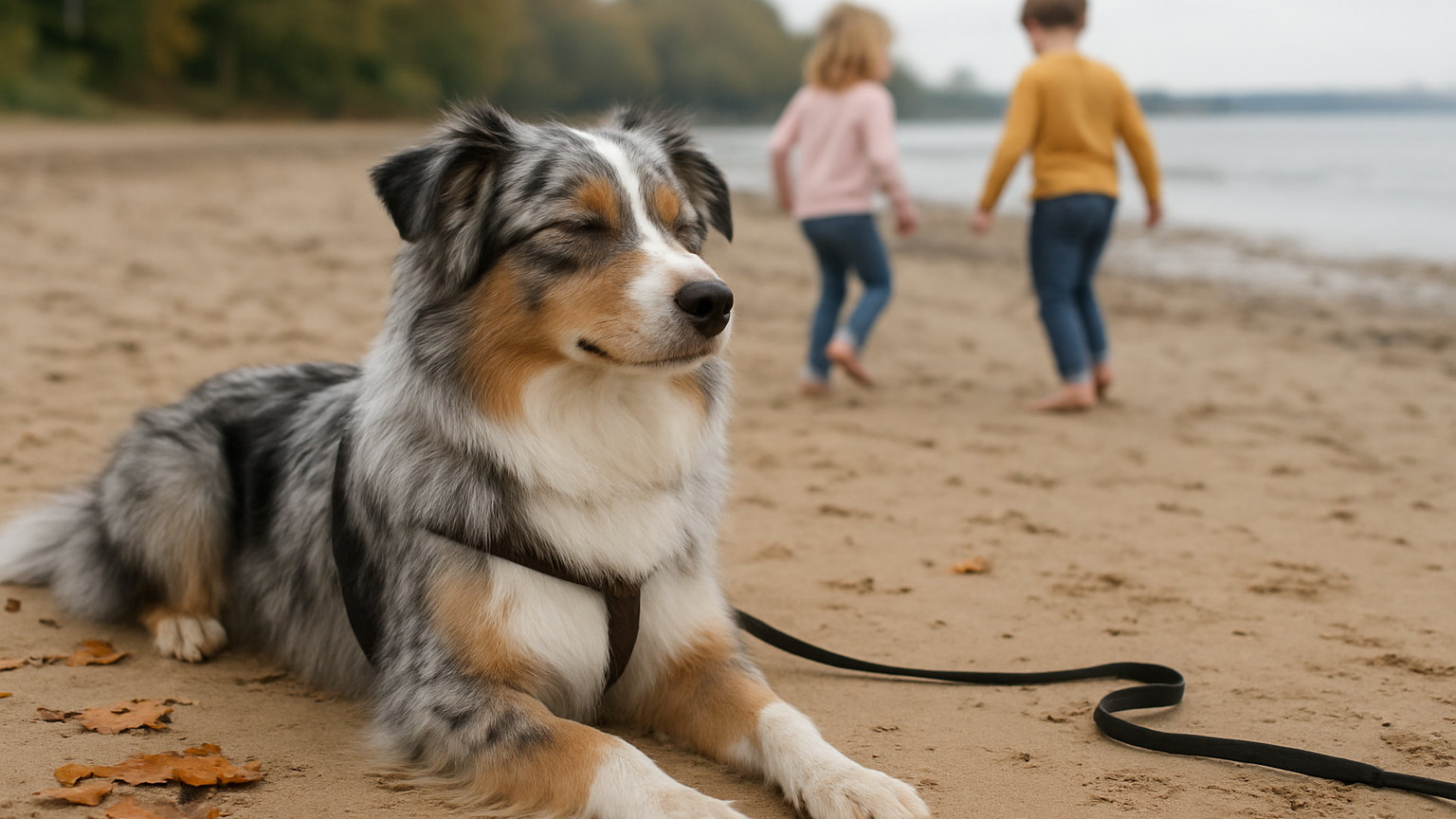
Autism assistance dogs are among the most established roles in Britain outside sight and hearing work, and they are placed with families rather than with an individual handler.
What do they actually do?
Anchoring is the central task. The child wears a belt attached to the dog's harness, with the parent holding the lead, so the dog can slow or stop a child who runs.
Bolting into roads and crowds is one of the most serious risks for autistic children, and this task addresses it directly.
The dog also provides deep pressure during distress, lying across the child's lap or legs, which many children find calming.
It interrupts repetitive behaviours by nudging, and provides a focus in overwhelming environments.
Some are trained to track a child who has left the house, and to alert parents to a child leaving a room at night.
What difference do families report?
Being able to go out. Families frequently describe supermarkets, appointments and holidays becoming possible again after years of avoiding them.
Better sleep, both for the child and consequently for the household.
Reduced meltdowns in public, and faster recovery when they happen.
Social benefits, since a dog gives other children an easy way to start a conversation and shifts attention away from the child's behaviour.
Research in this area is limited and mostly based on parent reports, so findings should be held loosely even though they are consistent.
Who provides them?
Several UK charities place autism assistance dogs, some accredited through Assistance Dogs UK and others operating independently.
Criteria vary considerably. Most work with children within a defined age range, commonly from around three to twelve at the point of application.
A formal diagnosis is required, along with evidence from professionals involved with the child.
Waits are long, frequently several years, and some lists close.
Who handles the dog?
A parent or carer, always. The dog is a working partnership between the adult and the dog, working for the child.
This is a common misunderstanding. The child does not handle the dog, and families need an adult able to take on the training, exercise and daily care.
What should families consider?
That it is a substantial addition to an already stretched household. The dog needs walking, grooming, veterinary care and training maintenance regardless of how the week has gone.
That not every autistic child responds well to a dog. Some are frightened of them, or find the noise, movement and smell aversive.
Meeting dogs beforehand is essential, and reputable organisations will assess this rather than assume.
What about school?
Access to school is not automatic. Schools are covered by the Equality Act and must consider reasonable adjustments, and arrangements are negotiated case by case.
Many autism assistance dogs work with the family outside school rather than accompanying the child into class.
What are the alternatives?
Some charities run family dog schemes, supporting families to train their own pet dog to help in specific ways, with much shorter waits.
How long does the process take?
Application, assessment and then a wait frequently measured in years, followed by intensive training with the dog.
Given typical age criteria, families are advised to apply early rather than waiting to see how the child develops.
What about siblings and the wider household?
The dog belongs to the family rather than to one child, and siblings frequently benefit from it too.
Organisations assess the whole household, including whether other children are comfortable with dogs and whether there is capacity for the work involved.
What should families ask?
What the dog will and will not be trained to do, what the handler's daily commitment is, what aftercare is provided and what happens at retirement.
Ask to meet existing partnerships, since talking to another family is more useful than any brochure.
What happens as the child grows up?
The dog's role changes, and in some cases an older child takes on handling with support.
Organisations reassess partnerships periodically and will discuss how the arrangement should adapt.


