Dogs communicate discomfort continuously and quietly. Most bites described as unprovoked were preceded by signals nobody recognised.
What are the early signals?
Turning the head away while a child approaches, which is a polite request for space.
Lip licking when no food is present, and yawning when the dog is not tired. Both are stress signals rather than what they appear.
Blinking rapidly, or looking away deliberately. Shaking the body off as though wet, when dry, which frequently follows a stressful moment.
Scratching or sniffing the ground suddenly for no reason, which is displacement behaviour.
What are the clearer signals?
Whale eye, where the dog turns its head away but keeps watching, showing the whites of the eyes. This is a significant signal and easy to spot once you know it.
Freezing, where the dog goes completely still. This is one of the most serious warnings and is frequently mistaken for the dog being relaxed.
A closed, tight mouth when it was previously open and loose. Ears back and flat. A tucked tail, or a tail wagging stiffly and high rather than loosely.
Moving away, hiding, or trying to get behind furniture.
What comes last?
Lip curling, showing teeth, growling, snapping at the air, and finally biting.
By the time a dog growls, several earlier signals have already been ignored. The growl is not the beginning of the problem.
What does a relaxed dog look like?
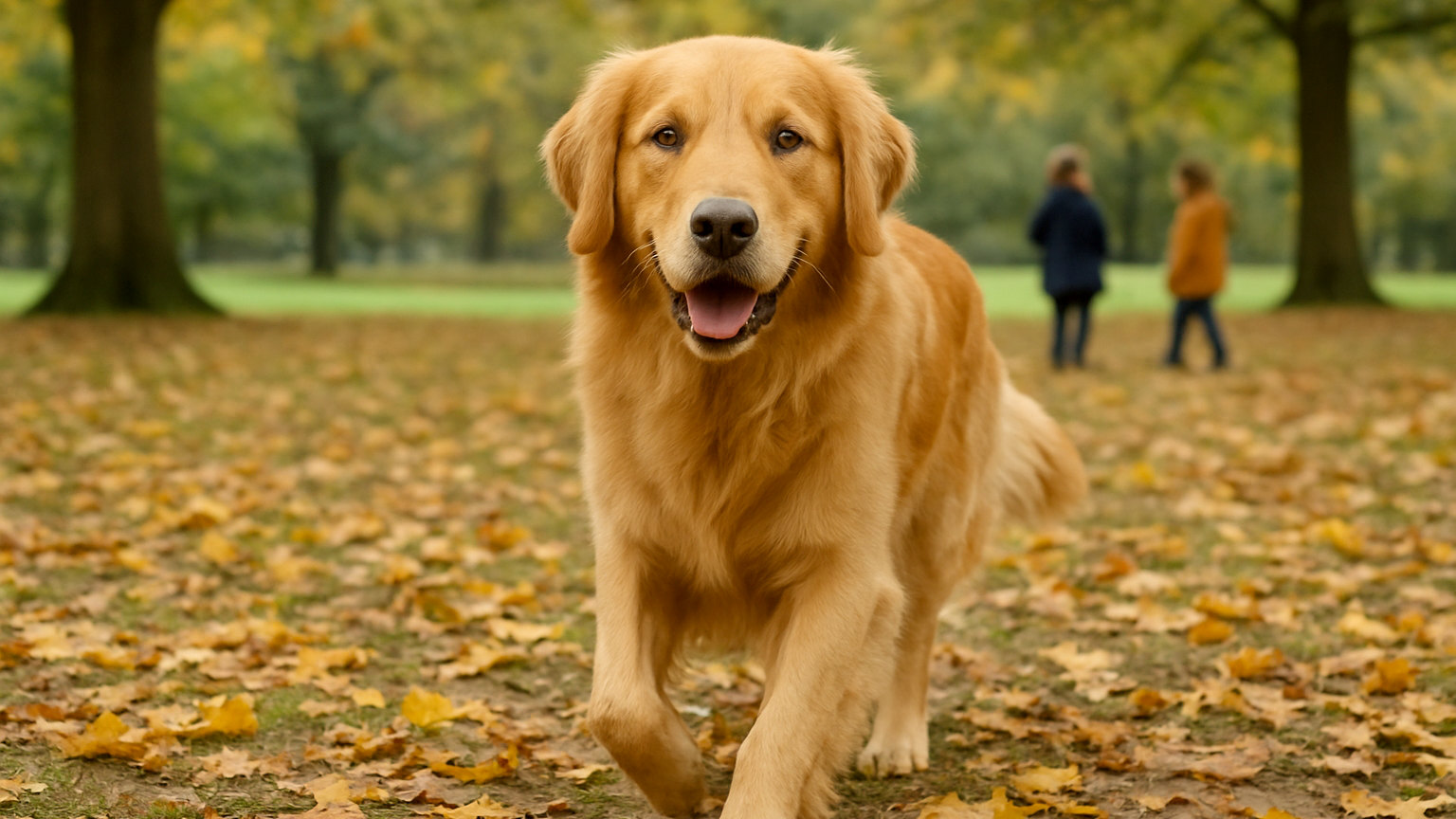
Worth knowing as a comparison. Loose, wobbly body, soft eyes, mouth slightly open, ears in a neutral position, tail wagging in a loose sweep involving the whole back end.
A relaxed dog moves fluidly rather than stiffly. Stiffness anywhere is worth noticing.
What is commonly misread?
Tail wagging, which indicates arousal rather than friendliness. A high, stiff, fast wag is not a welcome.
A dog rolling onto its back, which is frequently appeasement rather than a request for a tummy rub, particularly if the body is tense.
Yawning, interpreted as tiredness. Licking a child's face, which is frequently appeasement rather than affection.
A dog tolerating a hug while showing whale eye and a closed mouth, which appears in a great many family photographs.
What should you do when you see a signal?
Intervene immediately and calmly. Move the child away rather than telling the dog off, since the dog has done nothing wrong.
Give the dog space and let it retreat. Note what was happening, since patterns emerge.
Never punish a growl, which removes the warning without changing the feeling and makes a silent bite more likely.
How do you learn this?
Watch your own dog deliberately for a week and notice what it does in ordinary situations. Several UK welfare organisations publish free illustrated guides worth showing the whole household.
What about photographs?
Family photographs of children hugging dogs are extremely common and frequently show a dog displaying whale eye, a closed mouth and a turned head.
If you look at photographs of your own dog with children and see those signals, that is useful information rather than a criticism.
Where can you learn more?
Several UK welfare organisations publish free illustrated guides to canine body language, and some produce specific resources for families.
Going through one together as a household, including older children, takes twenty minutes and is among the most useful things a family with a dog can do.
What should you do about a growl?
Never punish it. Move the child away, note what caused it, and treat it as important information rather than misbehaviour.
Then arrange a veterinary check and behavioural advice, since a growl at a child is a clear warning that should not be left.
What should the whole household learn?
The same four or five signals, so everyone recognises them and everyone responds the same way.
Older children can learn these properly and frequently spot things adults miss, since they watch the dog more closely.
Learning four or five of these signals is the single most useful thing an adult in a dog-owning family can do, and it takes an afternoon.