
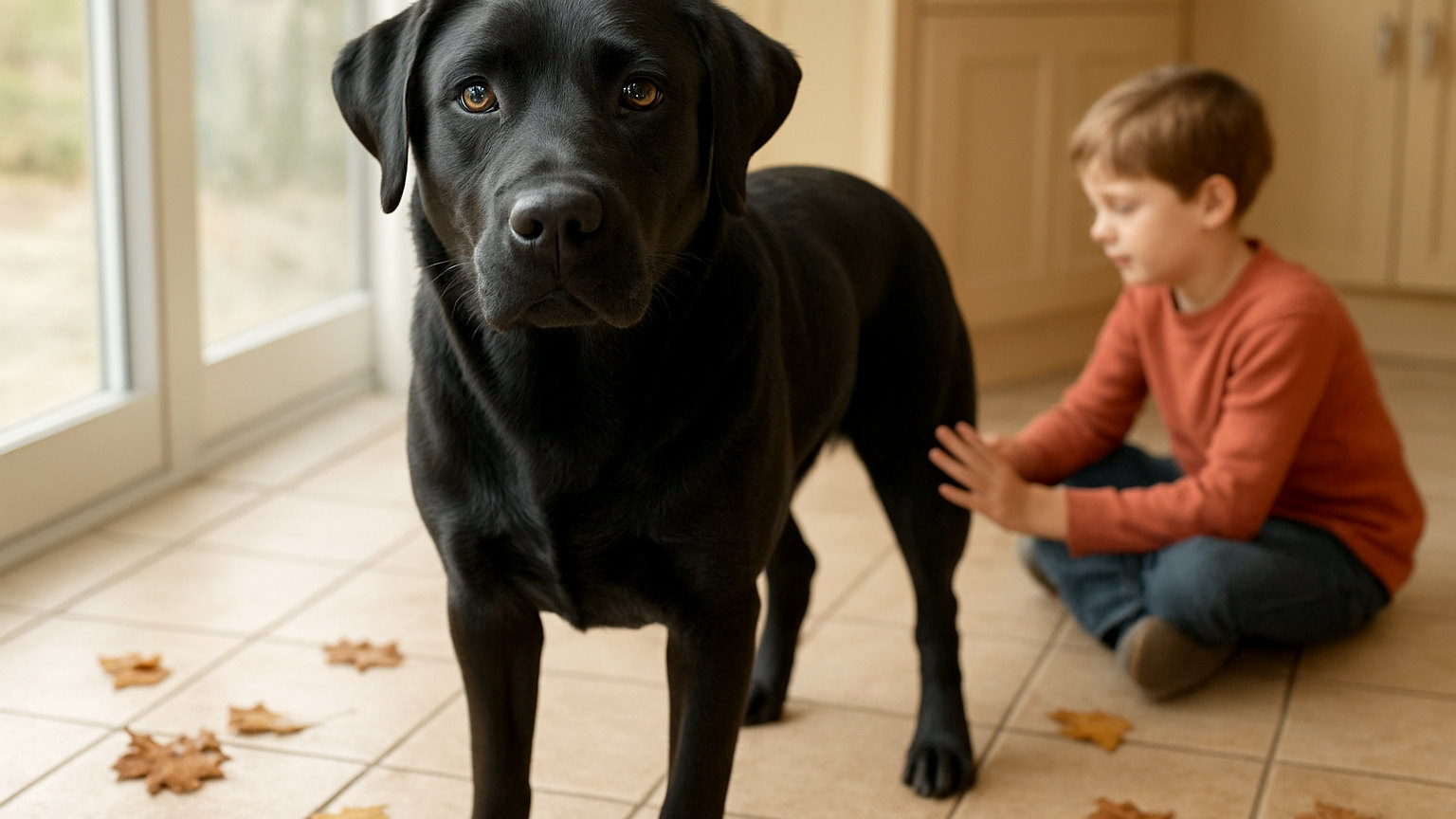
Families frequently get a dog because the children want one. Whether it is a good idea depends on some fairly unglamorous practicalities.
What is the main consideration?
Supervision capacity. A dog and a toddler in the same house need an adult watching whenever they are together, and that is a genuine demand on attention.
If the honest answer is that nobody can reliably supervise, the arrangement depends on physical separation instead, which is workable but requires planning.
Is there an age at which it becomes easier?
Broadly yes. Many families find things considerably easier once children are around five or six, when they can understand and follow rules reliably.
Under three is the hardest combination. Toddlers move unpredictably, grab, fall onto dogs and cannot be reasoned with, and they are the group most often bitten.
Between three and five, children can learn rules and cannot be relied on to follow them without supervision.
None of this makes it impossible at any age. It changes how much management is required.
What is the actual workload?
Substantial, and it lands on adults. Walks twice daily regardless of weather, feeding, training, grooming, veterinary appointments and cleaning up.
A puppy adds toilet training, broken nights and constant supervision for months, on top of young children. Many families underestimate this considerably.
Be honest about whether there is capacity. Adding a dog to an already stretched household is a common route to a dog being rehomed.
Should you get a puppy or an adult dog?
An adult dog with a known history around children is frequently the better choice, since the temperament is established and there is no puppy phase to manage.
Puppies bite, and puppy mouthing on small children is painful and frightening even though it is entirely normal.
Rescues can be cautious about homing with young children, and dogs assessed as suitable are in high demand, so expect a wait.
What should you ask yourself?
Who walks the dog on a wet Tuesday in February. Who gets up in the night with a puppy while also getting up with a child.
Where the dog will go when it needs to be away from the children. What happens on holidays.
Whether both adults genuinely want this, since households where one person is reluctant are heavily represented among dogs given up.
What if the children are asking?
Children's enthusiasm rarely predicts sustained involvement, and that is not a criticism of children. Get a dog because the adults want one and can manage it.
Fostering is worth considering, since it shows a family what daily life with a dog actually involves without a fifteen-year commitment.
What is the reasonable position?
Plenty of families with young children have dogs and it works well. Those families supervise, separate, choose sensibly and accept that the work is theirs.
What breeds or types suit families?
Temperament matters far more than breed, and an individual dog assessed as good with children beats any breed generalisation.
Practical considerations do apply: size relative to small children, energy level relative to household capacity, and grooming demands relative to available time.
Ask a rescue or breeder directly what this individual dog is like with children rather than reasoning from the breed.
What do rescues say?
Many are cautious about homing with children under five, and dogs assessed as suitable for families are in high demand.
That caution is based on their own experience of returns and incidents rather than on prejudice against families, and it is worth taking seriously.
Be honest about children's ages on the application, since misrepresenting it produces a match that fails.
None of this is an argument against family dogs. It is an argument for going in with an accurate picture of the work rather than an optimistic one.
What questions should you ask before deciding?
Who will walk the dog twice daily for the next twelve to fifteen years. What happens during the school run, bedtime and mealtimes.
Where the dog will go when the house is chaotic. Whether both adults are committed rather than one agreeing reluctantly.


