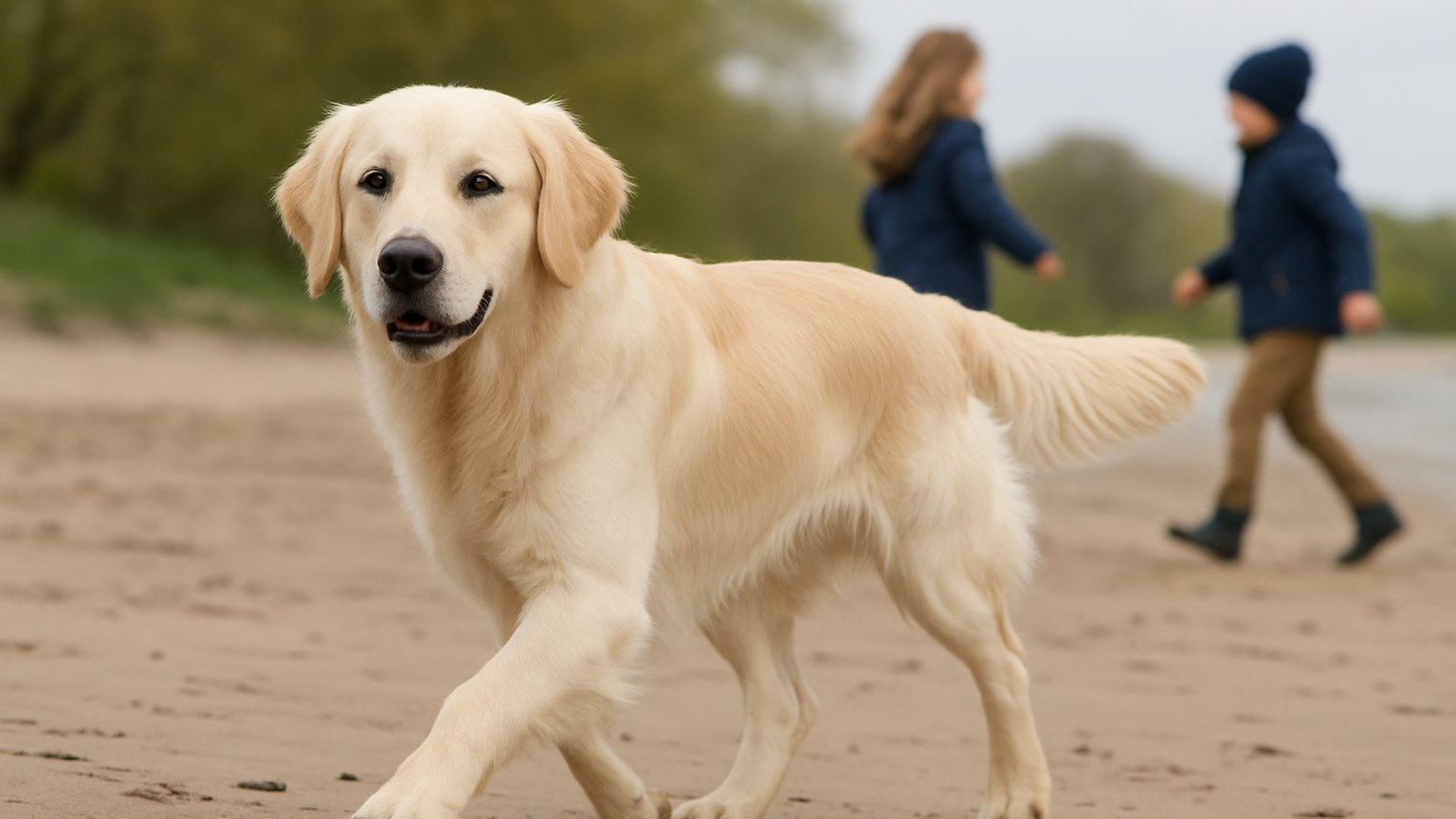
Almost every parent believes they supervise. The distinction that matters is between being present and actively watching.
What counts as active supervision?
An adult within reach, watching the interaction, able to intervene within a second, and prepared to end it.
Not being in the room while cooking, on a phone, watching television or talking to someone else. Incidents happen in seconds, and most occur with an adult nearby.
If you cannot give the interaction your attention, separate them instead. That is not a failure; it is the realistic alternative.
Why is this so often misjudged?
Because parents interpret a dog's tolerance as consent. A dog that has accepted being climbed on a hundred times may not accept it on the day it is sore, tired or startled.
Tolerance also erodes. Dogs frequently give warning signals for months before anything happens, and those signals are missed because nothing bad has occurred yet.
The dog being good with children is a description of the past rather than a guarantee.
How should you use separation?
Routinely and without guilt. Stair gates are the most useful item in a household with a dog and children.
Separate at predictable pressure points: mealtimes, when the dog is eating or has a chew, when children have friends over, when the household is busy or chaotic.
Separate when you cannot watch, including while cooking, showering or on a call.
Use a crate the dog likes, a gated room, or a playpen for a baby, whichever suits the household.
What arrangement works day to day?
Many families operate a rotation: the dog has free access when adults are available, and is behind a gate when they are not.
Others give the dog a room of its own where children never go, and bring it out for supervised time.
Both are entirely reasonable and considerably safer than assuming continuous supervision is achievable.
What should the dog have?
Somewhere it can retreat to that children never enter, under any circumstances. This is essential rather than a nicety.
A dog with no escape route is a dog with no options, and dogs without options escalate.
Make it a firm household rule that a dog in its bed or crate is invisible.
Can older children supervise?
No, not as the responsible adult. Children cannot reliably read canine body language or intervene quickly, and it is unfair to place that responsibility on them.
Older children can be taught to fetch an adult, which is a more appropriate role.
How long does this need to continue?
Throughout childhood, with the intensity reducing as children mature. The highest risk period is from crawling to about five years old.
What about multiple children?
Considerably harder, since attention divides and one child is frequently unobserved. Physical separation becomes more important rather than less.
Group play with a dog present is particularly high risk, since the noise and running raise arousal quickly.
What arrangement do families actually use?
Most successful households operate a mixture: supervised time together, and separation for a substantial part of the day.
Gates left permanently in doorways become part of the furniture within a week, and remove the need for constant vigilance.
What about school holidays?
Harder, since children are home all day and the household is busier. Dogs frequently show more signs of stress during long holidays.
Build in more separation rather than less, and protect the dog's rest deliberately, since the usual quiet daytime hours have disappeared.
What does a workable household look like?
Gates in two or three doorways, a dog space nobody enters, and a habit of putting the dog away at predictable pressure points.
Once established, this takes almost no ongoing effort and removes most of the daily decisions.
The uncomfortable truth is that most parents believe they supervise adequately and most incidents happen with an adult in the room. Physical separation removes the reliance on attention you may not always have.