
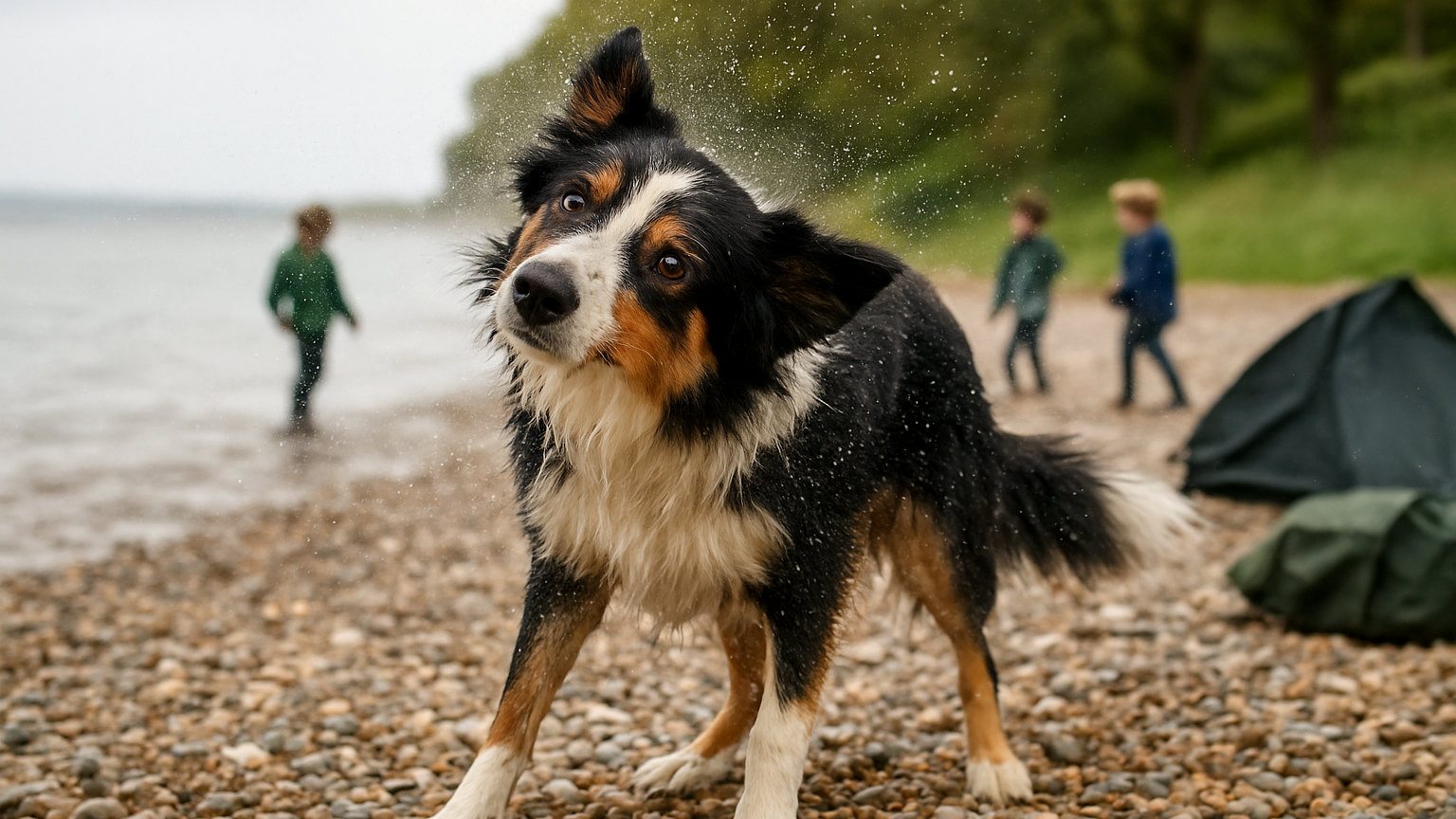
Camping suits many dogs well and involves a few specific problems that are worth solving before you arrive rather than at midnight.
How do you choose a site?
Check the dog policy properly, since many sites accept dogs with conditions: numbers per pitch, leads at all times, certain fields only, or restrictions during school holidays.
Ask whether dogs can be left unattended on the pitch, which most sites prohibit.
Consider the location of your pitch. Somewhere at the edge, away from the main thoroughfare and facilities, is considerably calmer for a dog.
Sites near livestock, wildlife or busy roads need more thought.
How do you keep the dog secure?
A ground anchor or corkscrew stake with a tether allows the dog to move around the pitch without wandering. Attach it to a harness rather than a collar.
Never leave a dog tethered and unattended, since it can tangle, panic or be approached by other dogs.
Check the tether length against tent guy lines, other pitches and anything the dog could reach.
A travel crate or a pop-up pen gives a more secure option and a defined space.
What about nights in a tent?
Bring the dog's own bed, which helps considerably, and something to insulate it from the ground, which gets cold.
Expect a disturbed first night. Every footstep, voice and rustle outside is novel, and many dogs bark or fuss until they habituate.
A tent is not soundproof, so a dog that barks at night will disturb the whole site. This is the main reason to build up to camping rather than starting with a week.
Consider a trial night in the garden first, which sounds excessive and saves a great deal.
How do you manage temperature?
Tents heat rapidly in morning sun and become very cold overnight. Both matter.
Pitch in shade where possible, open vents, and never leave a dog in a closed tent in warm weather, which carries the same risks as a car.
In cold weather, insulate the bed from the ground and consider a coat for thin-coated breeds.
What outdoor hazards should you watch for?
Ticks, which are common on campsites in rural areas. Check the dog thoroughly every evening and carry a tick remover.
Livestock in adjacent fields, and the legal requirement to keep dogs under control around them.
Campfires and barbecues, which cause burns and attract dogs to hot fat and discarded bones.
Other people's food, litter and disposable barbecues. Blue-green algae in nearby water in warm weather.
What should you take?
A long line for controlled freedom, a torch for night toilet trips, plenty of towels, and something absorbent for a muddy dog in a tent.
Water, since site taps may be a walk away, and a tick remover.
What about campsite etiquette?
Keep the dog on a lead around the site, pick up immediately, and do not let it approach other pitches. Barking is the main cause of complaints.
What about caravans and motorhomes?
Similar principles with better temperature control, though the same rule applies: never leave a dog inside in warm weather.
Most sites require dogs to be attended, and awnings offer shade and a defined space that works well.
How do you prepare a dog that has never camped?
Pitch the tent in the garden and let the dog explore it, then spend an evening in it, then a night.
The novelty is the main difficulty, and removing it beforehand makes the first real trip considerably easier.
What about wild camping?
Legal in parts of Scotland under access rights and generally not in England and Wales without landowner permission.
With a dog, the same access responsibilities apply, including leads around livestock and during ground-nesting season on open land.
What if the dog barks at night?
Address it before booking a week away. A dog that barks in a tent will disturb the entire site and you may be asked to leave.
Trial nights at home, a covered crate and a chew at bedtime all help, and a dog that cannot manage it is better left with a sitter.


