Muzzle training is one of the most useful things you can teach and carries an unfortunate stigma. It is a safety tool rather than an admission of failure.
Why should any dog be muzzle trained?
Because a dog in pain may bite the person it loves most. Injured dogs are frequently muzzled for treatment, and one that has never worn a muzzle finds that terrifying on top of the injury.
Muzzles are also required for some veterinary procedures, for travel on certain transport, and for dogs on the banned breeds list in public.
They allow a dog that scavenges dangerous items to walk more safely, and they give owners of reactive dogs confidence, which the dog reads.
Teaching it while nothing is wrong takes a couple of weeks. Introducing one during a crisis is unfair and rarely works.
What type should you use?
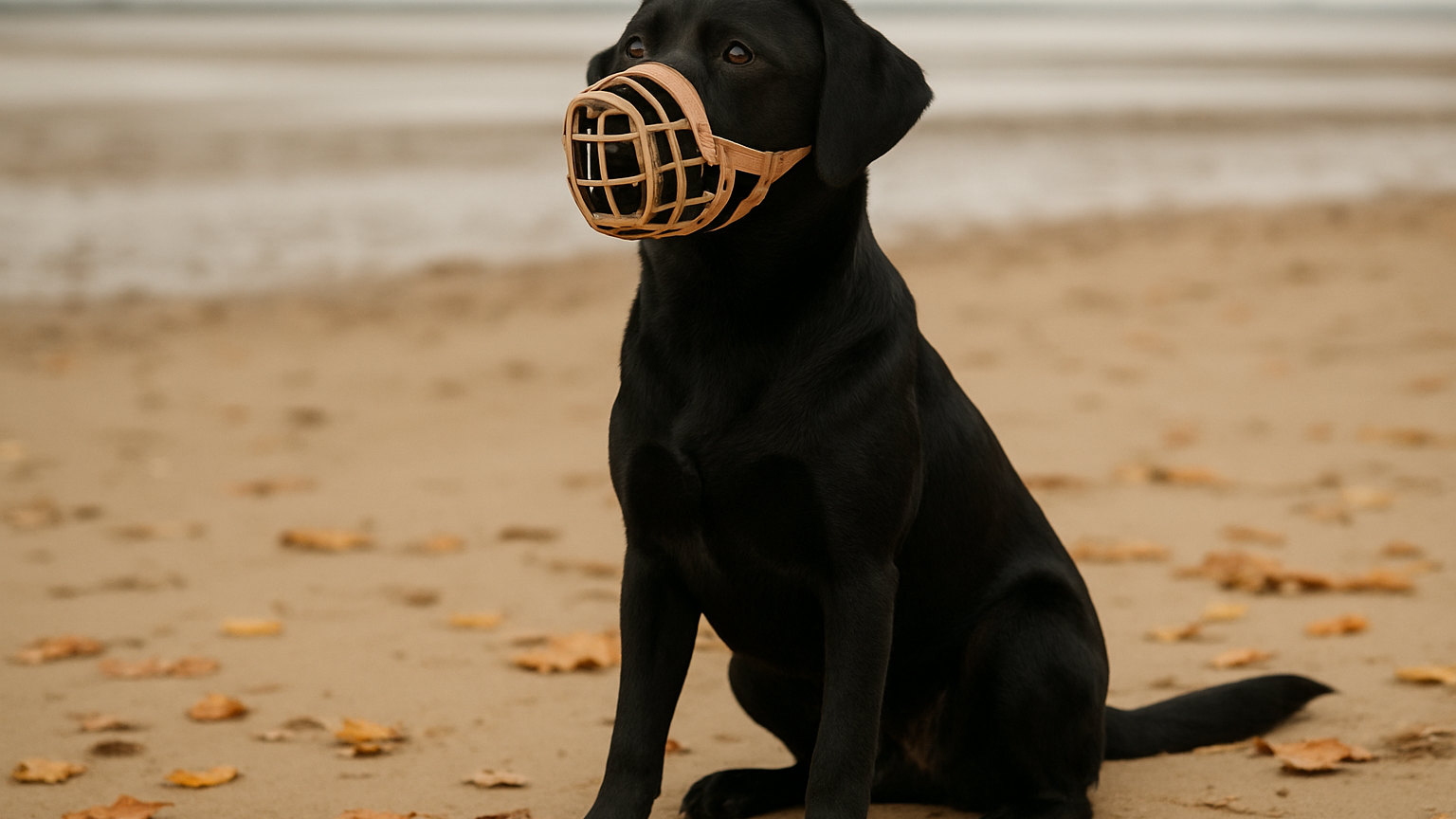
A basket muzzle, which is the only appropriate type for anything beyond a few minutes.
It allows the dog to pant fully, drink and take treats, all of which matter. Dogs cool themselves by panting, so a muzzle that restricts it is genuinely dangerous.
Fabric or sleeve muzzles that hold the jaws closed prevent panting and should only ever be used briefly by a professional. They are not suitable for walks.
Fit matters: the dog should be able to open its mouth fully and pant, with room in front of the nose. Several manufacturers offer sizing guides and custom fitting.
How do you introduce it?
Slowly, over days rather than minutes. The muzzle should predict good things from the very first moment.
Start by showing it and feeding a treat, then putting it away. Repeat until the dog looks pleased to see it.
Then hold treats through the basket so the dog puts its nose in voluntarily. Do not push the muzzle onto the dog at any point.
Build to the dog holding its nose in for a second, then two, then five, always removing it before the dog wants to withdraw.
How do you progress?
Fasten the strap briefly, then unfasten and remove immediately, rewarding throughout. Build duration in small steps.
Then add movement: a few steps with treats, then around the garden, then a short walk. Keep feeding through the basket regularly.
The whole process typically takes one to three weeks of short daily sessions. Rushing it produces a dog that tolerates a muzzle rather than one that is comfortable in it.
What are the common mistakes?
Going too fast, which is the main one. Only using it in stressful situations, so it predicts something unpleasant.
Leaving it on for long periods, particularly in warm weather. A poor fit that rubs or prevents panting.
What about how it looks?
Some people assume a muzzled dog is dangerous, which is unhelpful and inaccurate. Muzzled dogs include scavengers, dogs recovering from surgery and dogs whose owners are being responsible.
A muzzle also signals to others to give space, which many owners of reactive dogs find genuinely useful.
Where should you use one?
At the vet, particularly for anything painful. During grooming for dogs that find it difficult. On walks where scavenging is a risk.
In an emergency after an injury, which is the situation the training is really for.
Never leave a muzzled dog unattended, and remove it for feeding, long car journeys in warm weather and any prolonged period.
How do you handle other people's reactions?
Some will assume the worst, and a brief factual explanation usually settles it. Many owners simply say the dog is being trained to wear it, which is both true and sufficient.
Do not let awkwardness stop you using one. A muzzle is a responsible choice and considerably better than the alternative.
How do you choose the right size?
Measure the length and circumference of the muzzle following the manufacturer's guide rather than estimating from the dog's weight or breed.
Several UK makers produce custom-fitted basket muzzles, which are worth the cost for dogs that will wear one regularly.
Check the fit again as a puppy grows and after any significant weight change.