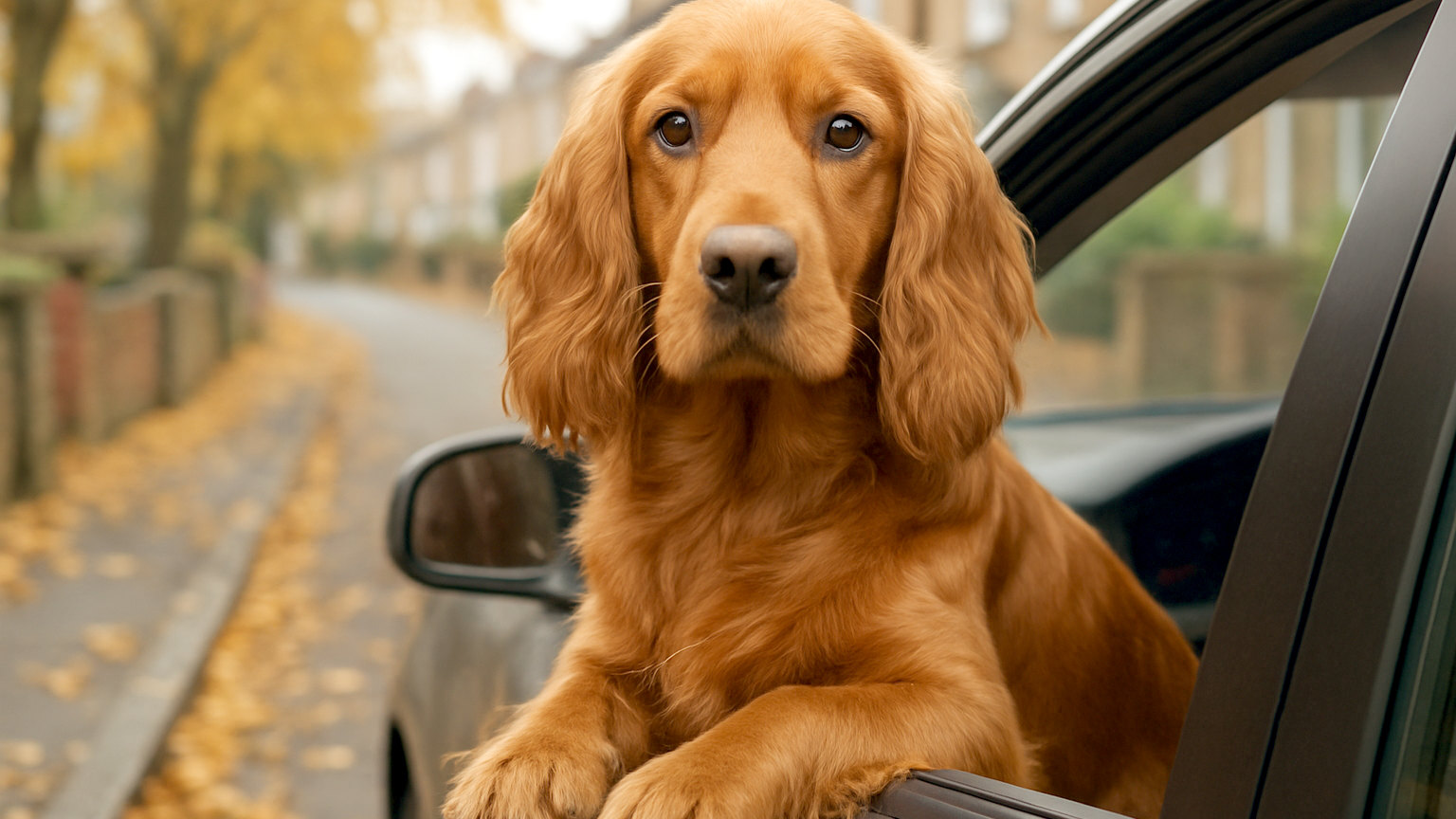
Barking in the car is unsafe as well as unpleasant, since it is distracting for the driver and frequently escalates over a journey.
What are the likely causes?
Excitement, in dogs where the car reliably predicts a walk. The barking builds with anticipation and peaks near the destination.
Frustration at things passing the window: other dogs, cyclists, motorbikes. The dog cannot reach or investigate them, and barrier frustration produces noise.
Fear, in dogs that find the movement, noise or confinement distressing. This sounds different, often higher and more frantic, and comes with panting, drooling or trembling.
Travel sickness, which causes drooling, whining and restlessness and is frequently mistaken for anxiety.
How do you tell them apart?
Look at the body rather than the noise. An excited dog is loose, wagging and looking forward. A frustrated dog is fixated on the window and barks at specific passing objects.
A frightened dog is tense, may be trying to hide, panting heavily or drooling. A car-sick dog drools excessively, may vomit, and often settles once stationary.
Travel sickness is common in young dogs and frequently improves with age, and effective medication is available from a vet.
What is the first practical step?
Remove the view. A covered crate, or a boot with a raised guard, means the dog cannot see passing triggers.
This alone resolves a good proportion of frustration barking. For dogs travelling on a back seat, a harness that limits movement and window shades help.
Secure travel is a legal expectation in any case, since an unrestrained dog is a hazard.
How do you rebuild the association?
Start with the car stationary and the engine off. Feed the dog in the car, then get out. Repeat until the car is boring.
Then engine on, no movement, treat, engine off. Then a drive to the end of the road and back. Then slightly longer.
Crucially, most journeys should end somewhere neutral rather than at an exciting destination, otherwise the car keeps predicting excitement.
Drive somewhere dull, sit for a minute, and drive home. Repeat frequently.
What helps during journeys?
A long-lasting chew or a stuffed frozen toy, which occupies the dog and lowers arousal through chewing and licking.
Calm background music or speech radio. A familiar blanket carrying the dog's own scent.
Do not feed a large meal shortly before travelling, which contributes to sickness.
What should you not do?
Shout, which adds to the arousal and is unsafe while driving. Turn round to intervene, for the same reason.
Give in and let the dog into the front, which rewards the behaviour and is unsafe.
When should you get help?
If the dog is genuinely distressed rather than excited, since that is anxiety rather than a training gap.
Speak to your vet, who can rule out travel sickness and discuss short-term medication where a dog needs to travel while behavioural work progresses.
Does the destination matter?
Considerably. If every car journey ends at a park, the car becomes a reliable predictor of excitement and the barking builds along the route.
Vary destinations deliberately. Drive to a supermarket car park, sit for a minute and come home. Most journeys should be dull.
What about multiple dogs?
One dog frequently sets the other off, and the noise escalates between them. Separate them with a divider or travel them in different parts of the car while working on it.
What about safety and the law?
Dogs must be suitably restrained in a vehicle, and an unrestrained dog can invalidate insurance in the event of an accident as well as being a danger.
A crash-tested crate, a boot with a guard, or a properly fitted travel harness attached to a seatbelt point are the usual options.
Barking that distracts a driver is a genuine hazard, which is a further reason to address it rather than tolerate it.
Work on this while journeys are optional rather than waiting until you need to travel a long distance. A dog that has practised calm short journeys copes far better with a real one.