Leave it and drop it are the most practically useful cues after recall. They prevent poisoning, obstruction and a great many expensive veterinary visits.
What is the difference?
Leave it means do not pick that up, used before the dog has the item. Drop it means release what is already in your mouth.
Both are needed, since they cover different moments. A dog that reliably leaves things alone still occasionally picks something up before you notice.
Why does trading work better than taking?
Because a dog that has things removed learns to guard them, swallow them quickly, or run away with them.
Chasing a dog that has something is the fastest way to teach it that stealing produces a brilliant game, and that swallowing is the way to keep the prize.
Trading teaches the opposite: giving something up produces something better, so there is no reason to hide or bolt.
How do you teach drop it?
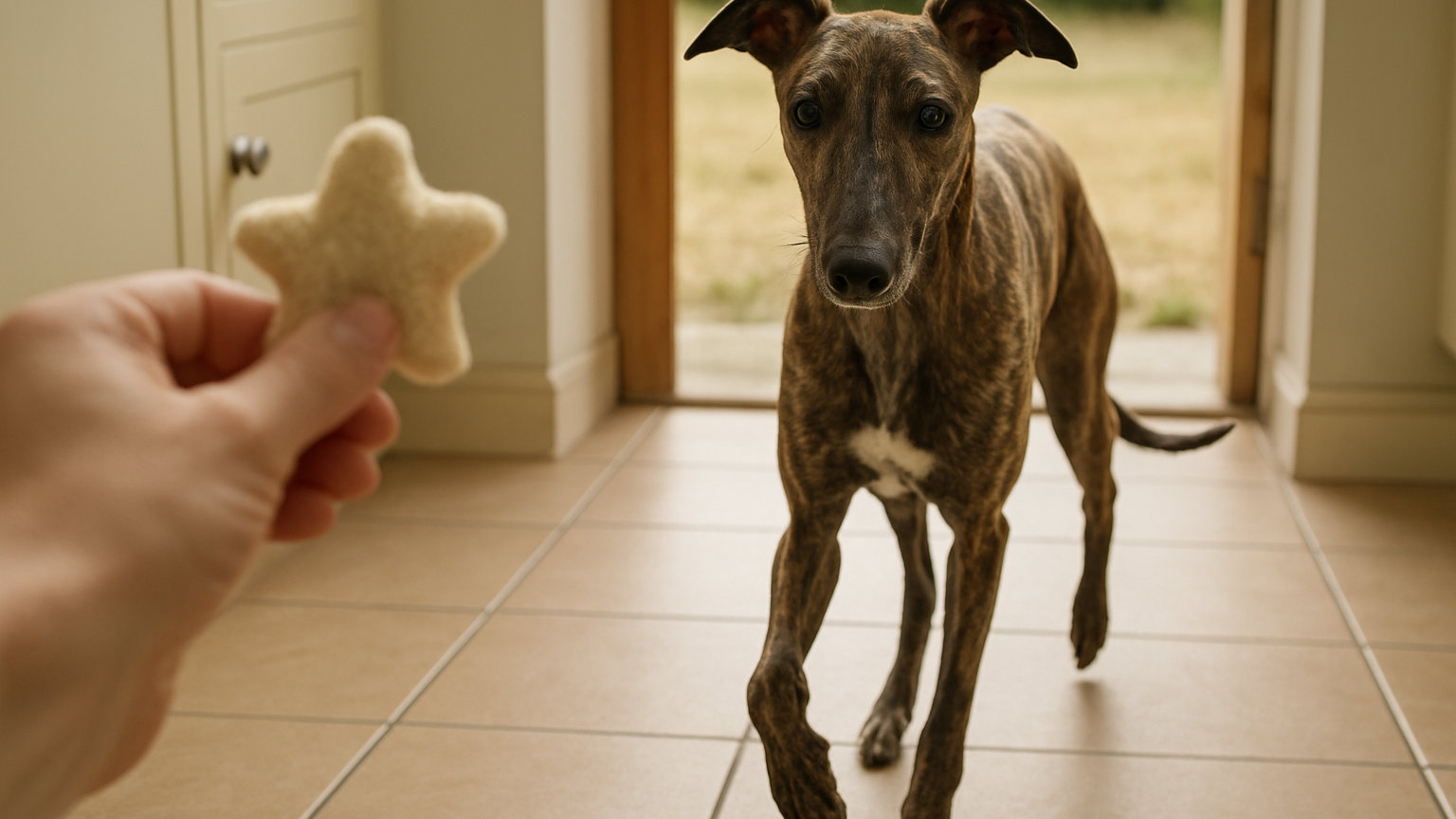
Start with a low-value toy the dog is holding but not obsessed with. Show a genuinely good treat near its nose.
Most dogs open their mouth. The moment the item drops, mark and give the treat, then give the toy back.
Giving it back matters enormously. If dropping always means losing the item, the dog stops cooperating. Practise so that dropping usually means the item returns.
Add the cue once the behaviour is reliable, saying drop just before you present the treat.
How do you teach leave it?
Put a boring treat in a closed fist and let the dog sniff, lick and paw at it. Say nothing.
The instant the dog backs off or looks away, mark and reward from your other hand with something better. The dog learns that ignoring one thing produces a better thing.
Progress to an open palm, then the treat on the floor covered by your hand, then uncovered with your hand ready to cover it.
Then add the cue, then practise with items on the ground while walking past.
Why must the reward come from elsewhere?
Because if the dog gets the item it was told to leave, it learns that leave it means wait a moment and you can have it.
Always reward from your hand or pocket with something different, so leaving genuinely means moving on to something better.
Why do these matter so much?
Because dogs pick up things that kill them. Chicken bones, corn cobs, discarded food containing xylitol, rat bait, mouldy food, sharp objects and, in summer, blue-green algae at the water's edge.
A reliable leave it prevents the ingestion. A reliable drop it recovers something already taken, without a chase that ends in swallowing.
What if the dog guards items?
Stiffening, freezing, hard staring or growling over an item is resource guarding rather than a training gap.
Do not attempt to take things from a dog that does this, and do not punish the growl, which removes the warning without changing the feeling. Seek help from a behaviourist registered with the Animal Behaviour and Training Council.
How do you practise safely?
Use boring items to start with rather than anything the dog badly wants, and build value gradually.
Never practise leave it with anything genuinely dangerous. The point of training is that the cue works when it matters, not that you rehearse with hazards.
On walks, set up easy successes by dropping something dull on the ground and cueing leave it, rather than only ever using the cue in a crisis.
Of all the cues in this section, these two are the ones most likely to save a vet bill or a life. They are worth practising weekly for the whole of a dog's life rather than teaching once. Practise them when nothing is at stake, so that when something is, the dog already knows what the words mean.
Both cues are built on the same idea: cooperating with you is more rewarding than holding on. Owners who take things away instead spend years chasing dogs round the garden.