A marker is the most useful mechanical concept in dog training and the one most owners have never had explained. It is why some people seem to teach things in days.
What does it do?
It identifies the exact moment the dog did the right thing, bridging the gap between the behaviour and the reward arriving.
Without one, there is a delay while you reach for a treat, and the dog may have already stood up, looked away or moved. It then associates the reward with whatever it was doing when the food appeared.
The marker freezes the moment. It says: that, precisely, is what earned this.
Word or clicker?
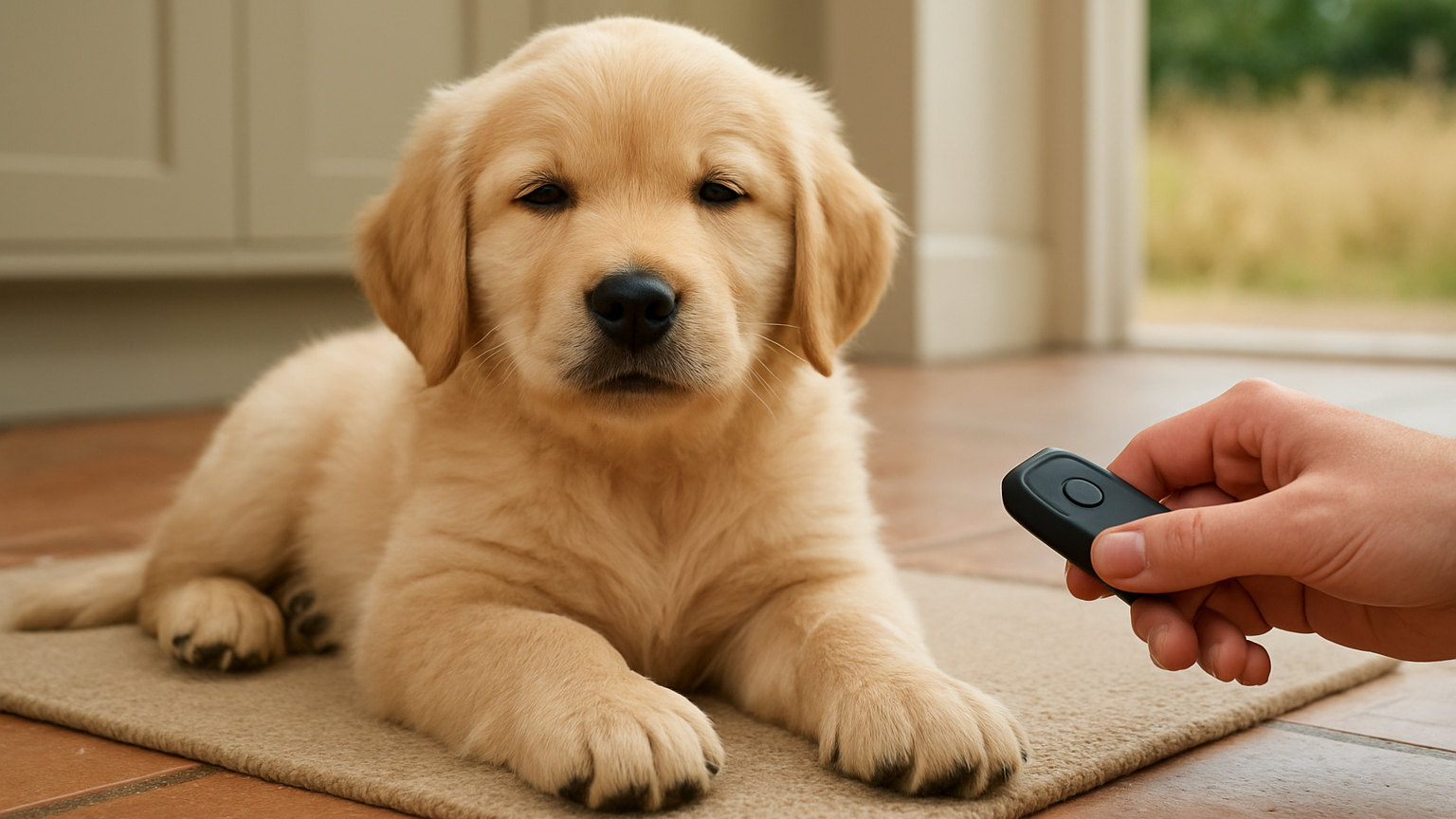
Both work. A clicker is more precise and consistent, since it sounds identical every time and carries no emotional tone.
A word is always with you and leaves your hands free, which matters when you are holding a lead, treats and a poo bag.
Many people use a clicker for teaching new behaviours and a word for everyday use. If choosing one, a word is more practical for most owners.
What word should you use?
Something short and distinct that you do not use in conversation. Yes is the most common. Good is a poor choice, since most people say it constantly.
Say it the same way each time, briefly and clearly, rather than drawing it out or varying the tone.
How do you charge it?
Before it means anything, the marker has to be associated with reward.
Say the word, then immediately give a treat. Repeat twenty or thirty times, doing nothing else. The dog does not need to earn it at this stage.
You know it is charged when the dog looks expectantly towards the treat source on hearing the marker.
What are the rules?
One marker, one reward, always. If you mark, you pay, even if you marked the wrong thing by mistake.
Mark the instant the behaviour happens, not a second later. Precision here is what makes the technique work.
The marker ends the behaviour. Once marked, the dog may move to collect its reward, so do not mark mid-way through something you want continued.
Do not use it to get the dog's attention. It is information about something that just happened, not a summons.
Do you use it forever?
No. A marker is a teaching tool used heavily while learning something new, then faded once the behaviour is established.
Once a cue is reliable, move to rewarding intermittently and the marker becomes less central. Bring it back whenever you teach something new.
What is shaping?
Building a complex behaviour by marking successive approximations rather than luring the whole thing.
To teach a dog to go to a mat, you might mark looking at it, then stepping towards it, then a paw on it, then standing on it, then lying down.
It requires good timing and produces dogs that think and offer behaviours rather than waiting to be positioned, which is why trainers rate it so highly.
What are common mistakes?
Marking late, which is the most frequent and the most damaging. Practise your timing by marking the moment a ball bounces or a person's foot lands.
Marking more than once for a single behaviour, or marking and then not rewarding.
Using the marker to summon the dog rather than to mark something it did. And clicking at the dog rather than at a moment, which is a subtle but important distinction.
If you take one mechanical idea from all of this, take the marker. Owners who get their timing right find that everything else in training becomes noticeably faster. Practise your own timing without the dog first, marking moments on television, until it becomes automatic.
Once the mechanics click, most owners find they teach new behaviours in a fraction of the time it previously took, which is why trainers treat this as a foundational skill rather than an optional extra.