This is the most commonly suggested first step and it is worth doing, provided you understand what it does and does not achieve.
What does it actually do?
Mainly masking. Background sound covers external noises that would otherwise trigger a reaction: footsteps, car doors, post, voices, other dogs.
For a dog that barks at things it hears outside, this can produce a substantial improvement, since the triggers simply stop registering.
It may also provide some sense of company, particularly speech, though this is harder to demonstrate.
Does the evidence support it?
Reasonably, for the masking effect. Studies in kennel environments have looked at different types of audio and generally found that sound reduces observable stress compared with silence.
Classical music has been studied most and appears to have a mild settling effect, though some research suggests dogs habituate and the benefit reduces over days.
Audiobooks and speech radio have shown promise in shelter studies, possibly because a human voice is reassuring.
The effects reported are modest rather than transformative, which matches what owners find.
What works best?
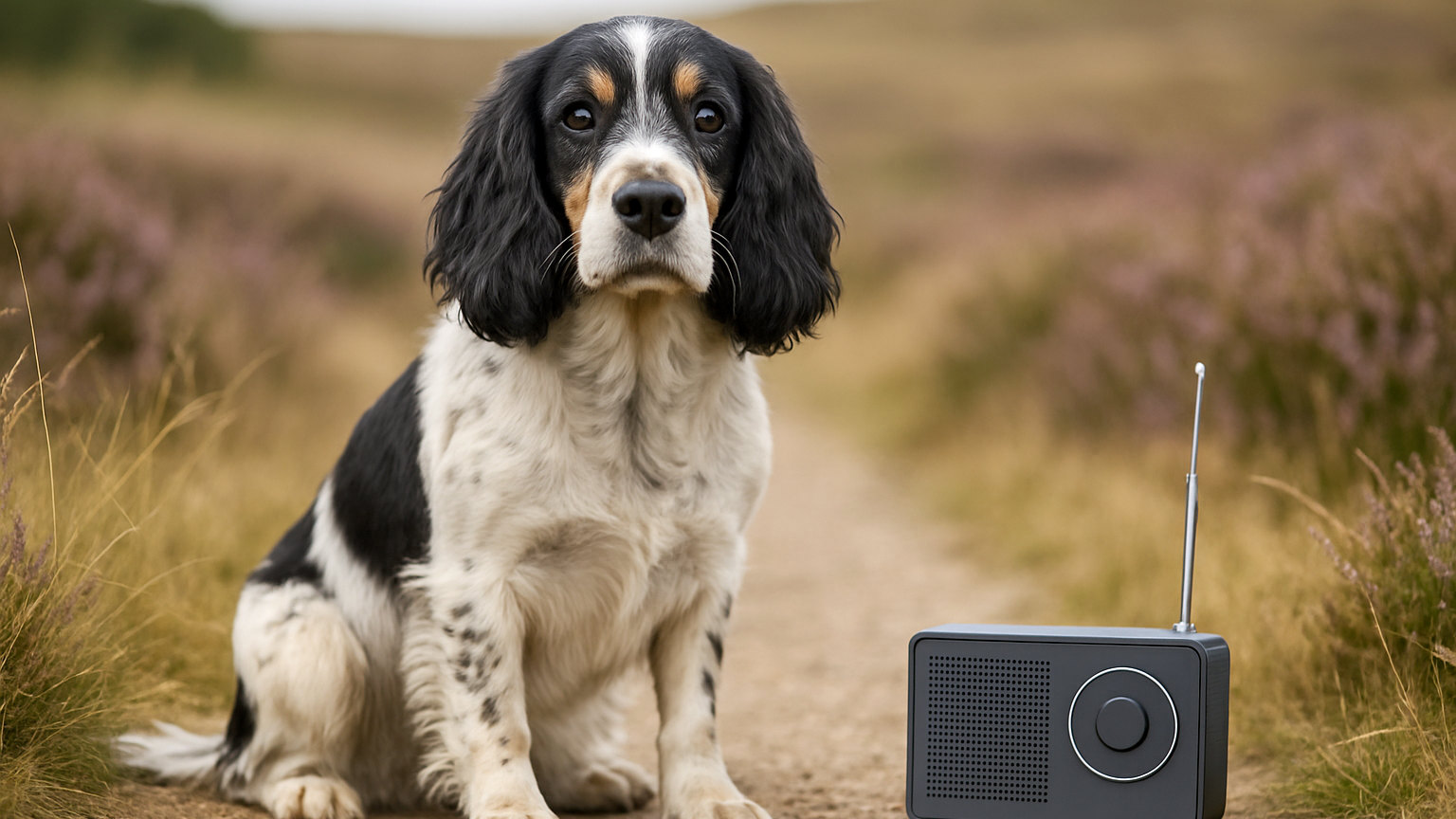
Speech radio is a reasonable default: it masks effectively, provides human voices and does not have the sudden volume changes television has.
Classical or specifically composed calming music suits some dogs. Rotating between options may help, since habituation appears to reduce the effect over time.
Keep the volume moderate. Loud enough to mask, quiet enough not to be a stressor in itself.
What about television?
More variable. Television has sudden volume changes, dramatic sounds and doorbells, all of which can startle a dog rather than settle it.
Dog-specific television channels exist and evidence for them is limited. Most dogs pay little attention to screens, since their vision and the frame rate of many displays do not match well.
If you use a television, choose something with a steady sound level and avoid anything with barking dogs or doorbells in it.
What are the limitations?
It does not treat separation anxiety. A dog panicking because you have left will panic with the radio on.
Owners frequently try this, see no change, and conclude nothing will work. In fact it addresses a different problem: noise-triggered reactivity rather than distress at separation.
If the recording shows the dog reacting to specific outside sounds, background audio is a genuine solution. If it shows the dog distressed from the moment you leave, it is not.
Is there any downside?
Rarely. A small number of dogs find constant noise stressful, particularly noise-sensitive dogs, and prefer quiet.
Watch the recording with and without it rather than assuming. Some dogs settle better in silence, which is worth knowing.
What should you pair it with?
The rest of the management: a comfortable safe space away from the street, something to occupy the dog at the start, a good walk beforehand and absences within what the dog can manage.
How do you test whether it helps?
Record two comparable absences, one with sound and one without, and compare how quickly the dog settles and how often it reacts.
Keep everything else the same so you are testing one variable. It takes a few days and gives you a clear answer rather than a guess.
What is the sensible expectation?
A useful, cheap addition to the management of a dog left alone, particularly one that reacts to outside noise.
Not a treatment for separation anxiety, and not a reason to postpone getting proper help if the recording shows genuine distress.
What about leaving lights on?
Worth considering in winter, when a dog left in the afternoon returns to darkness. A lamp on a timer costs little.
For dogs with failing sight, a night light helps navigation and reduces the disorientation that can contribute to distress.
Try it, record the difference, and keep it if it helps. It costs nothing beyond electricity and is one of the few interventions with no meaningful downside.
Whatever you choose, keep it consistent rather than changing daily, since a predictable soundscape is part of what makes the dog's environment feel unremarkable while you are out.