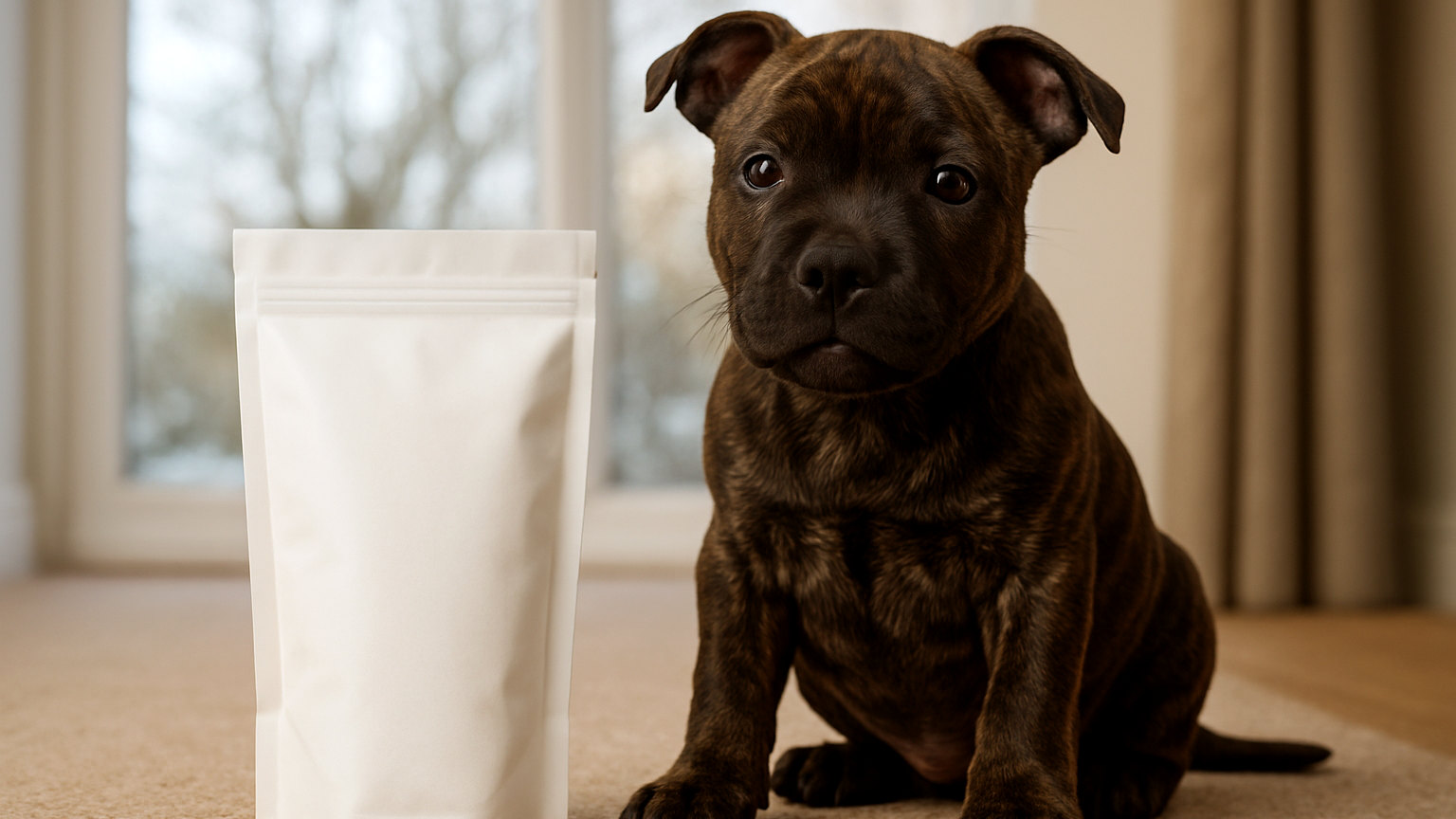
Teething is a predictable phase that causes a lot of chewing and a small number of genuine problems. Knowing the timeline helps you tell the two apart.
What is the timeline?
Puppies are born without teeth. Twenty-eight deciduous or baby teeth erupt from around three to eight weeks, which is part of why weaning happens when it does.
From around twelve to sixteen weeks, the baby teeth begin to fall out as adult teeth push through underneath. The incisors at the front go first, then the canines, then the premolars.
By around six to seven months most dogs have their full set of forty-two adult teeth. Small breeds sometimes run slightly later.
Will you find the teeth?
Occasionally, though most are swallowed while eating and pass through without any problem. Finding a tooth on the floor or in a toy is normal.
A small amount of blood on chew toys or a slight pink tinge to saliva during teething is normal. Persistent bleeding is not.
What does teething behaviour look like?
Increased chewing, which is the main one. Puppies chew more during teething because pressure on the gums provides relief.
Some are more irritable, some eat slightly less for a day or two, and some drool more than usual. Mouthing at hands and clothing frequently intensifies.
This is a phase rather than a behaviour problem, though what the puppy learns to chew during it can become a lasting habit.
How do you manage the chewing?
Provide appropriate outlets rather than only removing things. Soft rubber toys, a damp flannel frozen for a short time, and frozen stuffed toys all provide relief.
Avoid anything hard at this stage. Bones, antlers and hard nylon toys can damage developing teeth.
Redirect rather than punish. Take the shoe away calmly, replace it with a toy, and praise the puppy for chewing the right thing. Manage the environment so the wrong choices are not available.
What are retained puppy teeth?
Baby teeth that fail to fall out when the adult tooth comes through, so both are present at once. It is most common with the upper canines and particularly frequent in toy and small breeds.
The problem is crowding. Two teeth in one socket trap food and plaque, which causes early periodontal disease, and the retained tooth can push the adult tooth into an abnormal position.
If a baby tooth is still present alongside an adult tooth by around six to seven months, it usually needs removing. This is frequently done at the same time as neutering to avoid a second anaesthetic.
What else should be checked?
The bite. Most dogs should have the upper incisors sitting just in front of the lower ones. An abnormal bite can cause teeth to strike the palate or opposing gum, which is painful and needs assessment.
Missing or extra teeth, and teeth erupting in unusual positions. Any facial swelling or a puppy that seems to be in pain rather than simply chewy.
When should you start brushing?
Straight away, on the puppy teeth. The point at this age is not plaque control but building tolerance, so that having the mouth handled is completely ordinary by the time it matters.
Be gentle during teething, when gums are sore, and use a finger brush or soft cloth. A puppy accustomed to brushing rarely objects as an adult, and that habit is worth more than any dental product.
Should the bite be checked?
Yes, and it is easy to overlook. Ask your vet to check the bite at the puppy vaccination appointments and again at around six months when the adult teeth are through.
Problems worth catching include lower canines striking the roof of the mouth, which is painful and causes damage, and jaws of markedly different lengths.
Some bite problems are correctable more easily when caught during development, so raising it early gives more options than waiting until the dog is fully grown.