Brushing looks straightforward and most people do it ineffectively. A dog can appear well brushed on the surface while carrying dense matting underneath, and owners are usually surprised when a groomer points it out.
Why is surface brushing not enough?
Because a soft bristle brush glides over the top of a coat without reaching the dense undercoat where dead hair accumulates and mats form.
The topcoat looks glossy and tidy while the layer against the skin becomes felted. This is why dogs arrive at groomers looking presentable and have to be clipped off.
The test is simple: run a metal comb through the coat down to the skin. If it snags or will not pass through, the coat is not properly brushed however good the surface looks.
What is line brushing?
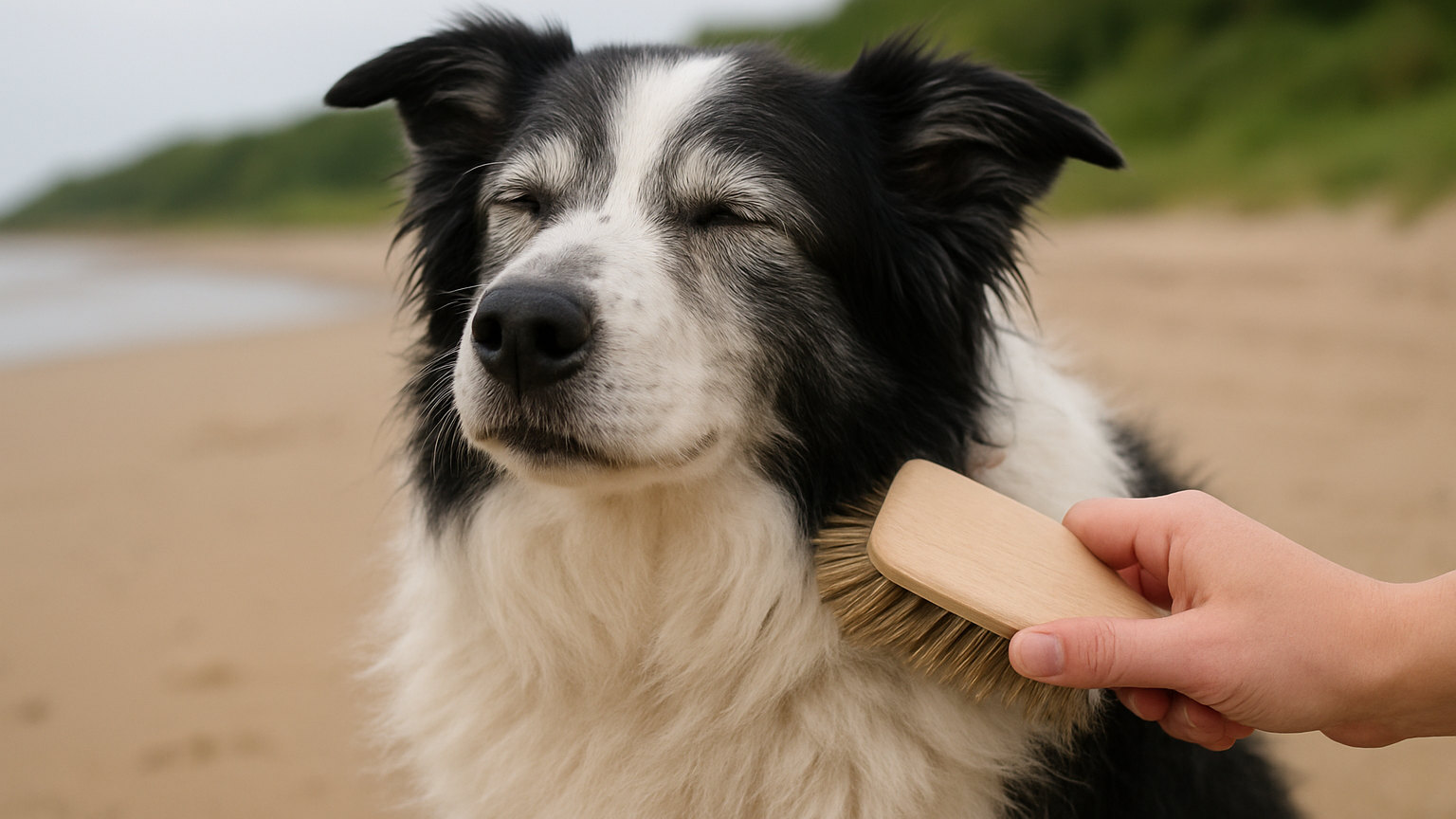
The technique that solves it. Part the coat with one hand to expose a horizontal line of skin, then brush the hair directly above the parting downwards, working outward from the skin.
Move the parting up a centimetre or so and repeat, working systematically up the body. It is slower than general brushing and it is the only way to reach the whole coat.
Follow with a metal comb to check. The comb is the quality control rather than the brush.
Which brush suits which coat?
Smooth coats need a rubber grooming mitt or soft bristle brush, used weekly to lift dead hair and spread natural oils.
Double coats need an undercoat rake or a deshedding tool to pull out loose undercoat, followed by a slicker brush. These are the coats where the right tool makes the biggest difference.
Curly and non-shedding coats need a slicker brush plus a metal comb, used with line brushing. Wiry coats need a stripping knife if hand stripping, or a slicker for maintenance between clips.
Long silky coats such as those on Yorkshire Terriers need a pin brush and a comb, worked gently to avoid breaking the hair.
Which areas do people miss?
The friction points, which are exactly where mats form. Behind and under the ears, in the armpits, on the chest, along the belly, around the collar area and between the back legs.
Also the tail base and the feathering behind the legs. A dog that wears a harness will mat where the straps sit, and a dog that lies on one side mats more on that side.
Work these areas deliberately every time rather than only brushing the back and flanks, which are the parts people can see.
How hard should you brush?
Firmly enough to reach the skin, gently enough not to scratch it. Slicker brushes have fine wire pins that cause brush burn if used with pressure on bare skin.
Let the brush do the work rather than pressing. If the dog flinches, ease off and check the skin, since redness means you are being too firm.
What about a dog that will not sit still?
Break the job into pieces. Do the legs one day and the body the next, keeping each session short and finishing on a good note rather than pushing through.
Give a chew or a lickmat to occupy the dog while you work. Reward calm behaviour rather than only reacting when it wriggles.
Does brushing help beyond appearance?
Considerably. It removes dead hair before it lands on furniture, spreads natural oils through the coat, and improves circulation to the skin.
It is also the best routine health check you have. Brushing weekly means you find lumps, ticks, cuts, fleas and sore patches early, which is frequently how owners spot problems first.
How long should a session take?
For a short-coated dog, five to ten minutes weekly is genuinely enough. For a curly or long double coat, expect twenty to thirty minutes several times a week if you want to avoid matting.
Splitting the dog into sections across the week works well: legs one day, body the next, head and tail the day after. It keeps each session short and the whole coat gets covered.
Consistency matters far more than duration. A coat brushed briefly every day almost never mats, while one brushed thoroughly once a fortnight frequently does.