Canine first aid is about controlling a situation long enough to get professional help. Nothing in a kit is a substitute for a vet, and the most valuable item in it is a phone number.
What should go in first?
Your veterinary practice's number and address, and the out-of-hours emergency provider details, written down rather than only on a phone.
Also useful is a note of your dog's weight, microchip number, any medication and any known conditions. In an emergency you will not remember these reliably.
What dressings are needed?
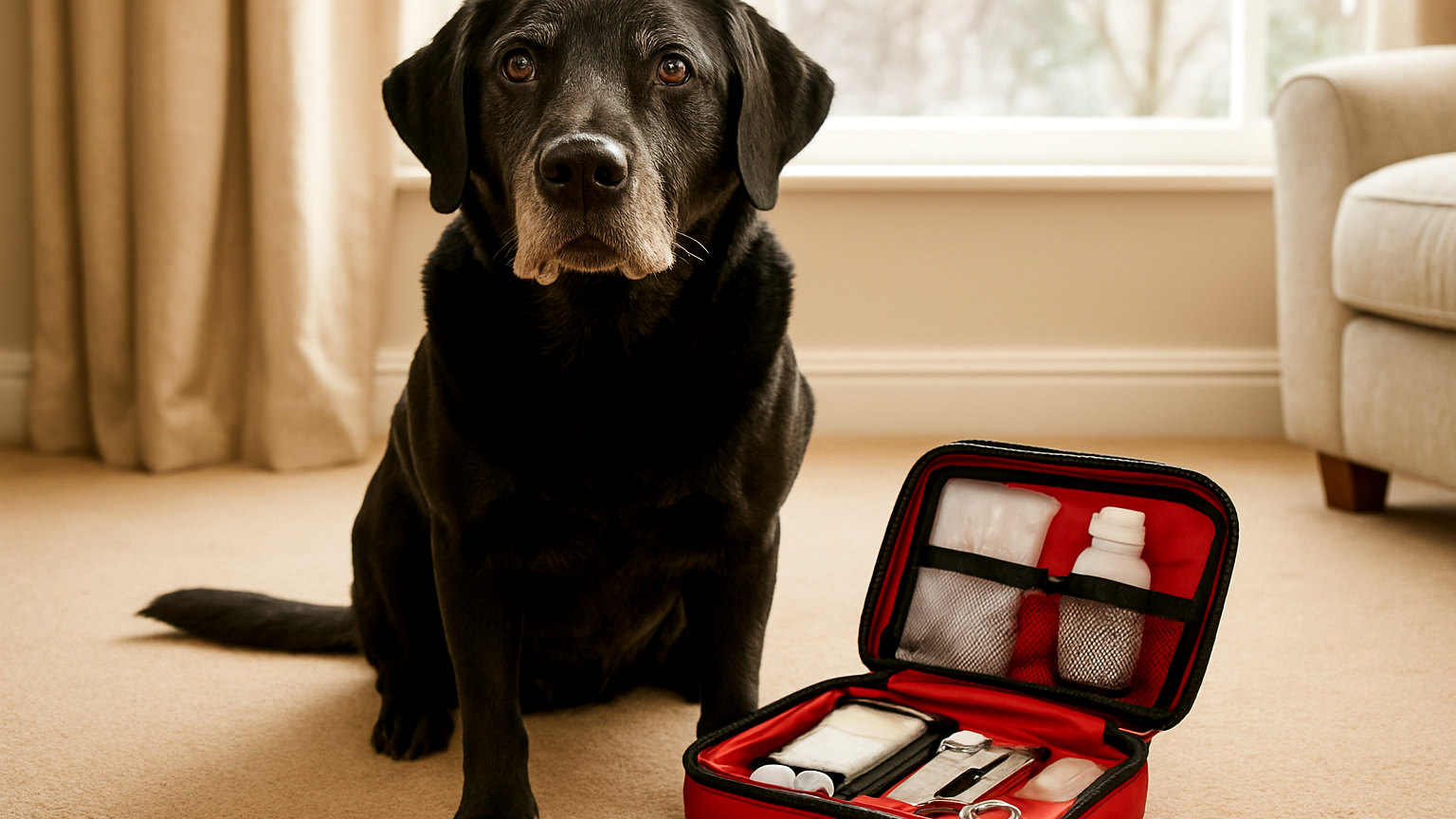
Sterile absorbent gauze swabs for cleaning and covering wounds. A roll of soft conforming bandage and a self-adhesive cohesive bandage that sticks to itself rather than to fur.
Non-adherent sterile dressing pads, which do not stick to a wound. Micropore tape. A few large sterile pads for covering bigger areas.
Apply bandages firmly enough to control bleeding but never tight enough to restrict circulation, and get to a vet promptly, since a badly applied bandage causes real damage.
What tools are worth including?
Blunt-ended scissors for cutting bandages and trimming fur around a wound. Tweezers for splinters and thorns. A tick removal hook, which twists a tick out whole rather than leaving mouthparts behind.
A digital thermometer and lubricant. Disposable gloves. A foil blanket for shock or cold. A clean towel, which doubles as a stretcher for a small dog and a restraint for a panicking one.
A torch, and a muzzle. A frightened dog in pain may bite the person it loves most, and a muzzle protects both of you while you help it.
What solutions should you carry?
Sterile saline for flushing wounds and eyes, which is the single most useful liquid in the kit. Small individual sachets or pods stay sterile.
An antiseptic solution suitable for animals, and styptic powder or a clotting product for bleeding nails.
Do not include human antiseptic creams, which dogs lick off, or hydrogen peroxide.
What should you leave out?
All human medication. Paracetamol and ibuprofen are toxic to dogs, and even medicines used in veterinary practice need proper dosing.
Anything to induce vomiting, which should only be done on veterinary instruction, since some substances cause more damage coming back up.
Cotton wool balls for wounds, since fibres stick to the surface. Use gauze instead.
What are the priorities in an emergency?
Keep yourself safe first, since an injured dog may bite. Ring the vet early rather than after trying things, and tell them you are coming so they can prepare.
Control obvious bleeding with direct pressure. Keep the dog warm, quiet and still. Move it as little as possible if a spinal injury is possible.
For suspected poisoning, take the packaging with you. For heatstroke, begin cooling with cool water while arranging transport.
Where should the kit live?
One at home and a smaller one in the car, since a good proportion of incidents happen on walks. Check it twice a year and replace anything out of date.
A practical addition is a short course in canine first aid. Several organisations run them, and knowing what to do in the first five minutes is worth more than any kit contents.
What should you know before you need it?
How to apply pressure to a bleeding wound, how to check gum colour, and how to muzzle a dog safely with a bandage if you have no muzzle.
How to move an injured dog, using a blanket as a stretcher with two people rather than lifting under the abdomen.
It is also worth knowing your dog's normal temperature, pulse and breathing rate when it is well, since those figures are only useful as a comparison.
Assemble the kit before you need it and put the vet's number on the lid. In an emergency you will not be in a state to look anything up, and that single detail is what makes the rest of it useful.