Being able to take basic measurements gives a vet genuinely useful information on the phone and helps you judge how urgent a situation is. It is worth practising on a healthy dog first.
What is a normal temperature?
Around 38.3 to 39.2 degrees Celsius, which is higher than a person's. Anything above roughly 39.4 is a fever, and above 41 is an emergency requiring immediate attention.
Below about 37.8 indicates hypothermia and also needs urgent help, particularly in puppies and small breeds.
How do you take it?
Rectally, with a digital thermometer, which is the only reliable method. Ear thermometers designed for dogs exist but are less accurate.
Lubricate the tip with petroleum jelly, lift the tail, and insert about two to three centimetres for a medium dog, less for a small one. Hold until it beeps.
Have someone hold the dog and reward afterwards. Label the thermometer and keep it separate from household ones.
How do you find the pulse?
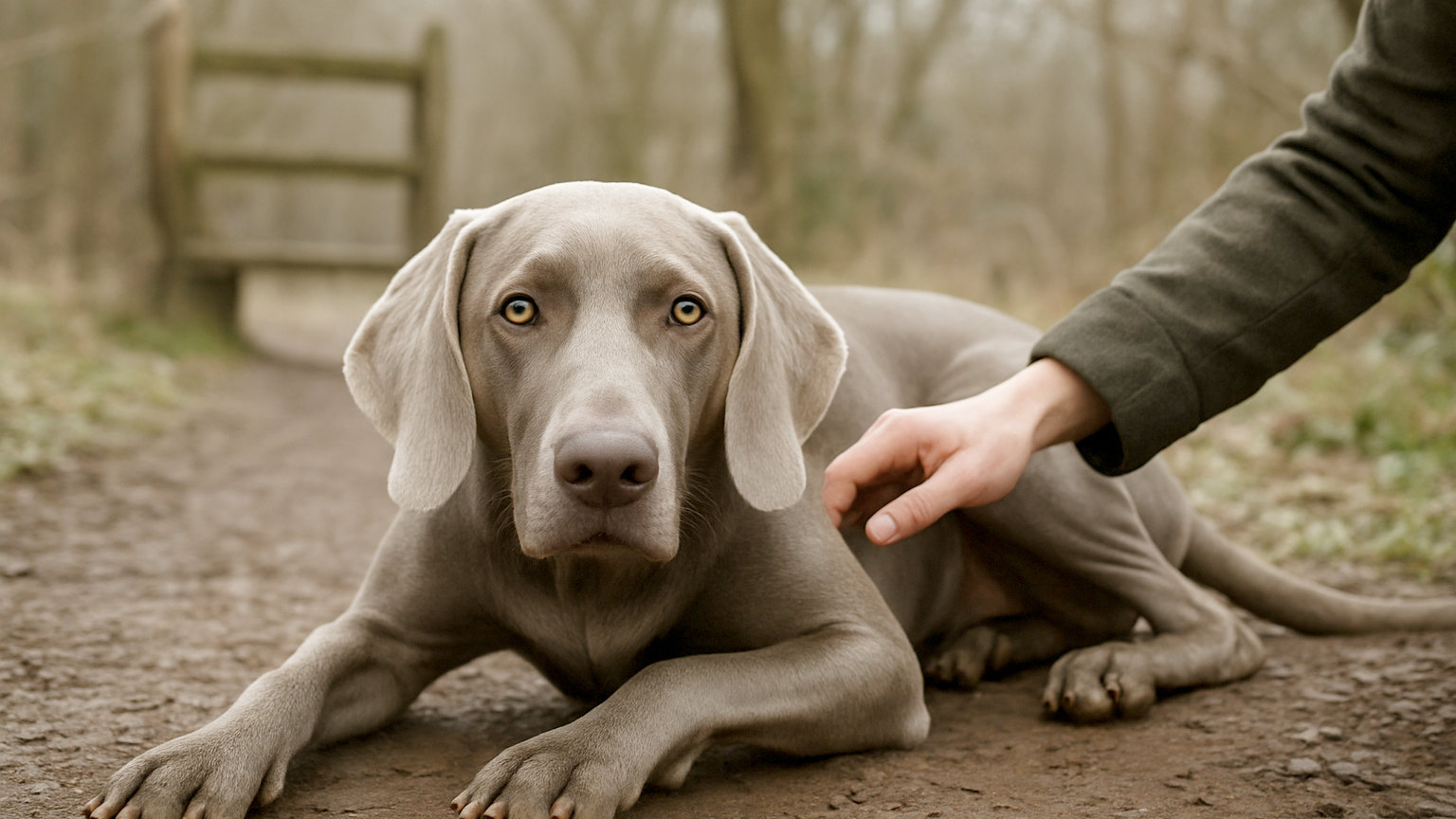
The easiest place is the femoral artery, on the inside of the thigh where the back leg meets the body. Press gently with two fingers until you feel a beat.
You can also feel the heartbeat directly by placing a hand on the left side of the chest just behind the elbow.
Count for fifteen seconds and multiply by four. Normal rates vary considerably with size: roughly 100 to 140 beats per minute in small breeds, 60 to 100 in large ones, and faster again in puppies.
How do you check breathing?
Watch the chest rise and fall while the dog is resting or asleep, and count for thirty seconds. Normal is roughly ten to thirty breaths per minute at rest.
Do not count while the dog is panting, which is a cooling mechanism rather than breathing in the usual sense.
What matters as much as the rate is the effort. Breathing should be quiet and easy. Laboured breathing, exaggerated abdominal movement, an extended neck or noisy breathing all warrant urgent attention.
What do gums tell you?
A great deal, and they are the quickest check available. Lift the lip: gums should be pink and moist.
Pale or white gums can indicate blood loss, shock or anaemia. Blue or grey suggests inadequate oxygen. Brick red can mean heatstroke or sepsis. Yellow suggests liver problems. All of these are emergencies.
Some dogs have naturally pigmented black gums, in which case check the inside of the lower eyelid instead.
What is capillary refill time?
Press a finger firmly on the gum until it blanches white, then release and count how long the colour takes to return. Normal is under two seconds.
Longer than that suggests poor circulation and needs immediate veterinary attention. It is a simple, quick indicator of how well the dog is perfusing.
Why record normal values?
Because ranges are broad and individual dogs sit at different points within them. A resting pulse of 130 might be normal for one dog and a warning sign in another.
Take readings a few times while the dog is well and note them down. When you ring a vet with an unwell dog, being able to say the temperature is 39.8 and the pulse is faster than usual is considerably more useful than a general description.
When should you take readings?
When something seems wrong and you are deciding how urgently to act, and when a vet asks you to over the phone. Do not take them constantly in a healthy dog.
Take them before travelling to the practice where possible, since the journey itself raises heart rate and temperature and the readings on arrival will be less informative.
Write the figures down with the time. In a stressful situation people misremember numbers, and a vet would rather have a written note than a recollection.
None of these measurements replaces a veterinary examination. What they do is help you decide how quickly to act and give the practice something concrete to work with when you ring.