This question comes up constantly and the answer is more settled than the debate suggests. For attaching a lead, a well-fitted harness is safer for most dogs, and a collar is still legally required.
What are the risks of a collar?
Pressure concentrated on the neck, which contains the trachea, thyroid gland, major blood vessels and the cervical spine.
A dog pulling against a collar generates considerable force on those structures. Tracheal damage is a documented risk, particularly in small breeds already prone to tracheal collapse such as Yorkshire Terriers, Pomeranians and Chihuahuas.
Repeated jerking or lunging on a collar has also been associated with eye pressure changes and neck injury. For a dog that pulls hard, a collar is the wrong attachment point.
Why is a harness better?
Because it spreads the force across the chest and shoulders rather than concentrating it on the throat. This is safer for the dog and usually gives the handler more control.
Harnesses are also considerably harder to slip out of than a collar, which matters for nervous dogs prone to backing out and bolting.
They are essential with a long line, since a dog hitting the end of a five metre line on a collar could injure its neck seriously.
Do harnesses encourage pulling?
This is the common objection and it is mostly a misunderstanding. Sled dogs pull in harnesses, but they pull because they are trained to and because the harness is designed for it.
A pet dog pulls because pulling moves it forward, and it will do that in any equipment. The harness does not cause it; failing to teach loose lead walking does.
What does help is a harness with a front attachment point, which turns the dog slightly towards you when it pulls and gives noticeably better steering.
What should you look for in a harness?
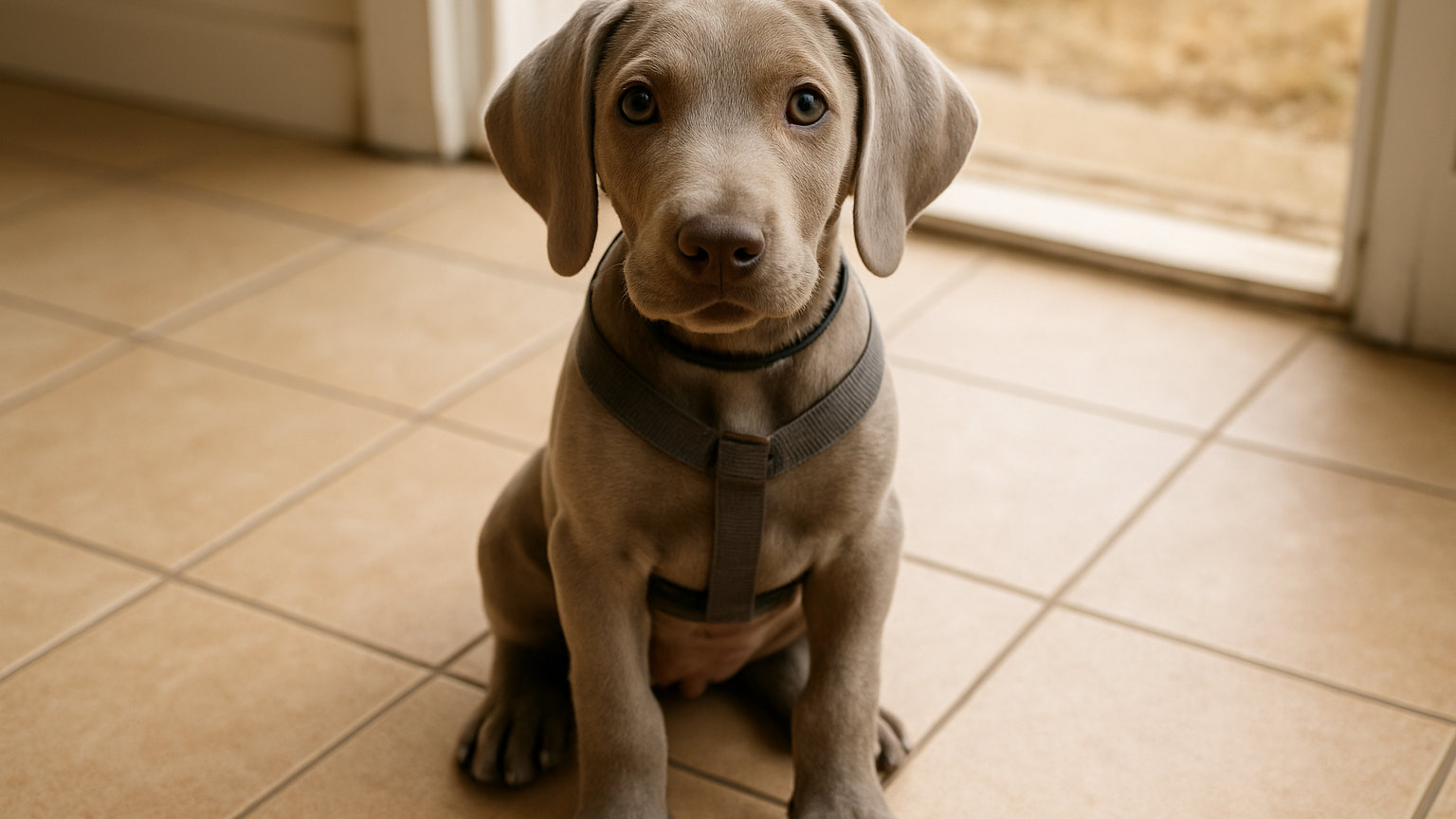
A Y-shaped front that sits on the breastbone rather than a horizontal strap across the front of the shoulders. Straps across the shoulder restrict the natural range of movement of the front legs.
Both a front and a back attachment point, which gives options. Adjustable straps at several points so the fit can be set properly.
Check the fit by sliding two fingers under any strap. It should not rub in the armpits, which is the most common cause of sore patches, and the dog should be able to extend its front legs fully.
Is a collar still needed?
Yes, and this is a legal point rather than a preference. In the UK a dog in a public place must wear a collar with the owner's name and address on it or on an attached tag.
Microchipping is also compulsory, and the registered details must be kept up to date. Both are separate requirements and both apply.
A flat collar worn for identification with the lead attached to the harness satisfies everything.
What about head collars?
They give a great deal of control on a strong dog and can be useful, but they need careful introduction over days rather than being put straight on.
Used badly they can cause neck injury if a dog hits the end of the lead at speed, so pair them with a short lead and calm handling. Many dogs find them aversive initially and paw at them persistently.
What should be avoided?
Choke chains, prong collars and slip leads used as correction tools. They work by causing discomfort, do not teach the dog what to do instead, and cause documented injury on strong dogs.
Extending leads on collars are a particular hazard, since a dog reaching the end at speed takes the full impact on its neck.
How do you introduce a harness?
Gradually, since many dogs object to something going over their head. Hold it up, reward the dog for approaching, and feed treats through the neck opening before putting it on at all.
Once it goes on, leave it for a minute and remove it, building up over days. A dog that has a harness forced on while it struggles will resist it for months.
Check the fit every few weeks in a growing dog, and look for rubbed patches in the armpits, which are the most common sign of a harness that does not fit properly.