Exercise requirements vary more between dogs than almost any other aspect of care, and the usual shorthand of small dog, small walk is unreliable. What the breed was developed to do is a far better guide.
What is the realistic range?
At the lower end, thirty to forty-five minutes a day suits companion breeds such as Shih Tzus, Cavaliers, Pugs and Bulldogs, along with elderly dogs of any breed.
An hour to ninety minutes covers most pet dogs, including Labradors, Beagles, Staffies, Cockers from show lines and the majority of crossbreeds.
Ninety minutes to two hours plus daily mental work suits working breeds: Border Collies, Springers, working Cockers, German Shorthaired Pointers, Weimaraners and Huskies.
Why does breeding purpose matter more than size?
Because stamina and drive were selected for, and neither switches off because the dog now lives in a house.
A Jack Russell weighs a fraction of a Basset Hound and needs considerably more exercise, because one was bred to work underground for hours and the other to follow a scent slowly. Size predicts how far a dog can comfortably walk, not how much it needs.
Ask what the breed was developed to do and you have most of the answer before reading any guideline.
Does mental work count?
Substantially, and for intelligent breeds it is not optional. Twenty minutes of scent work, a training session or a puzzle feeder will settle a dog more effectively than an extra mile of pavement.
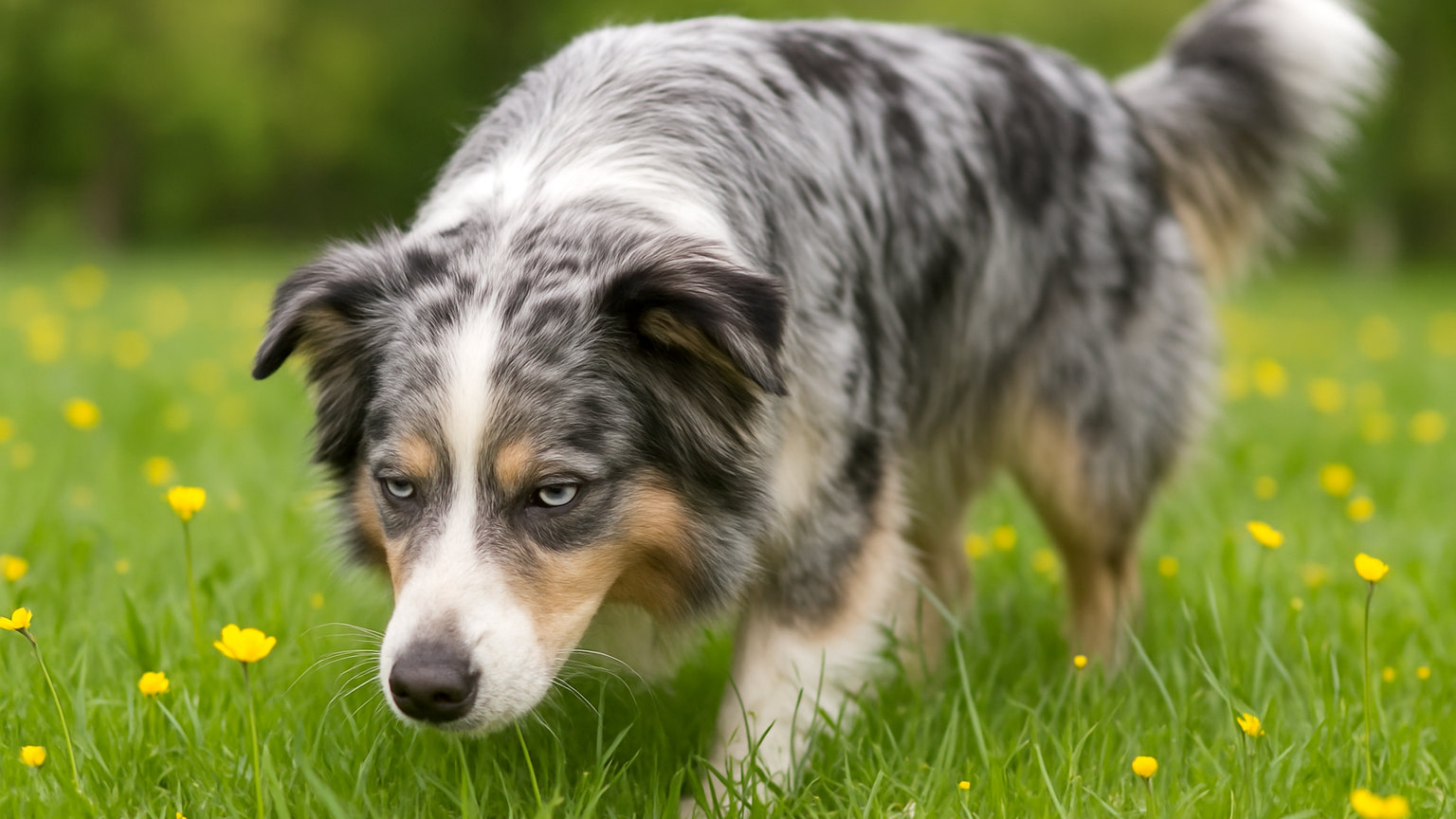
Sniffing on a walk is genuinely tiring. A slower walk where the dog investigates achieves more than a brisk one where it is pulled past everything interesting.
A useful daily pattern is two walks with sniffing time, one short training session and one enrichment activity.
How do you tell if a dog needs more?
The signs are consistent: chewing, digging, barking at minor noises, difficulty settling in the evening, worsening lead manners, and attention-seeking that escalates when ignored.
A useful test is what the dog does at nine at night. A well-exercised dog sleeps. One that paces or repeatedly brings toys is telling you the day was not enough.
Can a dog get too much?
Yes, and it is more common than people think. A dog conditioned to long, high-intensity daily work becomes fitter, so the same routine achieves less each month and owners describe an escalating pattern they cannot sustain.
Sustained high-arousal activity also leaves a dog unable to settle for hours afterwards. Some dogs described as hyperactive are chronically overtired rather than under-exercised.
If more exercise is making behaviour worse rather than better, try enforced rest for a few days instead.
How does age change things?
Puppies need far less than owners expect. A common guide is five minutes of formal exercise per month of age, twice daily, until growth plates close, which is around twelve months in small breeds and eighteen or more in giants.
Adults need the most. Older dogs generally need less intensity but should keep moving, since sustained gentle exercise maintains muscle and joint mobility. Little and often suits them better than one long walk.
What about health limits?
Flat-faced breeds need active limiting, particularly in warm weather, since they cannot cool themselves efficiently. Dogs with heart or respiratory conditions need veterinary guidance rather than a general rule.
Any dog that tires suddenly, lags behind, coughs during exercise or is reluctant to walk should be checked rather than pushed. A change in exercise tolerance is a meaningful symptom.
Does one long walk beat two short ones?
Generally not. Two or three shorter outings spread through the day suit most dogs better than a single long one, because they break up the hours and give the dog something to anticipate.
Toileting matters here too. A dog walked once a day is holding on for a very long stretch, which is uncomfortable and can contribute to urinary problems.
The exception is a fit adult working breed, which often benefits from one substantial outing plus a shorter one. For puppies, older dogs and arthritic dogs, little and often is clearly better.