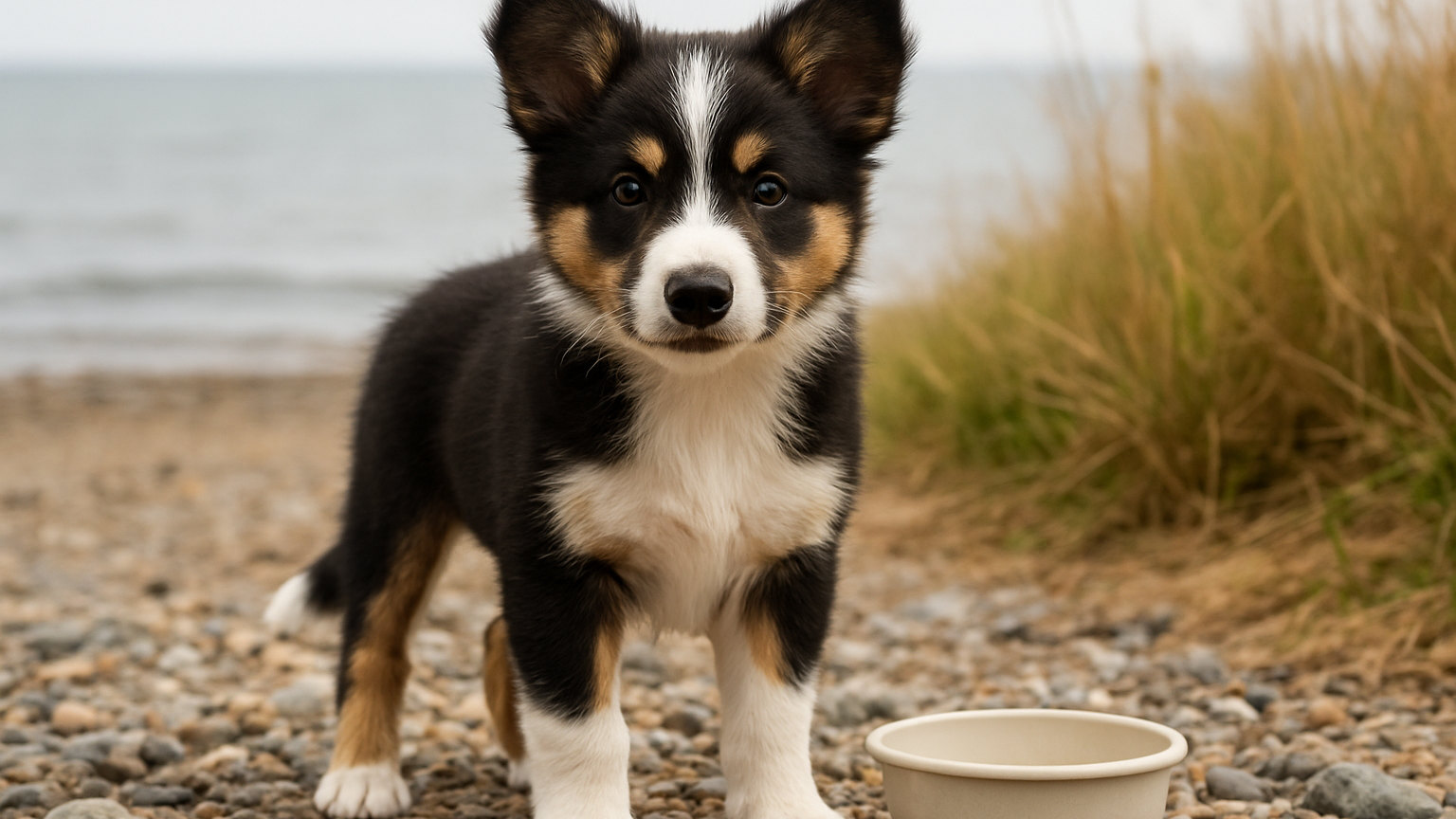
Illness, injury, bad weather, a broken ankle or a dog recovering from surgery all create days where walking is limited. Mental work fills the gap, and for many dogs it does the job better anyway.
Why is mental work so effective?
Because problem solving and scent processing are genuinely demanding. A dog working out how to get food from a puzzle feeder is concentrating hard, and concentration tires.
Physical exercise alone also has a ceiling. A dog conditioned to long runs simply becomes fitter, whereas mental work does not build tolerance in the same way.
Sniffing in particular lowers arousal. Heart rate drops during nose work, which is why dogs are calmer after scent games than after chasing a ball.
What is the simplest thing to start with?
Scatter feeding. Take the dog's meal and scatter it across grass or a snuffle mat rather than putting it in a bowl. A meal that took thirty seconds now takes fifteen minutes of nose work.
It costs nothing, uses food the dog was getting anyway, and works for almost every dog. For many owners it is the single highest value change they make.
What other scent games work?
Hide and seek with treats. Put the dog in another room, hide a few pieces of food around the living room, and release it to find them. Increase difficulty gradually.
The cup game, using three upturned containers with food under one. Cardboard box searches, where treats are hidden in scrunched paper inside a box.
Teaching a dog to find a named toy is a longer project and genuinely absorbing. Formal scent work classes exist across the UK and suit almost every breed.
What about puzzle feeders and chews?
Puzzle feeders and slow feeders turn eating into work. Rotate between a few so they stay interesting, since dogs solve them and lose interest.
Chewing is genuinely calming and provides real decompression. A safe chew or a stuffed and frozen rubber toy will settle most dogs for a substantial period, and frozen lasts considerably longer.
Lickmats have a similar effect, since licking is a self-soothing behaviour.
Does training count?
Considerably, and it is underused as a tiring activity. Five to ten minutes of teaching something new is mentally demanding, particularly shaping a new behaviour where the dog has to work out what earns the reward.
Trick training suits this well, since the specific trick does not matter. Teaching a dog to spin, weave through legs, put toys in a box or touch a target all provide the same benefit.
Keep sessions short and finish while the dog is still keen.
What indoor physical games are safe?
Tug is excellent and, contrary to old advice, does not make a dog aggressive. Teach a reliable release cue and it becomes a useful reward as well as an outlet.
Stairs and slippery floors are best avoided for repeated running, particularly with young or arthritic dogs. Corridor recalls between two people work well in a house with grip underfoot.
Avoid repeated ball throwing indoors, since the braking and twisting on hard floors risks injury.
How much replaces a walk?
Roughly speaking, twenty minutes of concentrated mental work is comparable to a moderate walk for settling purposes. It does not replace the physical conditioning or the toileting, but it addresses the restlessness.
For a dog on restricted exercise after surgery, this is how you keep it sane, and vets frequently recommend exactly this. Check what is permitted, since some activities involve more movement than they appear to.
How do you use enrichment during recovery?
Carefully, since some activities involve more movement than they appear to. A dog on strict crate rest after surgery should not be doing scatter feeding across a room.
Lickmats, stuffed frozen toys and simple puzzle feeders used lying down are usually acceptable. Nose work confined to a small area, where the dog barely moves, can often be done.
Ask the veterinary practice what is permitted rather than assuming, and describe the specific activity. Most are pleased to be asked, since mental stimulation makes confinement considerably easier to manage.