Switching food is one of the most common causes of diarrhoea in otherwise healthy dogs, and it is almost entirely avoidable. The gut adapts to a diet over time, and it needs a few days to adjust to a new one.
Why does a sudden change cause problems?
Because the bacterial population in a dog's gut adapts to a particular diet. Changing abruptly disrupts that balance, and the result is typically loose stools, wind and occasionally vomiting.
Different protein sources, fat levels and fibre content all require adjustment. The greater the difference between the old and new food, the more gradual the change needs to be.
What transition schedule should you use?
A seven to ten day changeover works for most dogs. Start with roughly three quarters old food and a quarter new for two or three days.
Move to half and half for the next two or three days, then a quarter old and three quarters new, then complete the switch.
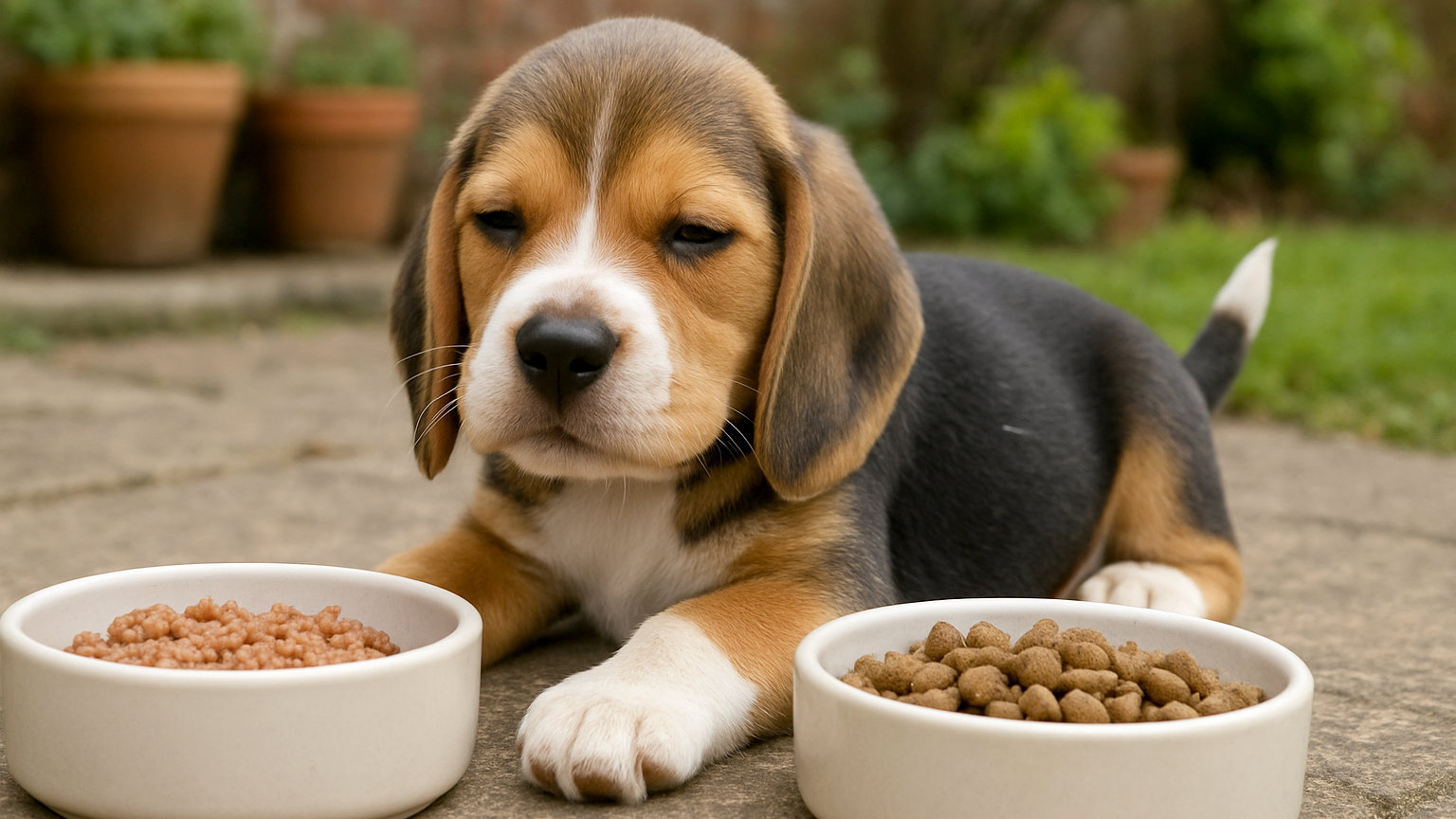
Mix the two thoroughly rather than feeding them separately, so the dog cannot select one and leave the other.
When should you go slower?
With dogs that have a history of digestive sensitivity, elderly dogs, puppies, and dogs recovering from illness. A two to three week transition is reasonable for these.
Also go slower when the change is large, such as moving between dry and wet, between protein sources, or to a very different formulation.
If loose stools appear, hold at the current ratio for a few extra days rather than continuing to increase.
What if the dog refuses the new food?
Slow down and start with a smaller proportion of new food. Some dogs detect and reject even small changes.
Warming wet food slightly increases its smell and palatability. Adding a small amount of warm water to dry food helps some dogs.
Avoid the trap of offering something else when a meal is refused, since a dog quickly learns that holding out produces better options. Remove the bowl after fifteen or twenty minutes and offer the same food at the next meal.
What is normal during a transition?
Slightly softer stools for a day or two, some wind, and a change in stool colour and volume. These usually settle.
What is not normal is persistent watery diarrhoea, repeated vomiting, blood in the stool, lethargy or refusing food entirely. Any of these warrants stopping and speaking to a vet.
How do you know the new food suits?
Give it at least four to six weeks after the transition completes before judging. Coat changes in particular take a full growth cycle to show.
Look for firm, well-formed stools, steady weight, good energy, a healthy coat and no excessive scratching. Adjust the quantity as needed, since calorie density varies between foods and the previous amount may be wrong.
What if you have to change suddenly?
Sometimes there is no choice, such as a food being discontinued or a vet prescribing a therapeutic diet. In that case feed smaller, more frequent meals for a few days.
Plain boiled chicken and white rice for a day or two is a traditional interim measure for a mildly upset stomach, though it is not complete nutrition and should not continue for more than a couple of days.
A probiotic paste designed for dogs can help settle the gut during an abrupt change, and most veterinary practices stock one.
What if you are changing for a medical reason?
Follow the veterinary instruction rather than a general schedule. Therapeutic diets for kidney disease, urinary problems or allergies sometimes need introducing faster than would otherwise be ideal.
Ask the practice how quickly to transition and what to do if the dog refuses, since palatability is a common problem with prescription diets and there are usually options.
For an elimination diet investigating allergies, the transition must be absolute. Nothing else can be fed at all, including treats and flavoured medication, or the trial tells you nothing.