Excess weight is the most common preventable health problem in British dogs, and the most striking thing about it is how normal it has become. Many owners of overweight dogs sincerely believe their dog is fine.
How do you tell?
By feel rather than by appearance, particularly in a coated breed. Run your hands firmly along the ribcage. You should feel the ribs easily under a thin covering, much as you can feel the bones on the back of your hand.
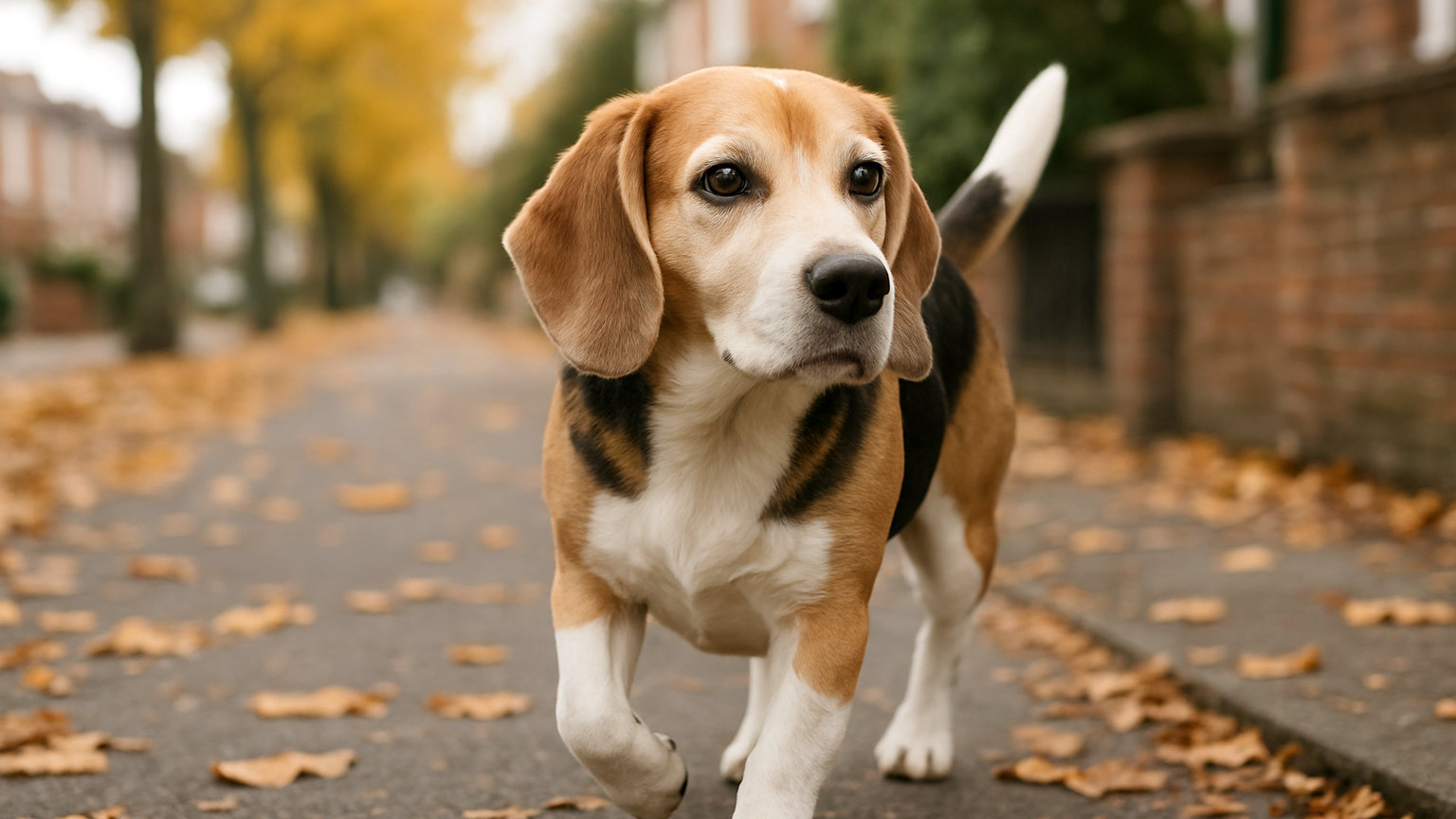
Look down from above. There should be a visible waist behind the ribs rather than a straight or bulging outline. From the side, the belly should tuck upwards rather than running level.
If you have to press to find the ribs, the dog is carrying too much. Body condition scoring charts using a nine-point scale are widely available and worth looking at.
Why does it matter?
Because the effects are substantial and well documented. Excess weight worsens arthritis and joint disease directly, increases the risk of diabetes, raises anaesthetic risk and contributes to heart and breathing problems.
It also shortens life measurably. Research comparing lean and overweight dogs of the same breed has found meaningful differences in both lifespan and years of healthy life.
Keeping a dog lean is the single most effective health intervention available to an owner, and it costs nothing.
Why do dogs gain weight?
Almost always because intake exceeds requirement, and usually for predictable reasons. Feeding by scoop rather than by weight is a common cause, as is following packet guidelines aimed at an average dog.
Neutering reduces energy requirements noticeably, often by around a quarter, and many dogs are never adjusted afterwards. Treats are the other major factor and are routinely uncounted.
Multiple family members feeding the dog is a classic scenario, where everyone assumes somebody else has not already fed it.
How should you approach weight loss?
Slowly and by measurement. Weigh food using kitchen scales rather than a scoop, and reduce the daily amount by around ten per cent to start.
Count all treats within the daily total rather than on top of it, and switch to low-calorie options such as carrot, cucumber or green beans. Use part of the daily food allowance as training rewards.
Aim for gradual loss of around one to two per cent of body weight a week. Rapid loss is not desirable and is worth discussing with a vet.
Does more exercise fix it?
It helps but it is secondary. Diet drives weight change far more than activity does, and it is difficult to exercise a dog out of a consistent calorie surplus.
Exercise is still worth increasing for joint health, muscle tone and mental wellbeing. Build up gradually, since an overweight dog is under strain and may have undiagnosed joint pain.
Swimming and gentle lead walking suit dogs with mobility problems better than running or ball work.
What if the diet does not work?
See a vet, since some dogs gain weight for medical reasons. Hypothyroidism and Cushing's disease both cause weight gain and are treatable once diagnosed.
Many practices run free weight clinics with a nurse, which provide accurate scales, a structured plan and regular monitoring. These are genuinely effective and considerably easier than doing it alone.
How do you keep the weight off?
Weigh the dog monthly and keep a record, since gradual gain is invisible day to day. Agree within the household who feeds the dog and what treats are allowed.
Recalculate portions whenever the food changes, after neutering, and as the dog becomes less active with age.
How do you talk to family about it?
Directly and early, because weight plans usually fail through kindness rather than neglect. Everyone needs to know the dog is on a plan and what it is allowed.
Keep the daily treat allowance in a visible pot so once it has gone, it has gone. That removes the argument entirely and stops the same dog being fed four times.
Explain the reason rather than just the rule. People tend to comply when they understand that excess weight worsens arthritis and shortens life, and rather less when they simply feel told off.