Why Is My Puppy Not Sleeping at Night?
Most puppies waking at night need the toilet, are overtired, or have learned that noise brings company, and the three need different responses.
By Dog Guides Editorial
8 May 2026

Most of what keeps a dog well is unglamorous and repetitive: the right amount of the right food, enough of the right kind of exercise, teeth that get cleaned, a coat that gets brushed before it mats. These guides cover the everyday side of owning a dog, including how much your dog should actually be eating, how often it genuinely needs grooming, and which of the products marketed at you are worth the money. Get the routine right and a good deal of the health section becomes theoretical.
Most puppies waking at night need the toilet, are overtired, or have learned that noise brings company, and the three need different responses.
Early waking is usually learned, and the thing that maintains it is almost always what happens in the first minute after the dog wakes you.
An overtired dog and an under-exercised one look almost identical, and the usual response to one makes the other considerably worse.
Dogs almost certainly dream, and waking one abruptly is a common cause of bites, particularly with older or rescue dogs.
Most sleeping positions come down to temperature and comfort, though a change in how a dog lies can be an early sign of pain.
Night-time restlessness in an older dog is rarely just age. Pain and cognitive decline account for most of it, and both are treatable.
Weekly washing at sixty degrees is the standard, and the temperature matters more than the frequency where fleas are concerned.
Most dogs in a household sleep happily in the same room, provided there are more beds than dogs and no competition over the best spot.
Five minutes a week catches most problems while they are still small, and it costs nothing but the habit of doing it consistently.
Eye problems can go from minor to sight-threatening within a day, which is why they are one of the few areas where waiting is a bad idea.
Most dogs take medication easily in food, and the ones that do not are usually detecting a change in routine rather than the tablet itself.
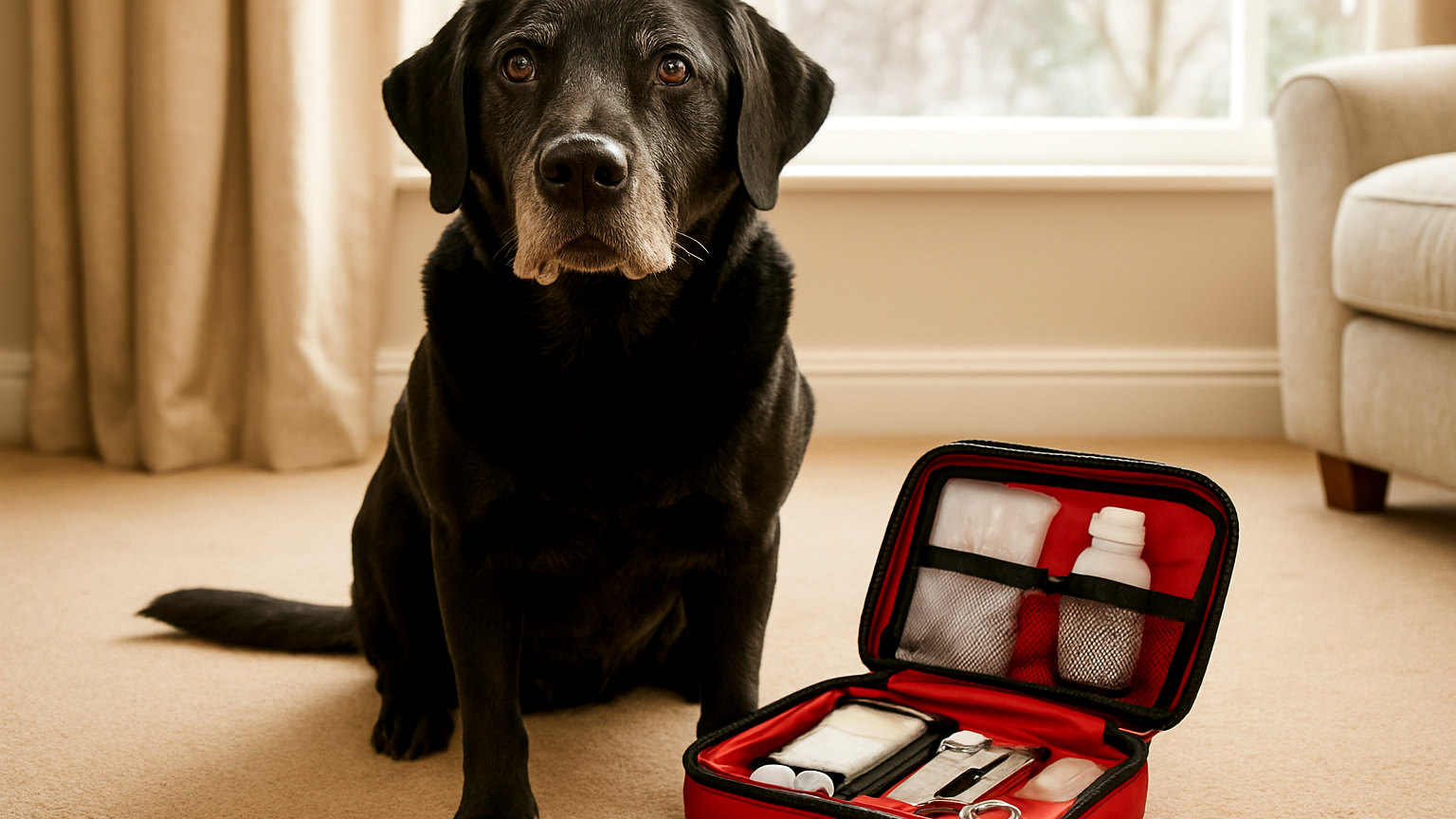
A first aid kit buys time on the way to a vet. Its purpose is stabilising a dog, never treating a problem at home instead.